18Ο◆
Rudolf Stingel
Untitled
Full-Cataloguing
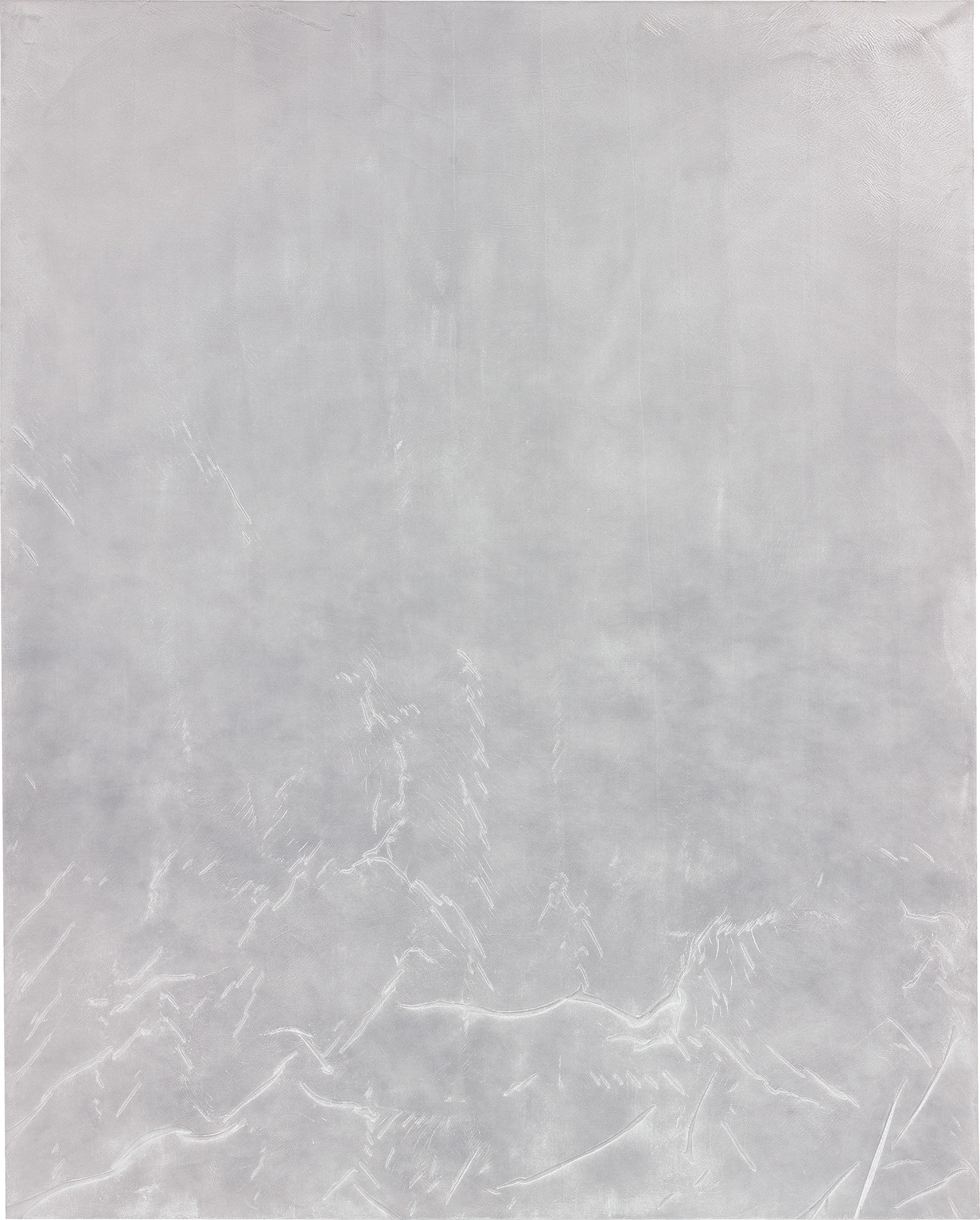
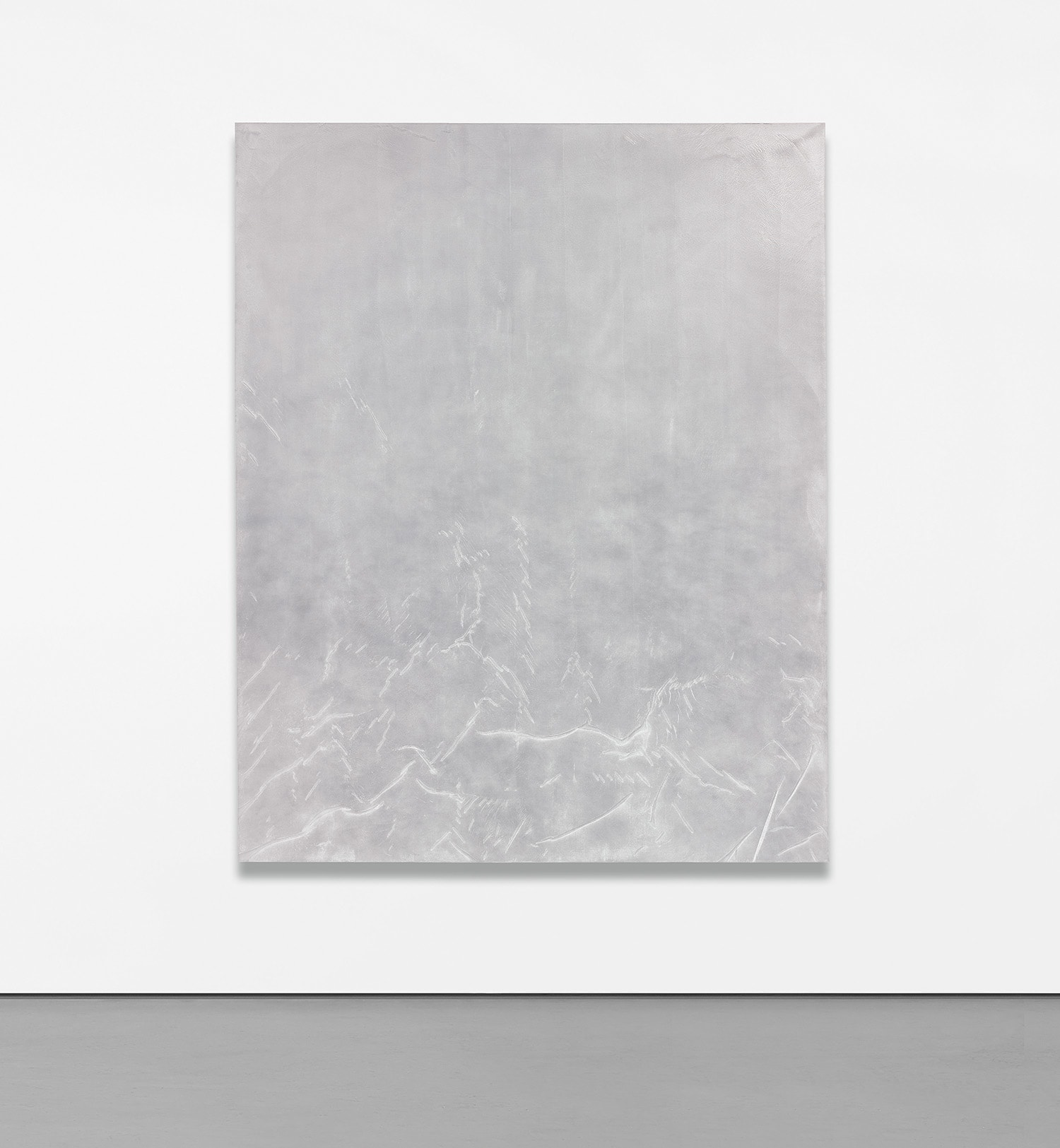
Characterised by simultaneous attention to surface, colour and space, Stingel’s compositions create a new paradigm for the meaning of painting, reflecting upon the fundamental questions that concern the artistic parameters of today’s creations: authenticity, meaning, and context. At once abstract and referential, majestic and subdued, Untitled epitomises the conceptual core of Stingel’s painterly gesture, of which each different iteration was elucidated in the artist’s 1989 self-published Instructions. In this manual, Stingel provided step-by-step instructions that intended to direct artists towards a clear and essential way of making art. As such, its contents represented the demystification of ‘painterliness’ and the commodification of mechanical processes. With their simple method of creation – he sprays silver enamel over layers of paint and mesh – Stingel’s silver paintings are at once aesthetically exquisite and conceptually arresting, visually supple and physically rigid. They exemplify Francesco Bonami’s claim that, ‘By disrupting painting’s assumption of material, process, and placement, Stingel not only bursts open the conventions of painting, but creates unique ways of thinking about the medium and its reception’ (Francesco Bonami, Rudolf Stingel, exh. cat., Museum of Contemporary Art, Chicago, 2007, p. 10). Continuing his investigation into the medium which Douglas Crimp had proclaimed dead in 1981, Stingel offered a new lease on painting – one that summoned more questions than it provided answers. In this perspective, Roberta Smith beckoned, ‘His art asks what are paintings, who makes them, and how?’ (Roberta Smith, ‘The Threads That Tie a Show Together’, The New York Times, 20 August 2013).
With Untitled, the exploration of the silver pigment, and the emulation of a material other than a painterly support furthermore call to mind a number of artists who similarly approached colour and medium as realms to investigate and break through. Vija Celmins’ poetic seascapes, moon surfaces and land shots betray an attentive eye and laborious technique that Stingel equally cultivates in his process. As with Celmins, the painter’s results are seamless, transforming into something that they are not through sheer pictorial conviction. From another perspective, the focus on colour and the plasticity of pigment have also been subjects in themselves since the beginning of painting. In the modern canon, a few names crop up instinctively – those of Yves Klein and Pierre Soulages; yet the variegated surface texture of the present work here more powerfully recalls the surface undulations of Piero Manzoni’s Achromes.
A paragon of Rudolf Stingel’s painterly output, Untitled, 2010, comprises the deliberate ambivalences that the artist consistently infuses in his work. At once abstract and referential, majestic and irreverential, it critiques the history of modern painting and the studio process whilst commanding the viewer to succumb to its iridescent magnificence.
Rudolf Stingel
Italian | 1956Rudolf Stingel came to prominence in the late 1980s for his insistence on the conceptual act of painting in a context in which it had been famously declared dead. Despite the prevailing minimalist and conceptual narrative of the time, the Italian-born artist sought to confront the fundamental aspirations and failures of Modernist painting through the very medium of painting itself. While his works do not always conform to the traditional definitions of painting, their attention to surface, space, color and image provide new and expanded ways of thinking about the process and "idea" of painting. Central to his multifarious and prolific oeuvre is an examination of the passage of time and the probing of the fundamental questions of authenticity, meaning, hierarchy, authorship and context by dislocating painting both internally and in time and space. Stingel is best known for his wall-to-wall installations, constructed of fabric or malleable Celotex sheets, as well as his seemingly more traditional oil-on-canvas paintings.