
1094
Watts
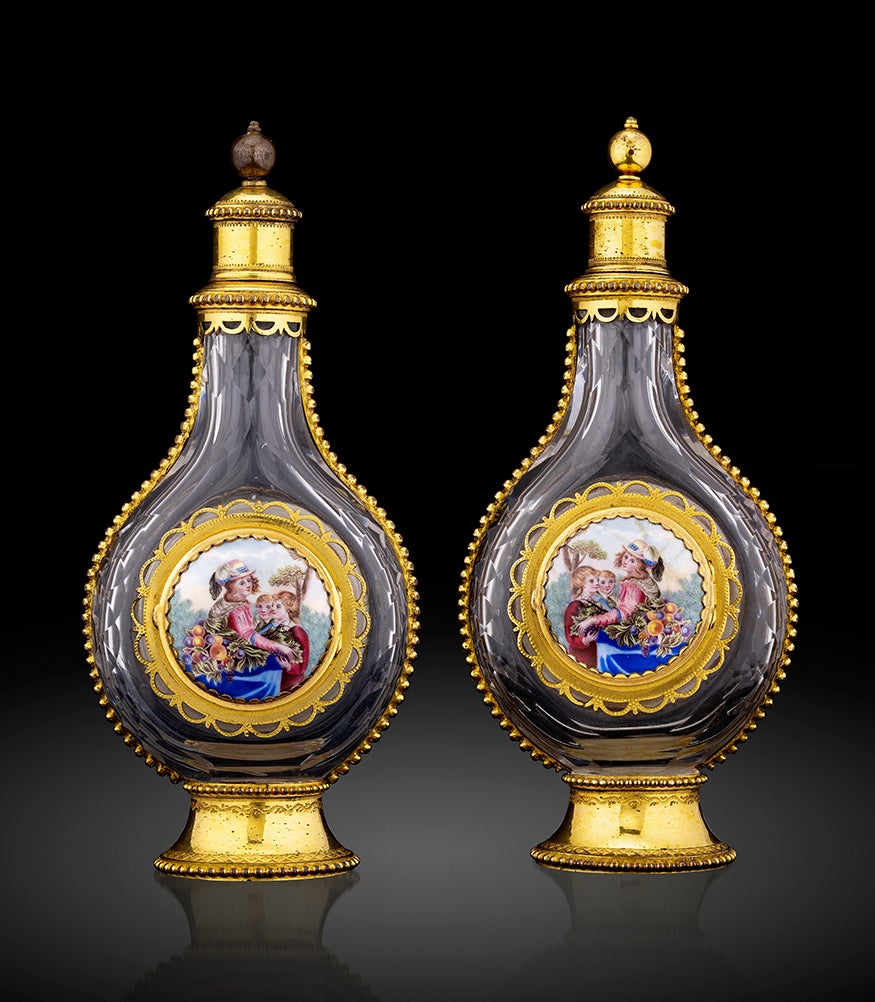
A pair of well-preserved gilt metal glass scent flask with watches, fusée and chain verge movements, paste-set hinged bezels, polychrome enamel paintings and white enamel dials
Estimate
HK$80,000–160,000
€8,800–17,700
$10,300–20,500
Sold For
HK$558,800
Manufacturer
Watts
Year
Circa 1780
Movement No
551 and 555
Material
Glass, metal and enamel
Calibre
Manual, gilt brass, verge escapement and chain fusée
Dimensions
170mm height
Signed
Movements signed
Full-Cataloguing
In the second half of the 18th century, the Swiss cantons experienced a period of strong economic growth. Geneva gained international recognition as a leading center for luxury watches and enamel decoration. The imaginative style, often picturesque and at times eccentric, shaped not only the design of elaborate timepieces but also influenced other fashionable items for both men and women. Many of these objects combined elegance with practical function. The variety of decorative accessories favored by watch collectors seemed limitless. Jewel-watches often served more than one purpose and appeared in items with entirely different primary uses. These included cane knobs, lorgnettes, snuff boxes, field glasses, seals, beauty-spot cases, vinaigrettes, and scent bottles. Such creations reflected both technical skill and a taste for ornamental refinement.
Under the very intense intellectual atmosphere of the Age of Enlightenment and the profound relationships growing up between the major cities and the neighbouring countries, this phenomenon prevailed in Georgian England as well. The present pair of faceted glass scent flask-form watches are well-preserved examples from London in that era. They feature a highly dimensional repousse design with floral and scroll motifs on the base, gilt metal beaded decoration surrounding the bezel and screw caps on top. These have given the flasks a lovely rich lustre. Meanwhile, the paste-set bezels are another highlight of the flasks. “Paste-set" refers to artificial gemstones that are meticulously cut and polished, and then set into metal settings to imitate valuable gemstones, like rubies in this case. This is a common jewellery-making technique seen in Georgian era, which can be traced back to the French court in 1724.
On the reverse, each flask bears a painted enamel scene depicting a young lady and two children in a pastoral setting, mirrored in the matching flask. The young lady is collecting fruits with two children, evoking a sense of warmth and companionship. The figures are rendered in soft, harmonious tones, with delicate attention to facial expression and attire. The background features naturalistic elements, enhancing the idyllic atmosphere. One can tell that present piece is apparently inspired by François Boucher or Jean-Honoré Fragonard’s work which often adopted the theme of romanticised rural life. Under the rococo influence in the French court, it was rather popular and common among aristocrats in the late 18th century. Crafts and paintings from that era highlighted beauty, elegancy and dreamlike features and incorporate the aristocrat’s longing for simplicity of the suburban lifestyle.
Beneath the hinged enamel panels lie the winding holes. Each flask contains a chain fusée verge movement made of gilt brass. This mechanism, widely used by watchmakers of the period, helped regulate the diminishing force of the mainspring as it unwound, thereby improving the accuracy of timekeeping. In contrast to the richly decorated flask, the white enamel dial presents a simple design. It features a Roman numeral hour ring and an Arabic numeral minute track. This layout was chosen to create a clear visual contrast with the gilt beetle and poker hands.
This pair of scent flasks offers more than mere functionality; they represent luxurious fashion statements. Each flask features intricate designs, richly embellished with enamel painting and gilt accents on paste-set glass bodies. A watch, embedded in the belly of each flask, highlights the craftsmanship of the 18th century and the seamless blend of personal adornment with practical use. Beyond their utility, these flasks served as symbols of wealth and social standing, reflecting the period’s celebration of refined and sophisticated accessories. Today, they can add a touch of elegance to a vanity or living room, serving as both decorative objects and historical conversation pieces.
Under the very intense intellectual atmosphere of the Age of Enlightenment and the profound relationships growing up between the major cities and the neighbouring countries, this phenomenon prevailed in Georgian England as well. The present pair of faceted glass scent flask-form watches are well-preserved examples from London in that era. They feature a highly dimensional repousse design with floral and scroll motifs on the base, gilt metal beaded decoration surrounding the bezel and screw caps on top. These have given the flasks a lovely rich lustre. Meanwhile, the paste-set bezels are another highlight of the flasks. “Paste-set" refers to artificial gemstones that are meticulously cut and polished, and then set into metal settings to imitate valuable gemstones, like rubies in this case. This is a common jewellery-making technique seen in Georgian era, which can be traced back to the French court in 1724.
On the reverse, each flask bears a painted enamel scene depicting a young lady and two children in a pastoral setting, mirrored in the matching flask. The young lady is collecting fruits with two children, evoking a sense of warmth and companionship. The figures are rendered in soft, harmonious tones, with delicate attention to facial expression and attire. The background features naturalistic elements, enhancing the idyllic atmosphere. One can tell that present piece is apparently inspired by François Boucher or Jean-Honoré Fragonard’s work which often adopted the theme of romanticised rural life. Under the rococo influence in the French court, it was rather popular and common among aristocrats in the late 18th century. Crafts and paintings from that era highlighted beauty, elegancy and dreamlike features and incorporate the aristocrat’s longing for simplicity of the suburban lifestyle.
Beneath the hinged enamel panels lie the winding holes. Each flask contains a chain fusée verge movement made of gilt brass. This mechanism, widely used by watchmakers of the period, helped regulate the diminishing force of the mainspring as it unwound, thereby improving the accuracy of timekeeping. In contrast to the richly decorated flask, the white enamel dial presents a simple design. It features a Roman numeral hour ring and an Arabic numeral minute track. This layout was chosen to create a clear visual contrast with the gilt beetle and poker hands.
This pair of scent flasks offers more than mere functionality; they represent luxurious fashion statements. Each flask features intricate designs, richly embellished with enamel painting and gilt accents on paste-set glass bodies. A watch, embedded in the belly of each flask, highlights the craftsmanship of the 18th century and the seamless blend of personal adornment with practical use. Beyond their utility, these flasks served as symbols of wealth and social standing, reflecting the period’s celebration of refined and sophisticated accessories. Today, they can add a touch of elegance to a vanity or living room, serving as both decorative objects and historical conversation pieces.