

No Reserve
21
Wifredo Lam
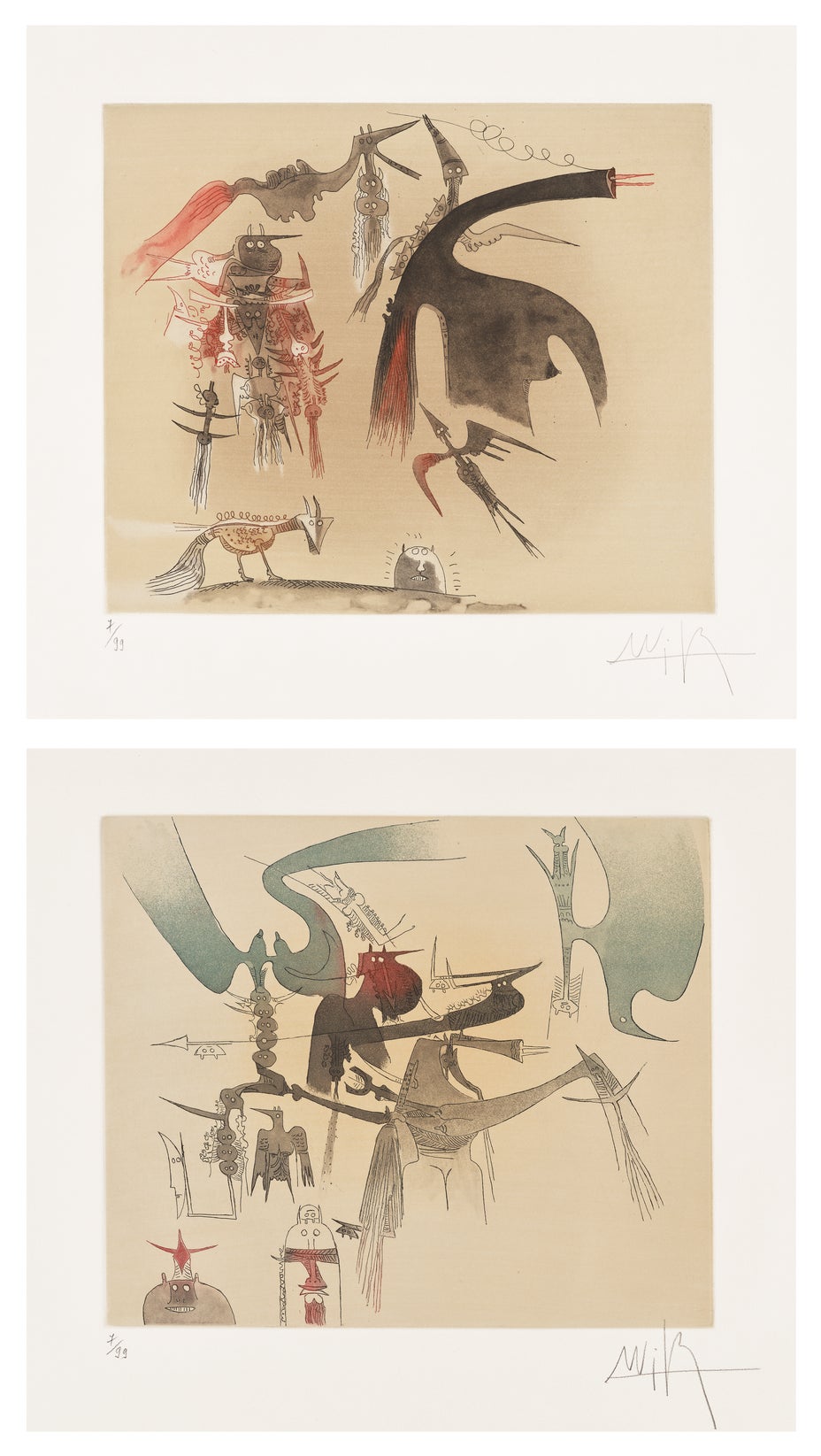
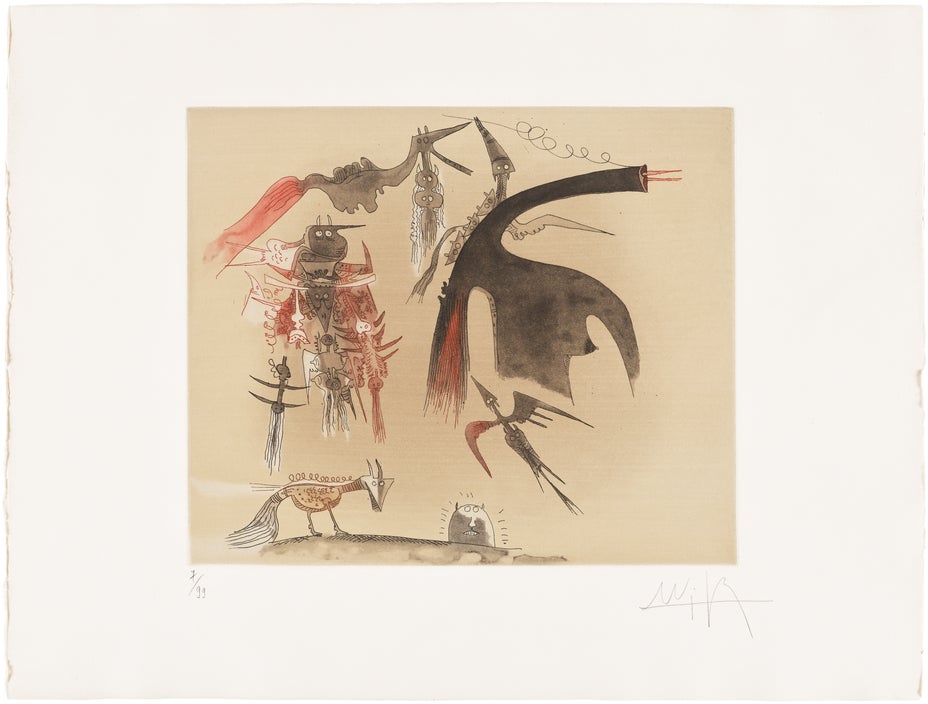
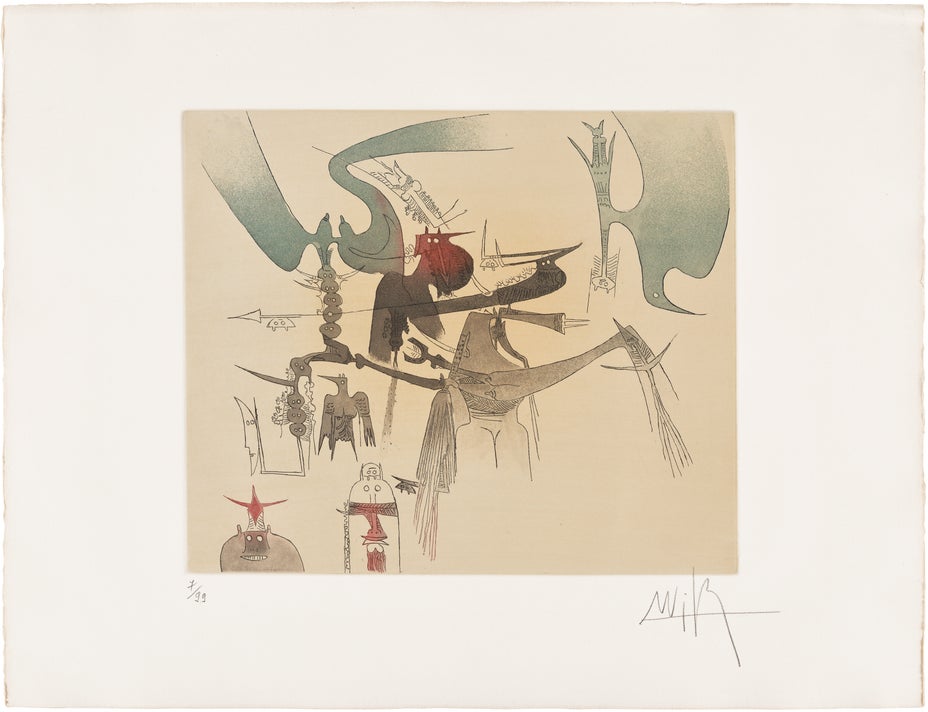
Lames de Lam (Lam's Blades): plates I and VI (T.-R. 7901 & 7906, L. 366 & 371)
- Estimate
- $800 - 1,200•
$1,806
Lot Details
Two etching and aquatints in colors, on Arches paper, with full margins.
1977-79
both I. 13 x 15 1/2 in. (33 x 39.4 cm)
both S. 19 3/4 x 25 7/8 in. (50.2 x 65.7 cm)
Both signed and numbered 7/99 in pencil (there were also 30 artist's proofs in Roman numerals), from the intended portfolio of 7 prints and text Lames de Lam that was never realized, published by XXe siècle, Paris, printed in Italy, both framed.
Priority Bidding is here! Secure a lower Buyer's Premium. Learn more >
Specialist
Full-Cataloguing
Literature
Wifredo Lam
Cuban | B. 1902 D. 1982Wifredo Lam was born in Sagua la Grande, Cuba and was of mixed Chinese, European, Indian and African descent. He studied under Fernando Álvarez de Sotomayor, curator for the Museo del Prado and teacher of Salvador Dalí.
While studying in Spain, he met Pablo Picasso, who would become his mentor and friend as well as one of his great supporters, introducing him to the intelligentsia of the time. Lam significantly contributed to modernism during his prolific career as painter, printmaker, sculptor and ceramist. His works explored Cubism and expanded the inventive parameters of Surrealism while negotiating figuration and abstraction with a unique blend of Afro-Cuban and Surrealist iconography. His iconic visual language incorporated syncretic and fantastical objects and combined human-animal figures fused with lush vegetation.
Browse ArtistWhile studying in Spain, he met Pablo Picasso, who would become his mentor and friend as well as one of his great supporters, introducing him to the intelligentsia of the time. Lam significantly contributed to modernism during his prolific career as painter, printmaker, sculptor and ceramist. His works explored Cubism and expanded the inventive parameters of Surrealism while negotiating figuration and abstraction with a unique blend of Afro-Cuban and Surrealist iconography. His iconic visual language incorporated syncretic and fantastical objects and combined human-animal figures fused with lush vegetation.