166
Yoichi Ohira
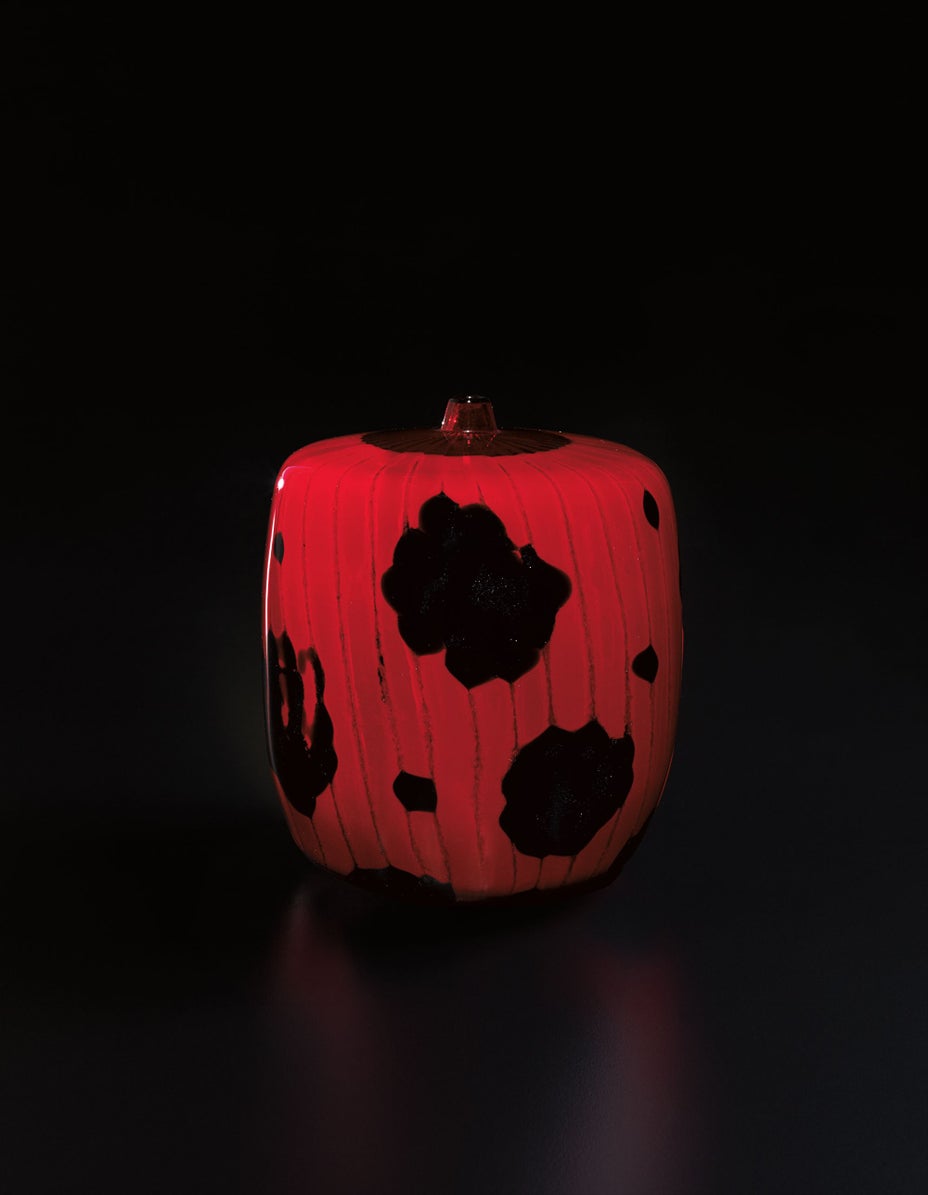
Unique "Rosso e Nero" vase from the "Polvere" series
Full-Cataloguing
Yoichi Ohira graduated from the Kuwasawa Design School, Tokyo, in 1969. Shortly thereafter he took up a glassblowing apprenticeship at the Kagami Crystal Company, Ltd. In 1973 Ohira moved to Venice to study at the Accademia di Belle Arti; he graduated in 1978, earning the highest possible grade for his thesis, The Aesthetics of Glass. In the late 1980s Ohira began collaborating with Murano glassmakers, earning the “Premio Selezione” of the Premio Murano in 1987.
Collaboration has always been central to Ohira’s practice; he has written, "If I might compare myself to a composer...I could then compare Murano glassmakers to singers or instrumentalists. Who in the music world would erase the performers' names? Thus, my pieces in all fairness bear, in addition to my signature, the names of those who carried out my instructions: the glassblower and glasscarver, with the date and the place the piece was made."
Yoichi Ohira
Japanese | 1946Glass art – hard, fragile, cold and often heavy – is not typically designed to be handled. Yoichi Ohira's luminous blown glass vessels, however, offer an exception to this trend. They are small and light enough to be turned in one's hands like a Wunderkammer specimen, inviting the viewer to admire his abstracted design vocabulary of gemstones, polished ivory, veined rocks, shimmering water, agate, moss and lichens. Ohira has been compared to Emile Gallé for his ability to emulate the natural world in glass. Comparisons may also be drawn to Jean Dunand's bronze vessels, Japanese rokusho patina and Otto Natzler's volcanic glazes – an impressive range of media to be translated into glass.
Yoichi Ohira graduated from the Kuwasawa Design School, Tokyo in 1969. Shortly thereafter he took up a glassblowing apprenticeship at the Kagami Crystal Company, Ltd. In 1973 Ohira moved to Venice to study at the Accademia di Belle Arti; he graduated in 1978 earning the highest possible grade for his thesis, "The Aesthetics of Glass." In the late 1980s Ohira began collaborating with Murano glassmakers, earning the "Premio Selezione" of the Premio Murano in 1987.