67
祖.科倫坡
"Living System Box 1"
估價
$20,000–30,000
成交價
$25,200
circa 1968
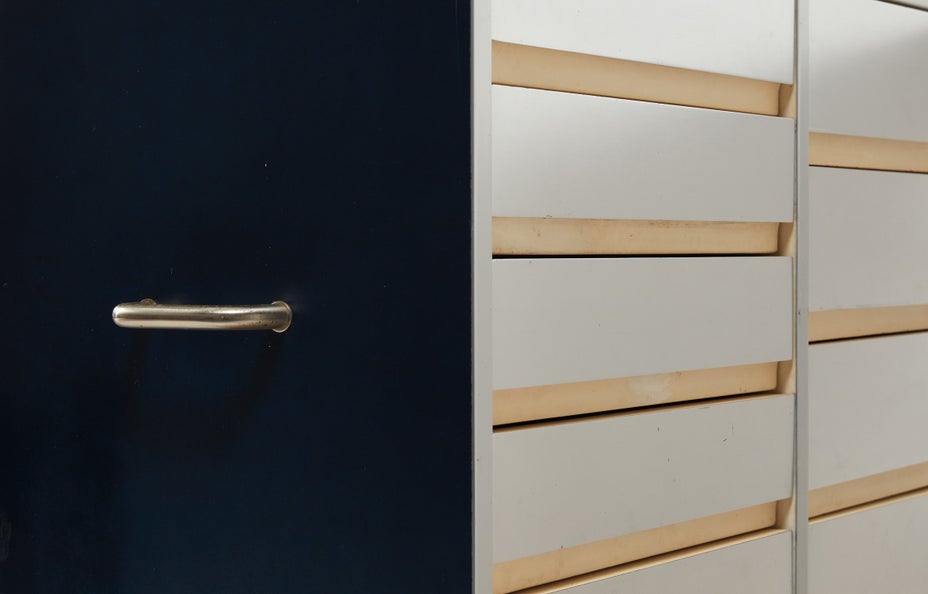
Plastic laminate-covered wood, chromium-plated metal, mirrored glass, leather.
Bed and storage units: 71 x 51 x 102 in. (180.3 x 129.5 x 259.1 cm), as shown
Chair: 29 3/4 x 21 1/2 x 17 7/8 in. (75.6 x 54.6 x 45.4 cm)
Chair: 29 3/4 x 21 1/2 x 17 7/8 in. (75.6 x 54.6 x 45.4 cm)
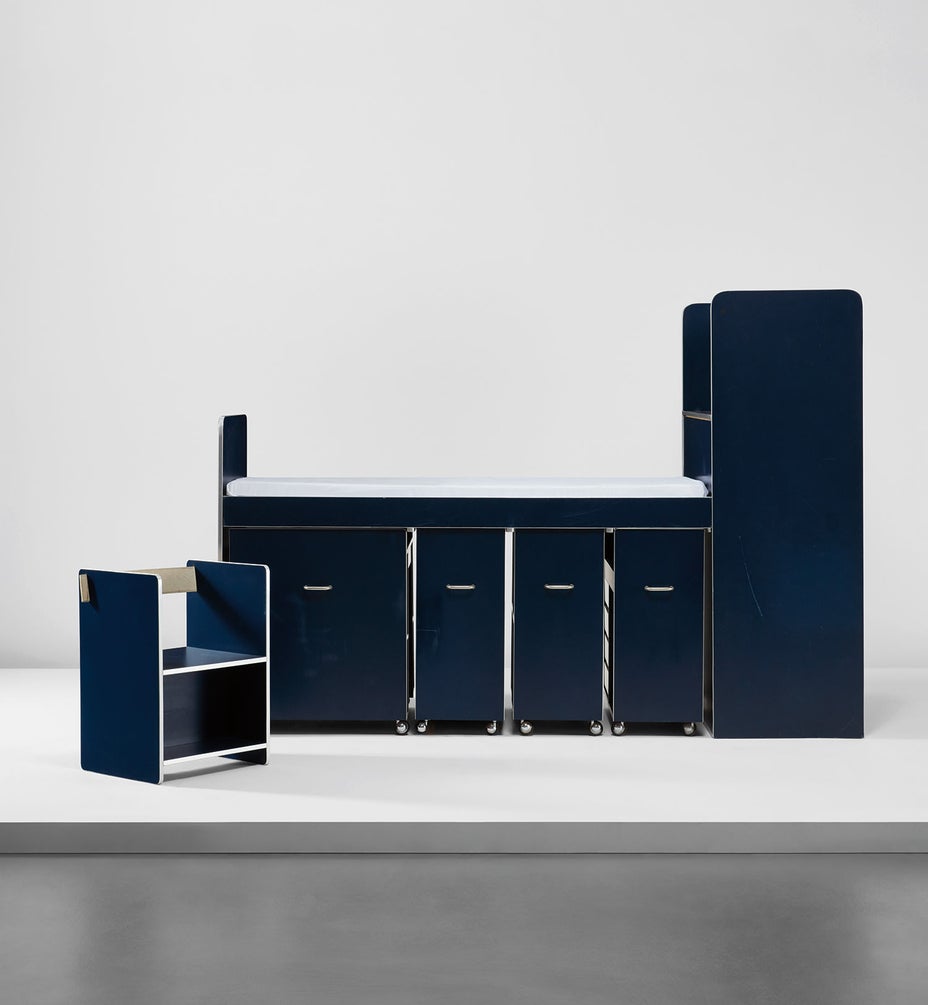
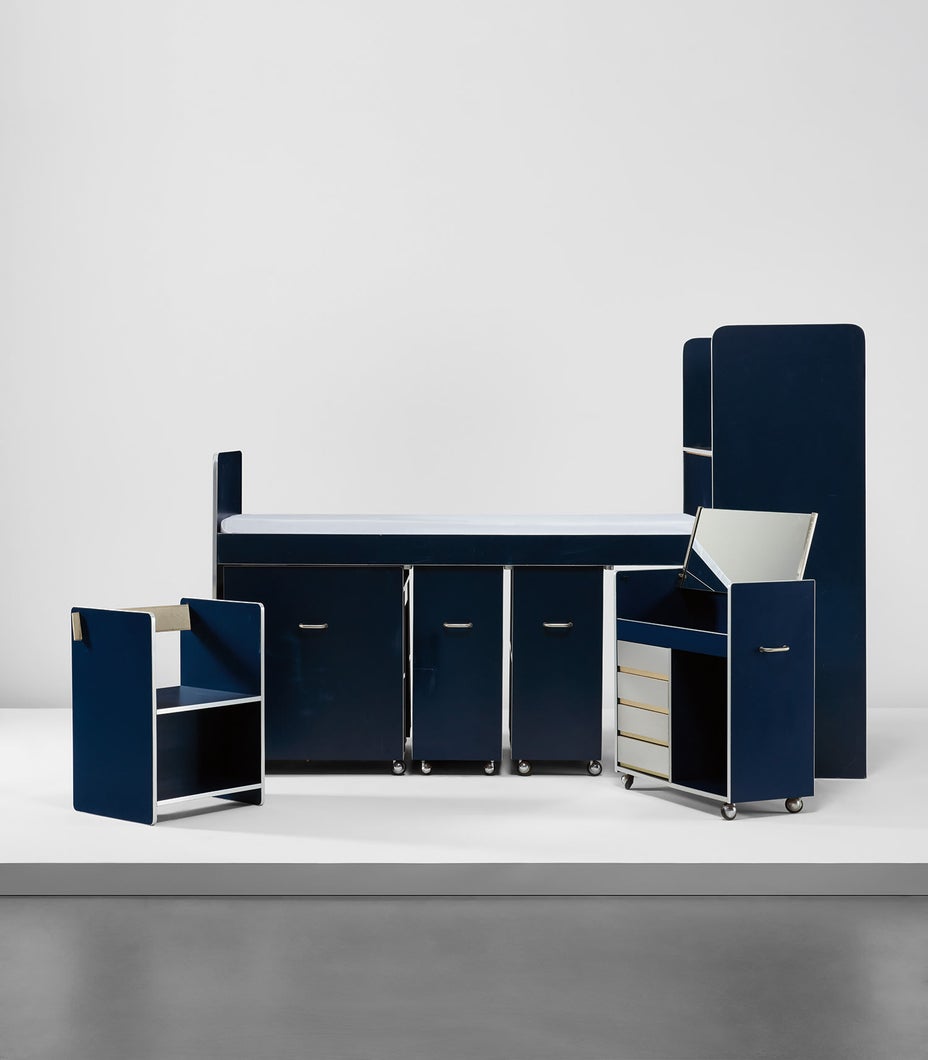
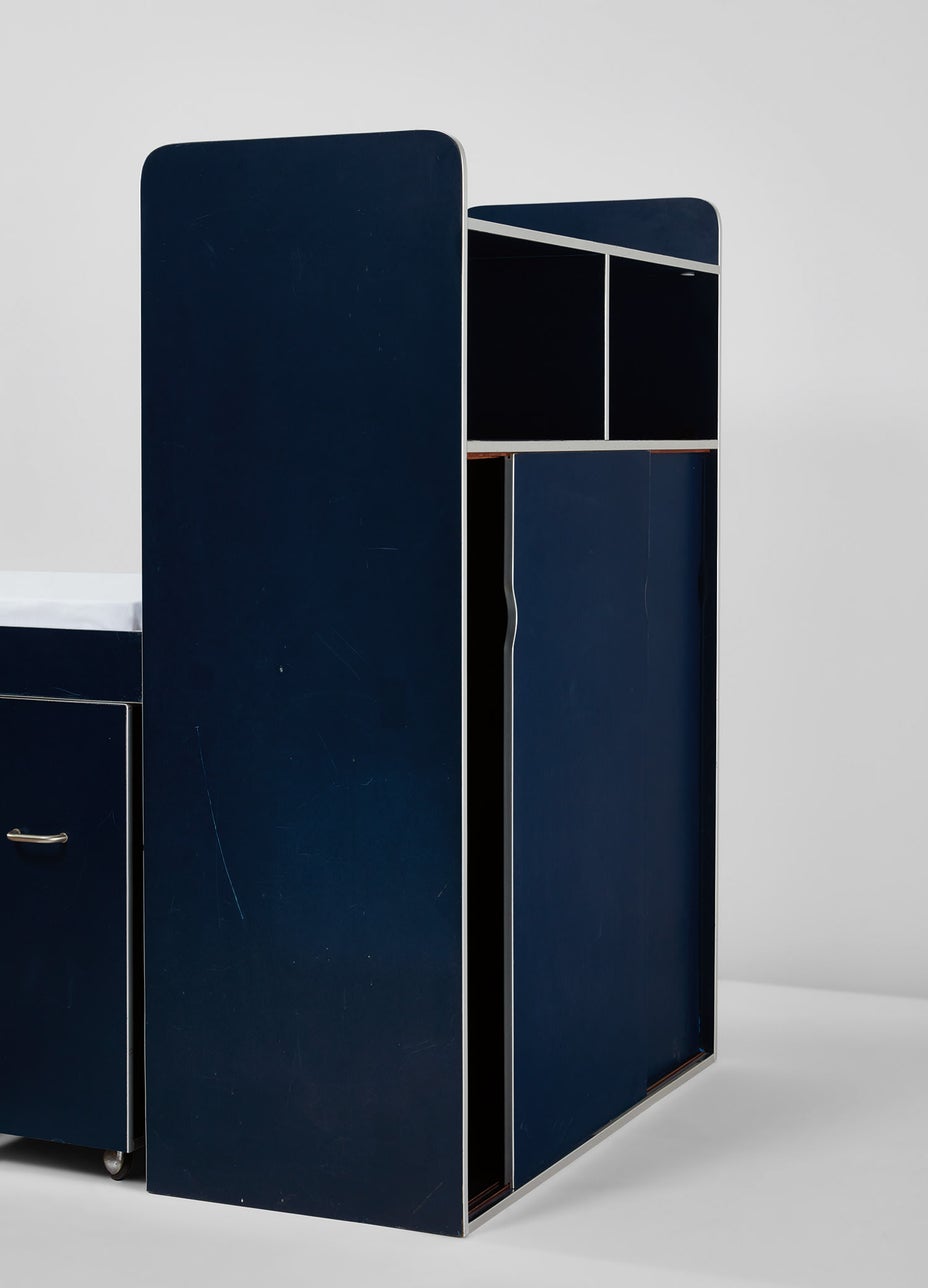
Manufactured by La Linea, Como, Italy. Comprising a closet, bed, chest of drawers, shelf, desk, vanity, and chair.
完整圖錄內容
In the exhibition catalogue for the Museum of Modern Art’s seminal show Italy: The New Domestic Landscape (1972), designer Joe Colombo described his contribution to the exhibition, what he called a Total Furnishing Unit, saying, “The space within this unit…should be in a continual state of transformation, so that cubic space smaller than the conventional norm can nevertheless be exploited to the maximum, with a maximum economy in its interior arrangement.” Simply put, he believed that interior spaces should be designed with efficiency, variability, and modularity in mind. Such characteristics are evident in the present lot and were central preoccupations throughout Colombo's short but energetic career.
Though trained in painting and architecture, Joe Colombo pivoted his focus towards design and, specifically, the domestic interior in 1962. Throughout the 1960s and until his untimely death in 1971 he created spaces that pushed the boundaries of contemporary design and that, in retrospect, capture the zeitgeist of his era. His embrace of mass production and his use of new industrial techniques and materials such as plastics, for example, were radical but today seem singularly representative of the time. It was not just his use of emergent technologies that set Colombo apart; he rigorously applied a certain aesthetic and conceptual framework to his work that ultimately set Colombo apart as a singular talent of his generation.
The present model lot, which was exhibited at the 1968 Salone del Mobile in Milan, includes a bed, wardrobe, bedside table, desk, bookcase, chest of drawers, shelves, and armchair (that also functions as a ladder when inverted). The piece was marketed as a space for nearly every quotidian activity: sleeping, studying, getting dressed, and relaxing. All of the component pieces could be separated from the overall “Box,” allowing the user to create myriad arrangements within his or her space. As the name suggests, the pieces were designed to be a synthesis of everything that a person needs to live.
Colombo saw the domestic space as a microcosm of the larger built environment. The present lot is an example of this philosophy, as an advertisement in Domus described the system as an “architecture within architecture.” In this way, the designer created an efficient space that encouraged organization while allowing a sense of play and exploration through its various arrangements. Living System Box 1 demonstrates Colombo's forward-thinking values as an architect: concerned not only with form and aesthetic but with re-imagining the way we interact with our environment.
Though trained in painting and architecture, Joe Colombo pivoted his focus towards design and, specifically, the domestic interior in 1962. Throughout the 1960s and until his untimely death in 1971 he created spaces that pushed the boundaries of contemporary design and that, in retrospect, capture the zeitgeist of his era. His embrace of mass production and his use of new industrial techniques and materials such as plastics, for example, were radical but today seem singularly representative of the time. It was not just his use of emergent technologies that set Colombo apart; he rigorously applied a certain aesthetic and conceptual framework to his work that ultimately set Colombo apart as a singular talent of his generation.
The present model lot, which was exhibited at the 1968 Salone del Mobile in Milan, includes a bed, wardrobe, bedside table, desk, bookcase, chest of drawers, shelves, and armchair (that also functions as a ladder when inverted). The piece was marketed as a space for nearly every quotidian activity: sleeping, studying, getting dressed, and relaxing. All of the component pieces could be separated from the overall “Box,” allowing the user to create myriad arrangements within his or her space. As the name suggests, the pieces were designed to be a synthesis of everything that a person needs to live.
Colombo saw the domestic space as a microcosm of the larger built environment. The present lot is an example of this philosophy, as an advertisement in Domus described the system as an “architecture within architecture.” In this way, the designer created an efficient space that encouraged organization while allowing a sense of play and exploration through its various arrangements. Living System Box 1 demonstrates Colombo's forward-thinking values as an architect: concerned not only with form and aesthetic but with re-imagining the way we interact with our environment.