美國西岸私人收藏
249
Herbert Bayer
《生態變化》
估價
$8,000–12,000
成交價
$8,820
1936年作
銀鹽照片(疑似1950年代印)
10 1/4 x 13 1/2 英吋 (26 x 34.3 公分)
款識:簽名、標題、日期標題、fotoplastik(邊緣)
鈴印:信用(邊緣)
鈴印:信用(邊緣)
完整圖錄內容
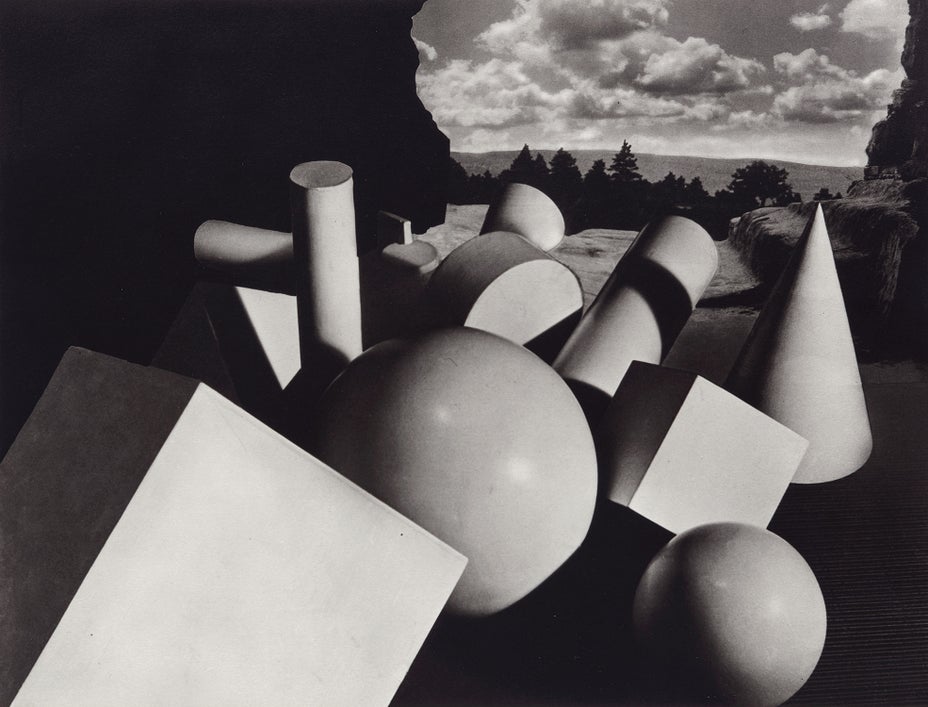
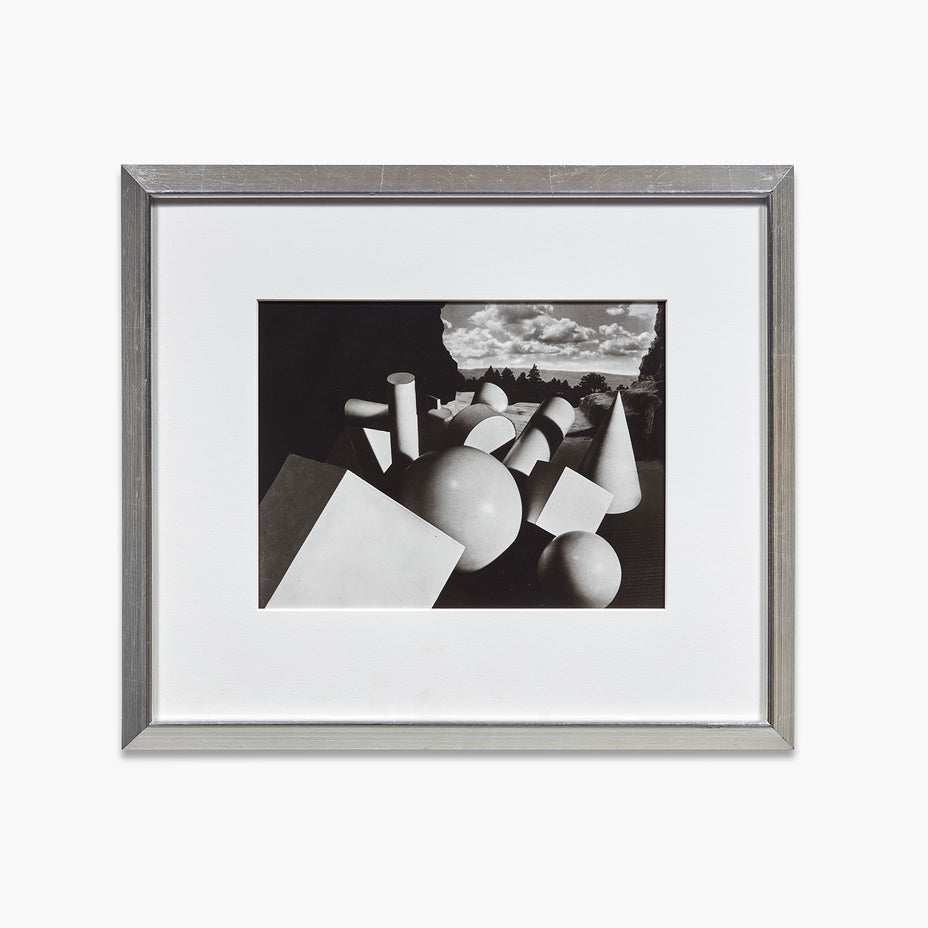
Metamorphosis is arguably the most famous image from the series of photomontages Herbert Bayer made in the late 1920s and 1930s that he called fotoplastiken (literally, “photo sculptures”). The print offered here predates most extant examples of the image, the majority of which were printed in the late 1960s. Writing in 1980 to gallerist Marcuse Pfeiffer, who owned the print at the time, Bayer states: “The print which you have was made from the original negative . . . I do not know the exact date your print was made, although probably in the ‘50’s.”
Bayer’s technique for making Metamorphosis was a meticulous synthesis of graphic art and photography. Each of the shapes in the image were photographed in Bayer’s studio with careful attention paid to lighting to create the desired modulation of highlights and shadows. Bayer placed the resulting images onto a photograph of a landscape, smoothing edges and enhancing details with hand-applied gouache. He then photographed the collage so that it could be reproduced as a finished photographic print. Through Bayer’s imaginative and adept handling of technique a static grouping of geometric shapes seems poised to emerge from a cave into a wooded landscape, a scene that hovers between the fictitious and the credible.
The Austrian-born Bayer became interested in art as a boy. By the time he attended the Bauhaus in Weimar in 1921, he had already worked as a professional commercial artist and graphic designer in Linz and Darmstadt, Germany. At the Bauhaus, he studied mural painting under Wassily Kandinsky. Between 1925 and 1928, he was an instructor at the Bauhaus, teaching typography and advertising design. In the late 1920s and 1930s, Bayer worked in Berlin, and it is during this period that he created his fotoplastiken.
Bayer’s technique for making Metamorphosis was a meticulous synthesis of graphic art and photography. Each of the shapes in the image were photographed in Bayer’s studio with careful attention paid to lighting to create the desired modulation of highlights and shadows. Bayer placed the resulting images onto a photograph of a landscape, smoothing edges and enhancing details with hand-applied gouache. He then photographed the collage so that it could be reproduced as a finished photographic print. Through Bayer’s imaginative and adept handling of technique a static grouping of geometric shapes seems poised to emerge from a cave into a wooded landscape, a scene that hovers between the fictitious and the credible.
The Austrian-born Bayer became interested in art as a boy. By the time he attended the Bauhaus in Weimar in 1921, he had already worked as a professional commercial artist and graphic designer in Linz and Darmstadt, Germany. At the Bauhaus, he studied mural painting under Wassily Kandinsky. Between 1925 and 1928, he was an instructor at the Bauhaus, teaching typography and advertising design. In the late 1920s and 1930s, Bayer worked in Berlin, and it is during this period that he created his fotoplastiken.