42
KAWS
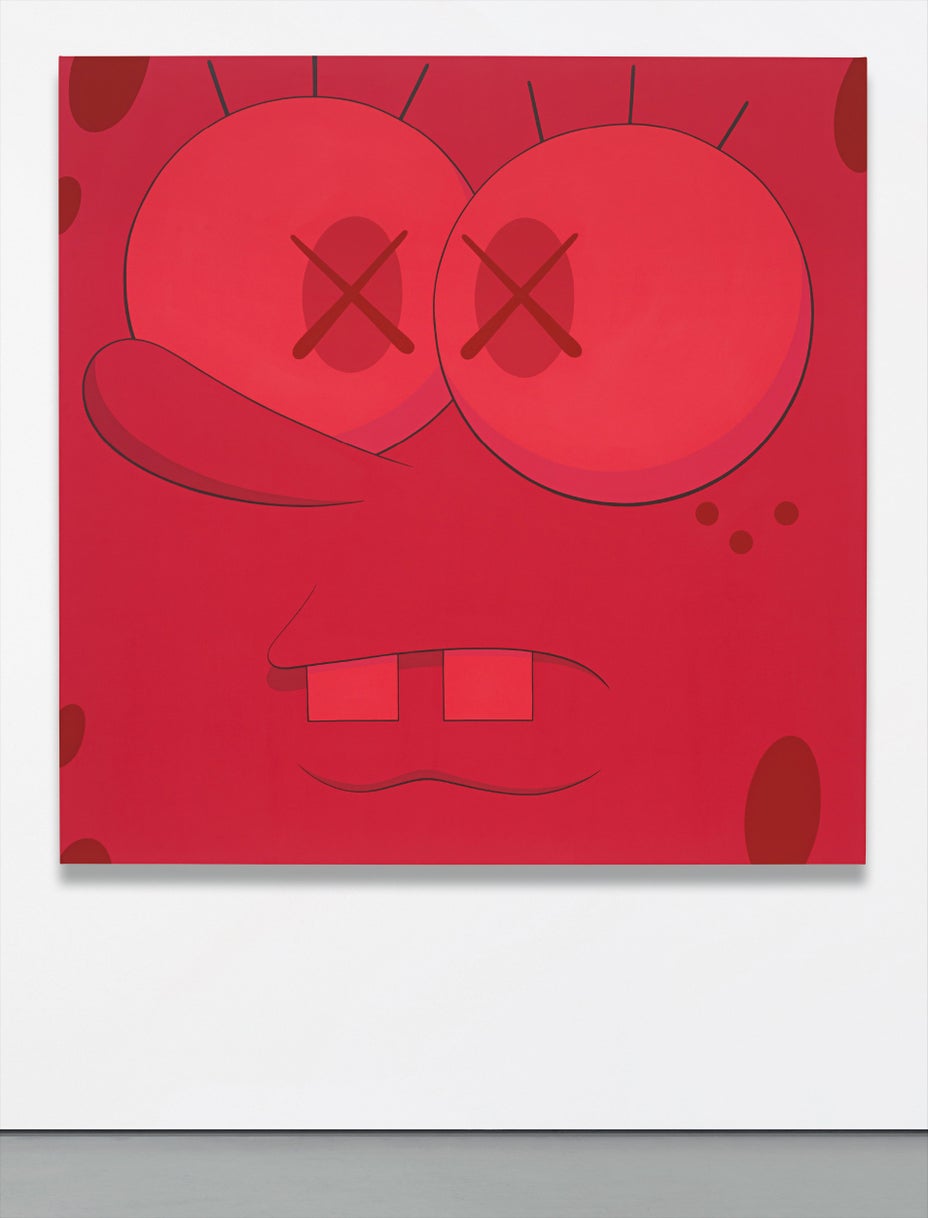
《無題》
完整圖錄內容
KAWS在上世紀90年代曼哈頓下城風行的文化下成長,他帶著卡通風格的作品,與他早期生涯有極大的關聯,他當時就常常將自己特有的符號天衣無縫地畫在公眾場所的廣告上。他的手法純熟,以至於往往讓人無法辨識他所畫上去的是否是廣告原作的一部分。他這樣力求完美的精神,至今不滅。對於傳統眼光來界定高級藝術和低級藝術的區分,KAWS曾這樣回應:「對我來說,兩者之間的創造過程是相同的,我發現這很有趣,當我用了銅材質來作件大作品,就會被稱作是雕塑,但我若用了塑膠來作件小作品,就會被稱作玩具。」(引自於KAWS在卡羅‧麥康米克所著《從街頭到電視到純藝術畫廊,KAWS無所不在》Paper雜誌,2013年11月4日刊載)。儘管KAWS的作品帶著明亮的色彩、商業取向的態度,以及像是普普藝術前輩克雷斯‧歐登堡、湯姆‧衛索曼或當代的村上隆,他仍在承襲普普藝術的同時,以其獨特重新去詮釋解構 當代文化符號的風格美學,席捲全球的矚目。
KAWS
American | 1974To understand the work of KAWS is to understand his roots in the skateboard and graffiti crews of New York City. Brian Donnelly chose KAWS as his moniker to tag city streets beginning in the 1990s, and quickly became a celebrated standout in the scene. Having swapped spray paint for explorations in fine art spanning sculpture, painting and collage, KAWS has maintained a fascination with classic cartoons, including Garfield, SpongeBob SquarePants and The Simpsons, and reconfigured familiar subjects into a world of fantasy.
Perhaps he is most known for his larger-than-life fiberglass sculptures that supplant the body of Mickey Mouse onto KAWS' own imagined creatures, often with 'x'-ed out eyes or ultra-animated features. However, KAWS also works frequently in neon and vivid paint, adding animation and depth to contemporary paintings filled with approachable imagination. There is mass appeal to KAWS, who exhibits globally and most frequently in Asia, Europe and the United States.