101Σ︎
Omega
“Tourbillon 30 I”
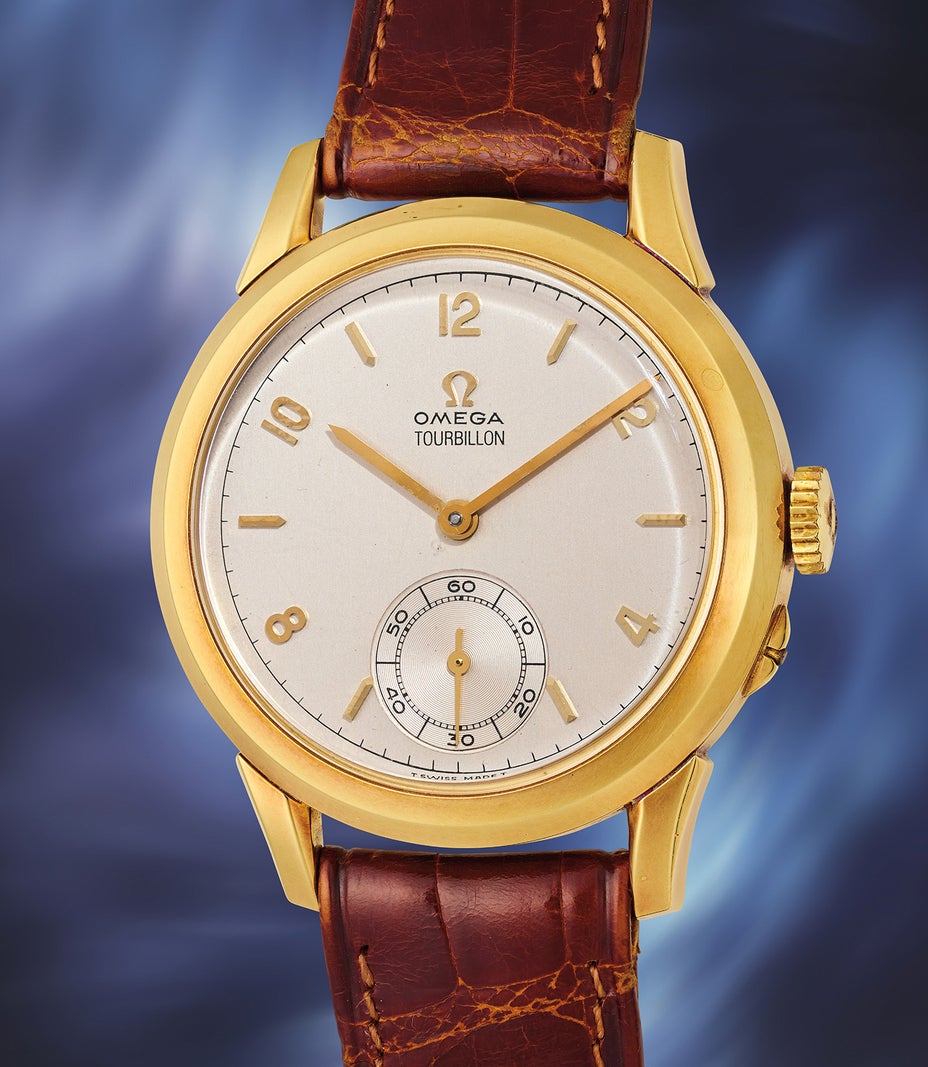
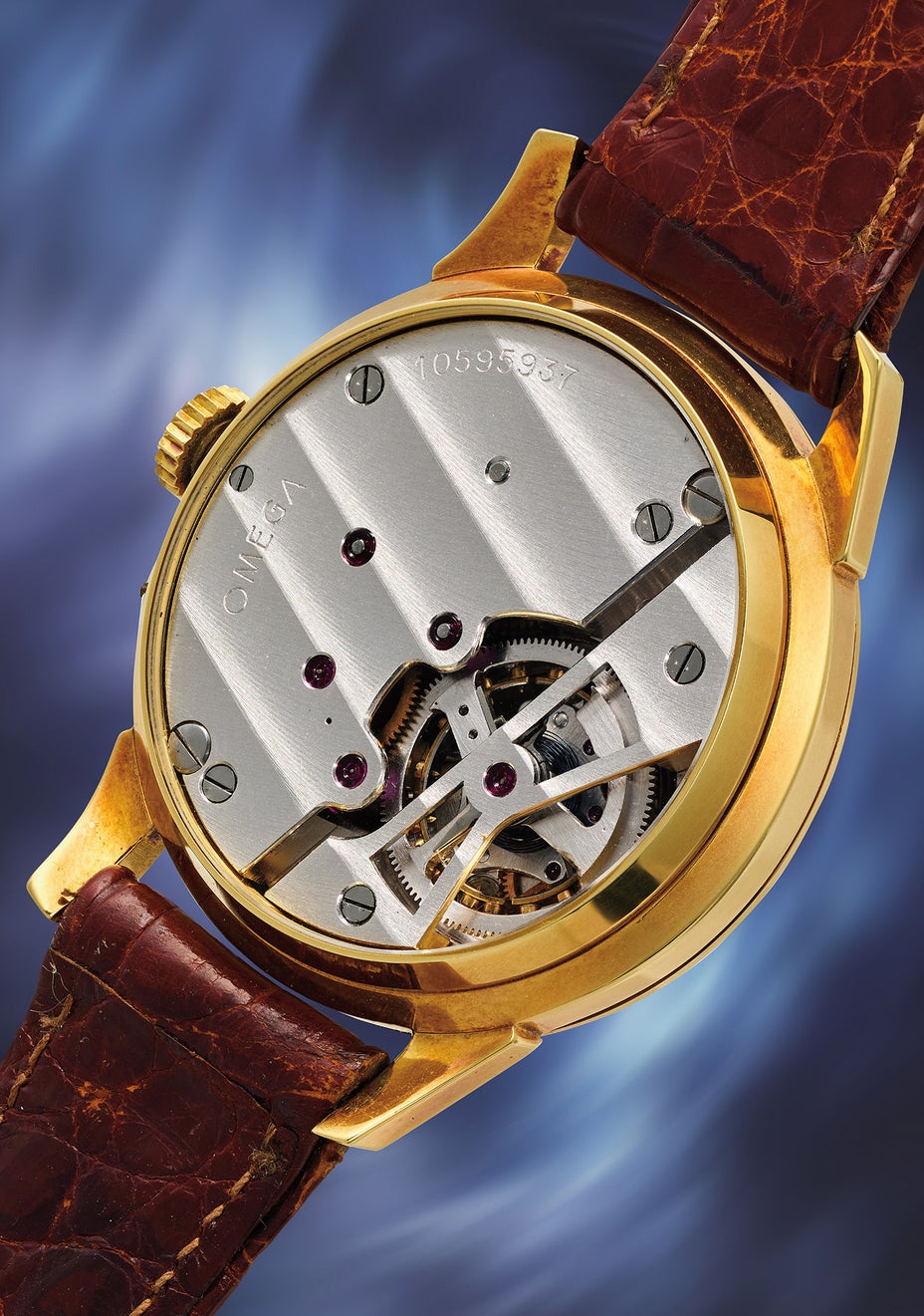
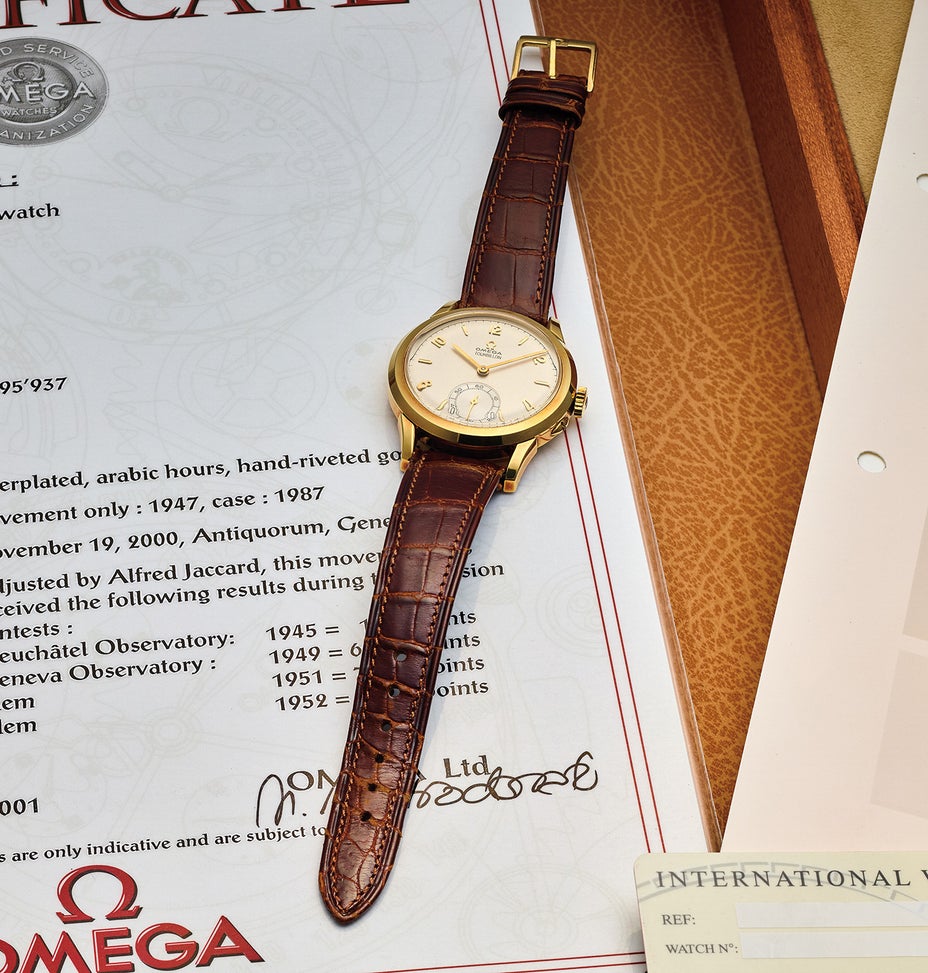
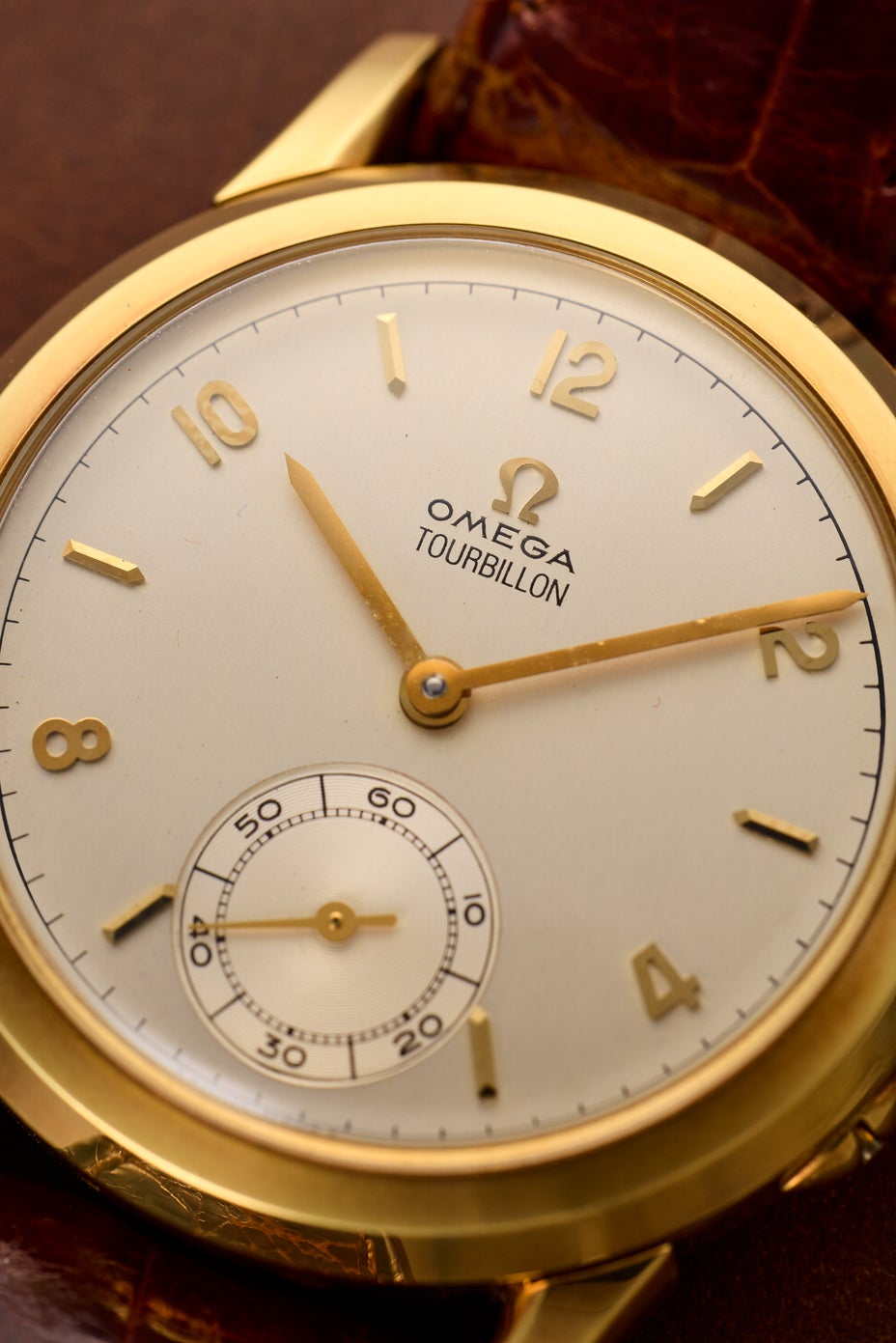
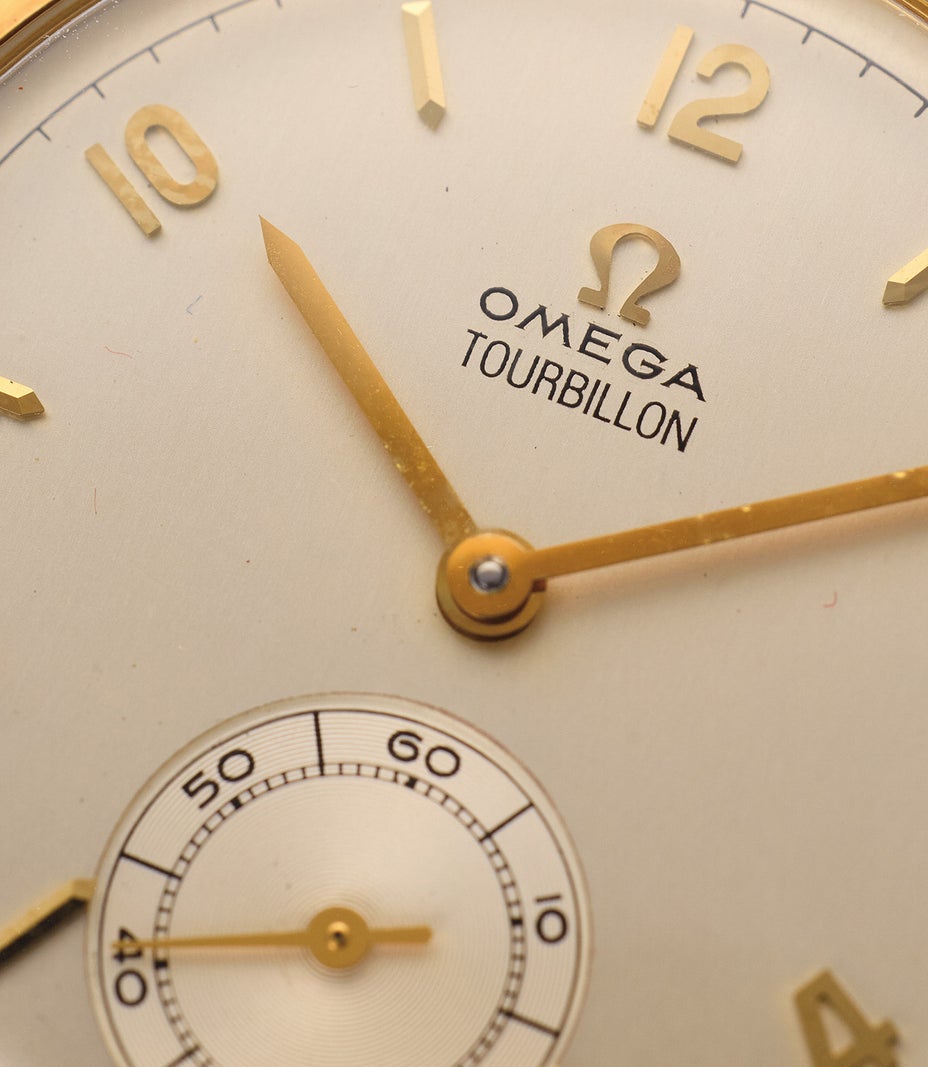
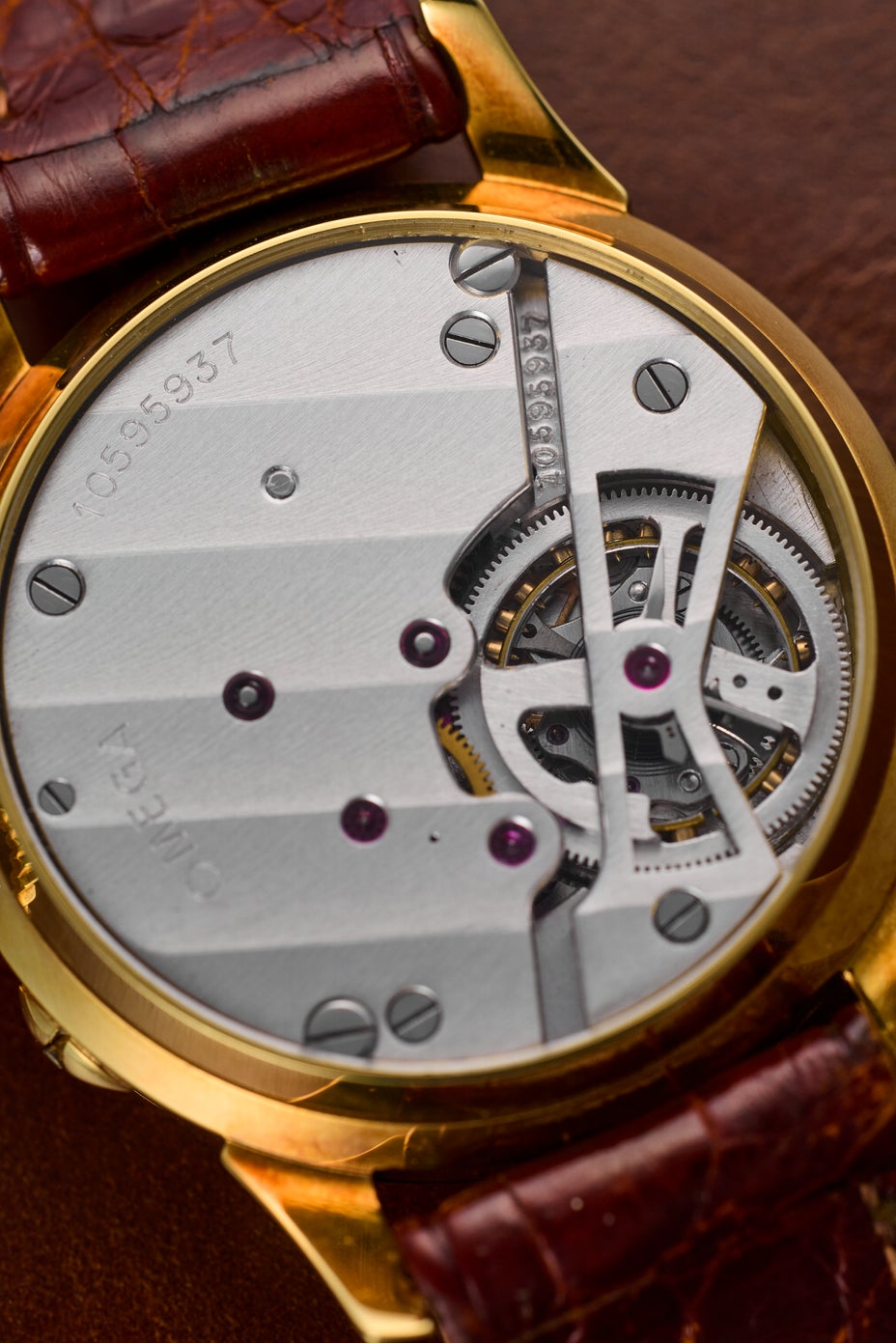
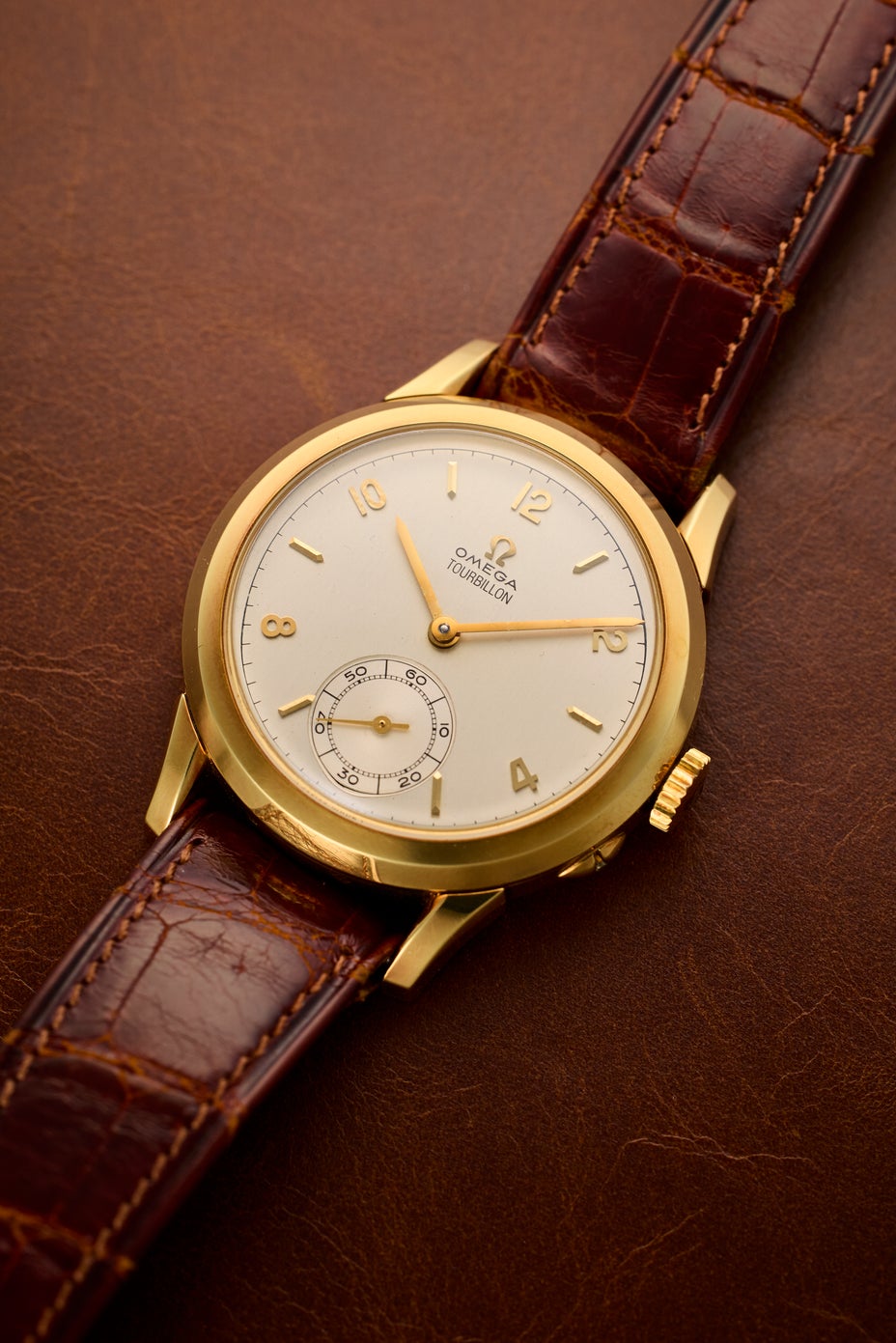
歐米茄,極度重要、罕見,黃金陀飛輪腕錶,備1947年機芯。附證書、錶盒—已知現存七枚1987年嵌入天文台陀飛輪的腕錶之一
完整圖錄內容
In these trials, manufacturers would submit one or several specially prepared movements for competition. Interestingly, these watches were never meant for sale, the purpose of these trials being not only competition but also a testing ground for research on chronometry and of course a marketing and communication tool for the manufacturer in selling their “regular production” watches.
Prior to being allowed to compete, entrants were tested, and those meeting the rigorous standards were eligible for actual competition. The watches were tested in 5 positions and 3 temperatures (4°C, 20°C and 30°C) for a period of 40 to 44 days. Each movement was graded on a performance scale and awarded a certificate with the final score and rating.
It is important to note that these movements did not have a particularly fine aesthetic finish but were technically the best of the best: the surfaces of pinions and wheels were highly polished with exceptionally even tolerances, springs were pre-tested and hand chosen and the dimensions of shafts and bearings perfectly executed. They were hand built and hand-adjusted by brands’ best watchmakers – the equivalent of Formula One racecars in motorsport.
Out of twelve examples of the Calibre 30 I, only 7 examples participated in several trails between 1947, 1950 and in 1952.
The project was leaded by Mr. J-P Matthey Claudet, watchmaker at Omega, and the movements were entirely hand made. Mr. Marcel Vuilleumier, director of the Horological School in the Vallée de Joux, was the master watchmaker that designed the Tourbillon caliber.
The present Tourbillon 30 I with movement number 10’595’937 achieved scores of 696.7 (1949), 727.0 (1951), and 602.0 (1952) at the Geneva Observatory. At the Neuchatel Observatory in 1947, it achieved 12.6 points, adjusted by master regulateur Alfred Jaccard.
In 1987, it’s believed seven of these twelve movements were discovered by Omega, which refurbished, then cased in either 18K gold (3 known examples) or sterling silver (2 known examples) livery and offered to a select group of VIP collectors. Preserved in outstanding condition, with its incredible rarity of one of only three known cased in 18 karat yellow gold. It is an exceptional opportunity for the connoisseur.
Omega
Swiss | 1848Omega's rich history begins with its founder, Louis Brandt, who established the firm in 1848 in La Chaux de Fonds. In 1903, the company changed its name to Omega, becoming the only watch brand in history to have been named after one its own movements. A full-fledged manufacturer of highly accurate, affordable and reliable watches, its sterling reputation enabled them to be chosen as the first watch company to time the Olympic Games beginning in 1932. Its continued focus on precision and reliability ultimately led their Speedmaster chronograph wristwatch to be chosen by NASA in 1965 — the first watch worn on the moon.
Key models sought-after by collectors include their first, oversized water-resistant chronograph — the reference 2077, early Speedmaster models such as the CK 2915 and 2998, military-issued versions of the Seamaster and oversized chronometer models such as those fitted with their prestigious caliber 30T2Rg.