943
Patek Philippe
Tourbillon First Prize at 1924 Geneva Astronomical Observatory
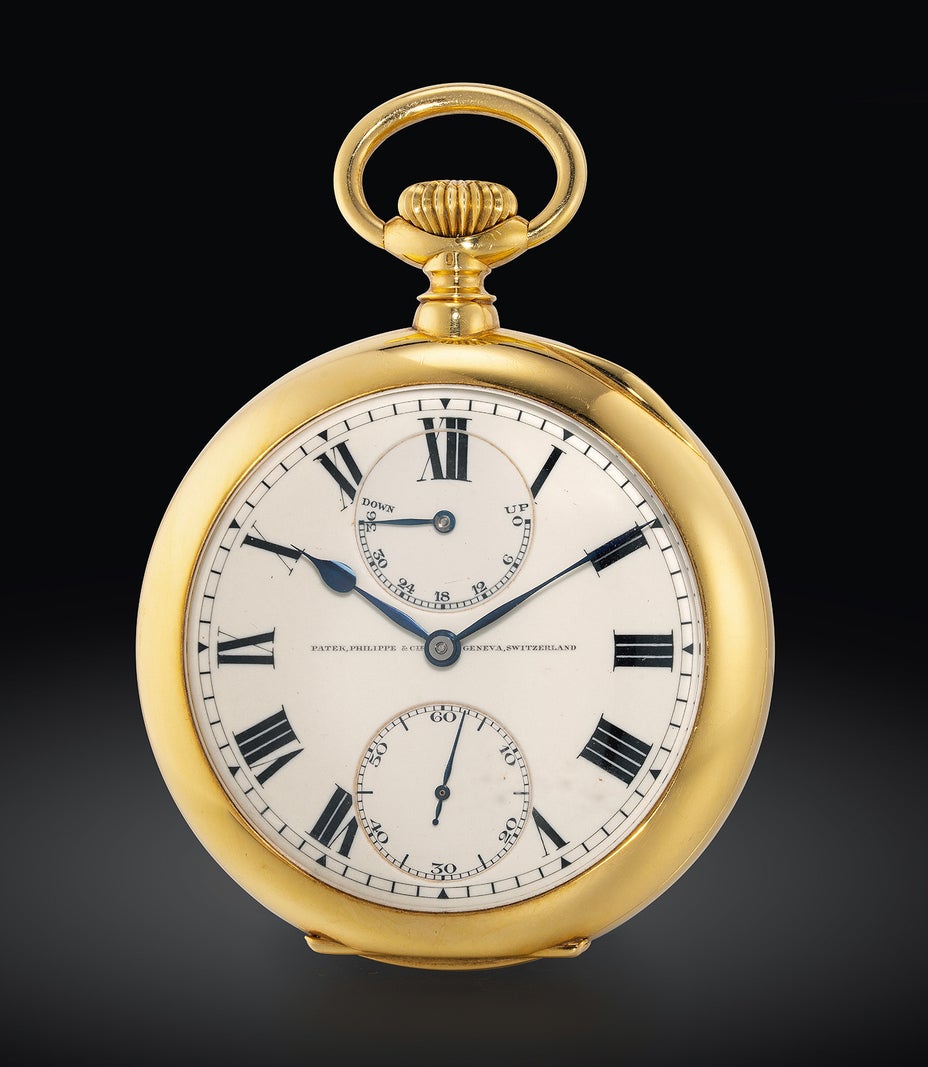
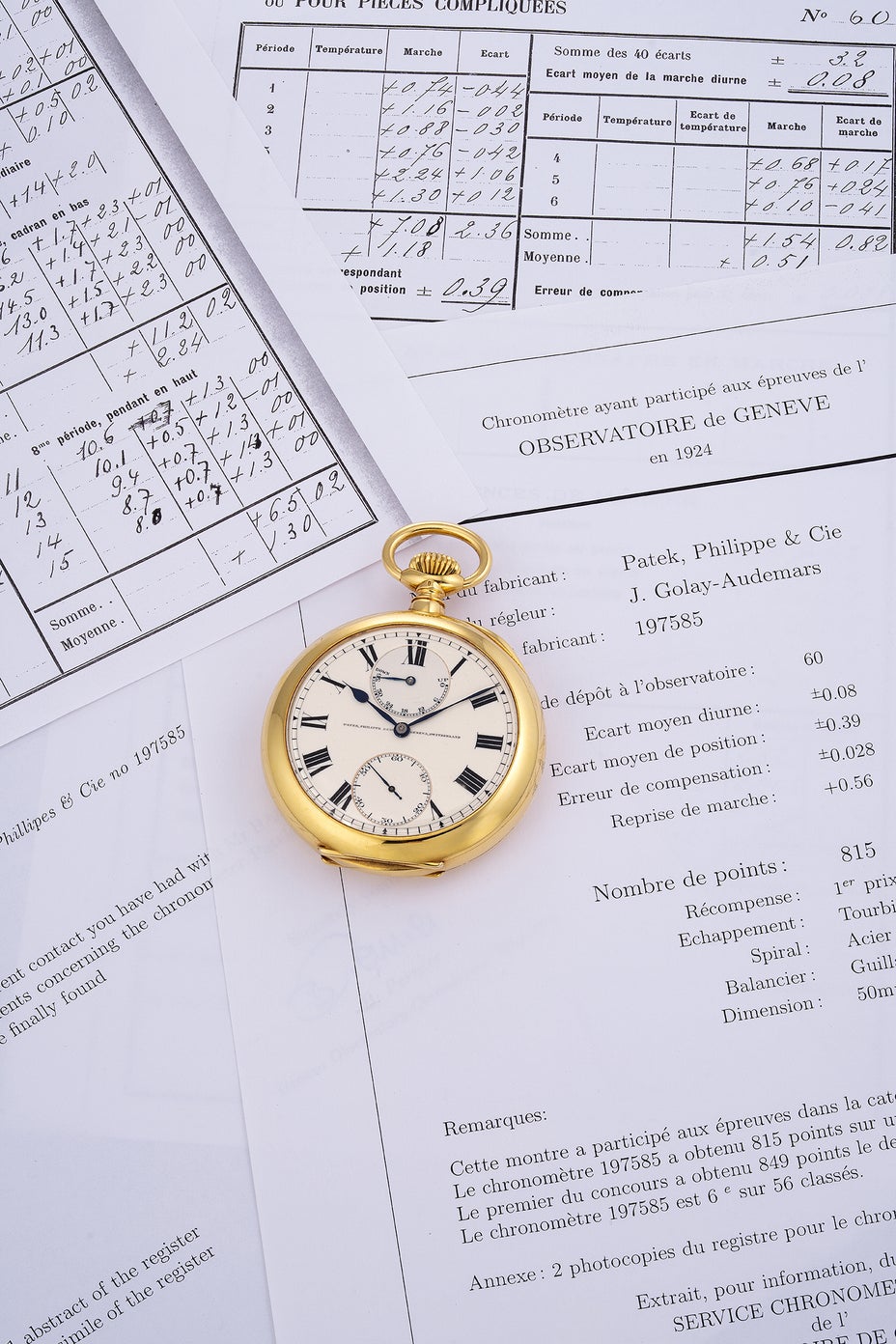
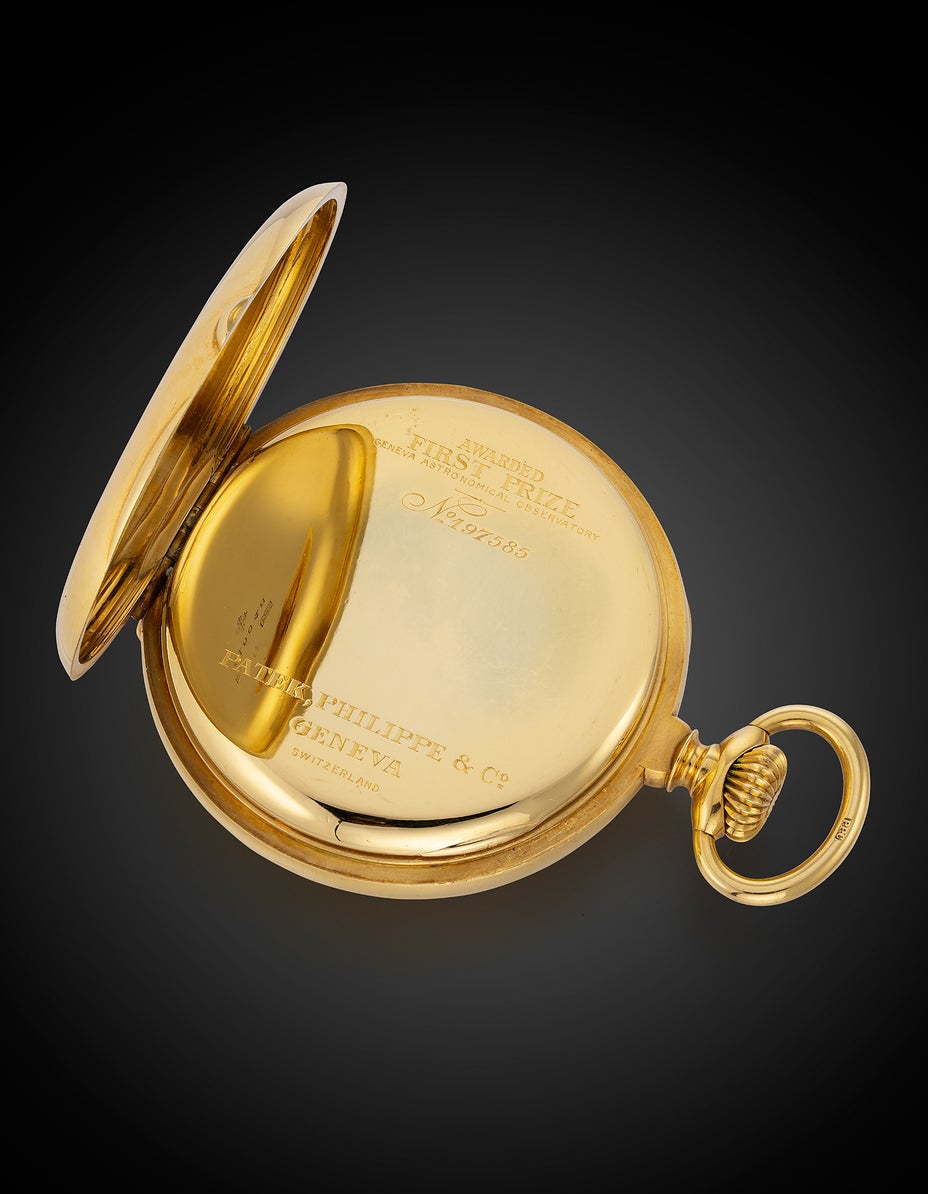
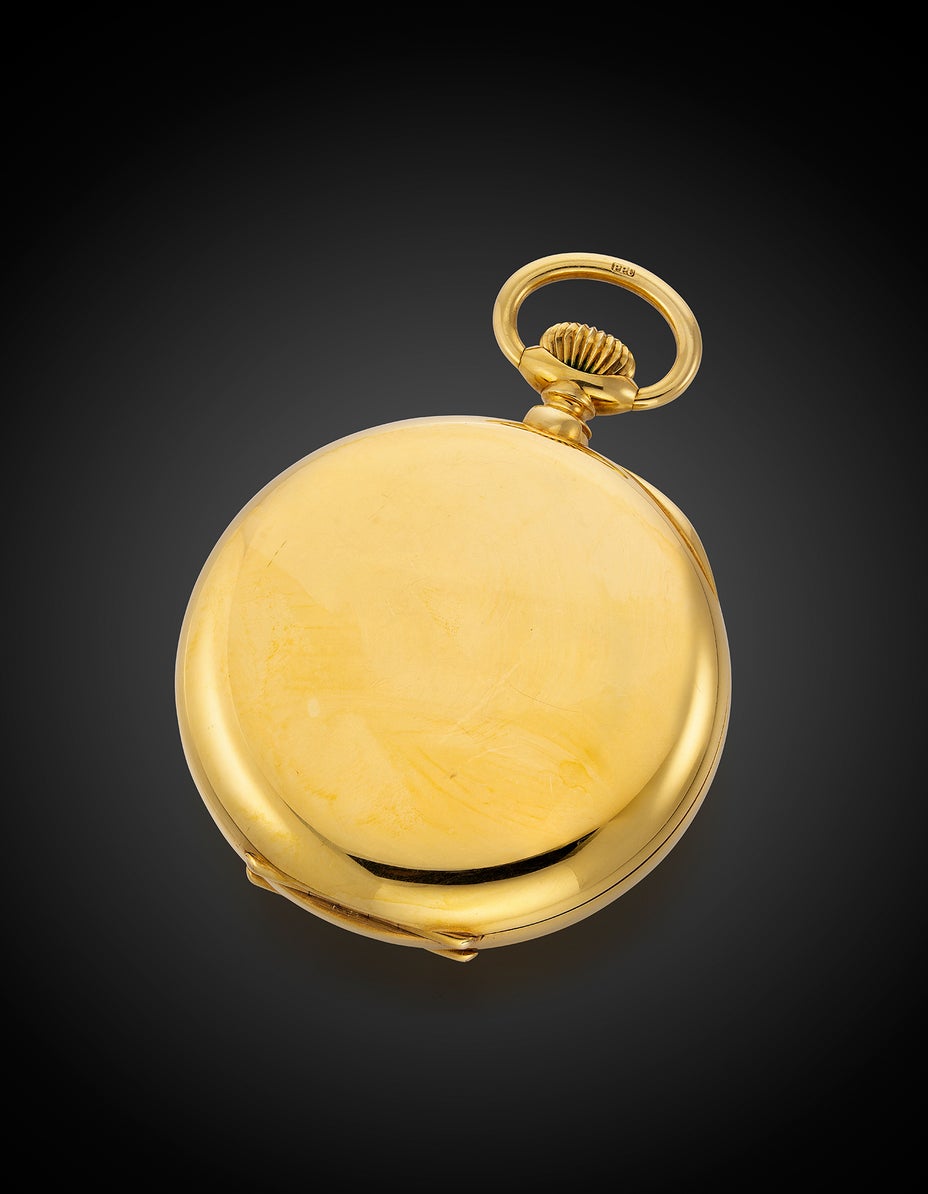
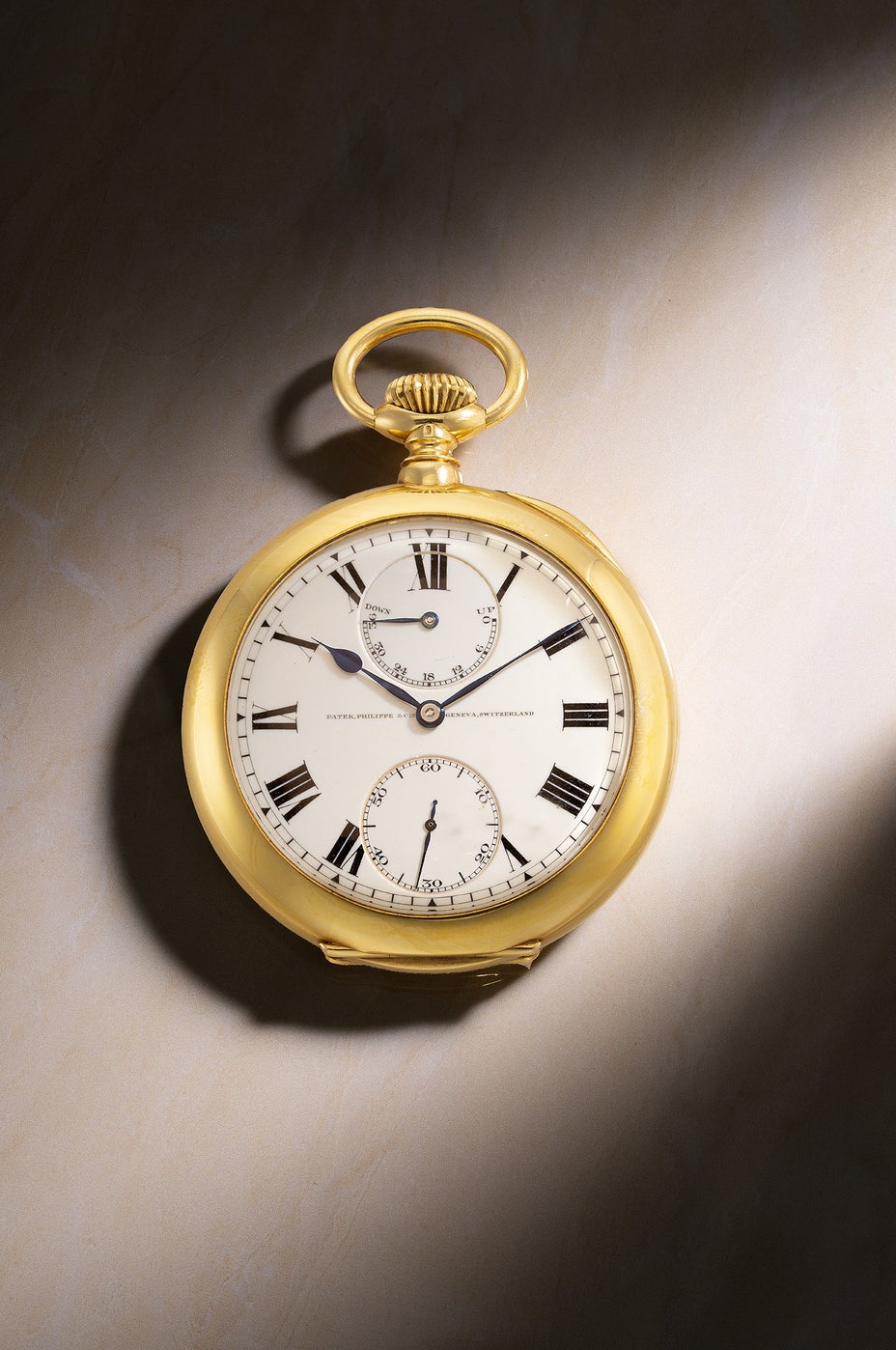
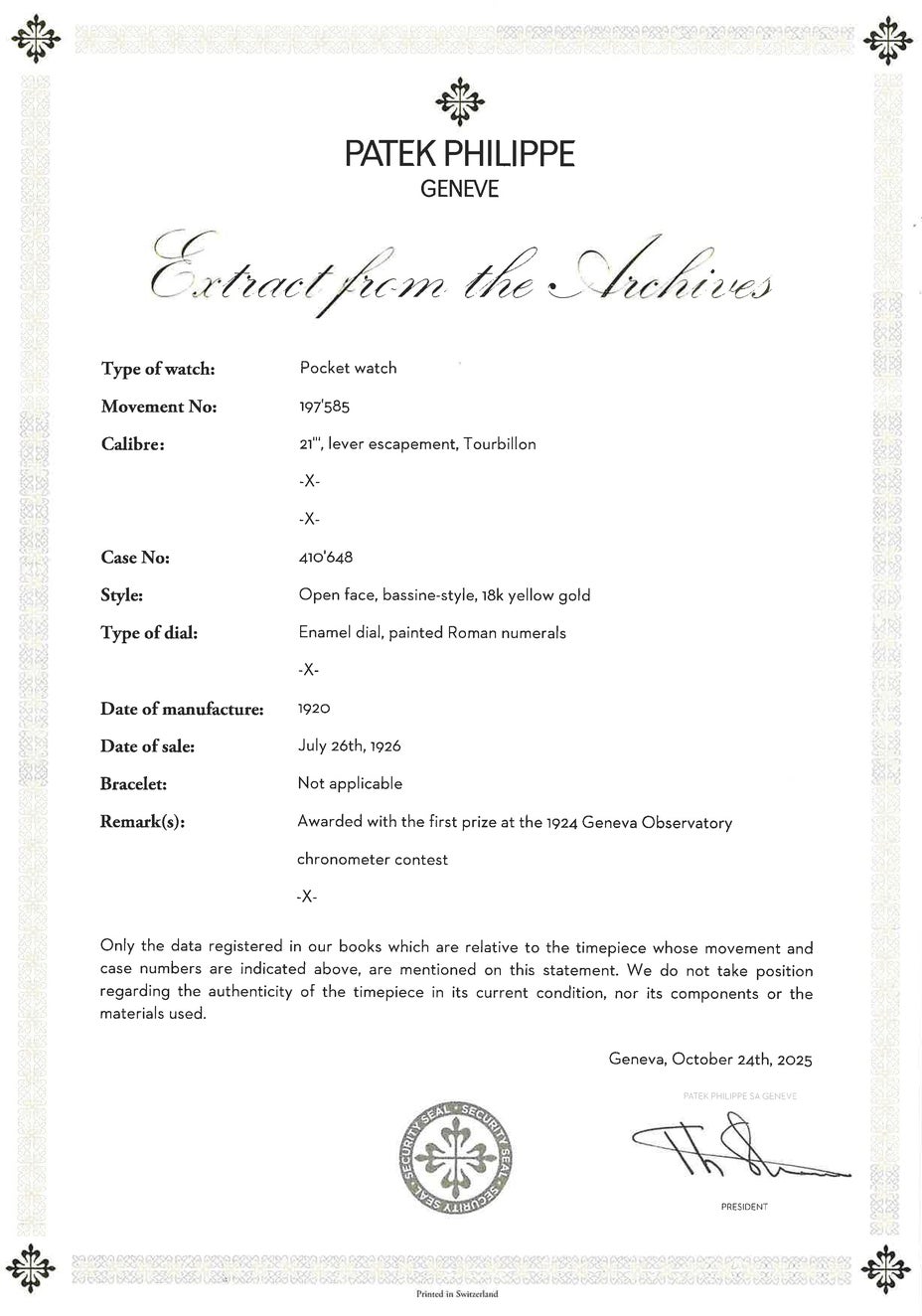
百達翡麗,極度重要,黃金天文台競賽陀飛輪懷錶,備「Extra」卓越級機芯、動力儲存顯示、琺瑯錶盤、製錶大師James C. Pellaton陀飛輪框架,1924年獲頒日內瓦天文台競賽頭獎,1920年製。附後補證書 、天文台競賽後補文件
完整圖錄內容
Mechanical timepieces, in particular chronometers, are highly accurate and the stringent observatory testing helps manufacturers maintain the highest possible standards. By the 19th century, observatories, such as the Swiss Observatories in Neuchâtel and Geneva, and the Kew Observatory in the UK, were holding “time contests” to scientifically judge these precision timepieces. Through the Bulletin de marche, rating certificates were awarded based on overall performance and it is within this milieu that brands such as Patek Philippe entered watches for competition. Today the Swiss Contrôle Officiel Suisse des Chronomètres, formed in 1973, tests movement for 15 days in five positions and three different temperatures and issues a certificate if the movement meets their exacting standards.
A chance to acquire the best of the best, timepieces awarded the First Prize deserves a special place in a seasoned collector’s possession. Patek Philippe began tourbillon production in the early 1860s with the first known, number 25’298, manufactured in 1864. It is believed that they have produced approximately 100 tourbillon regulators with majority crafted by Le Locle based tourbillons and chronometers master watchmaker, A. Pellaton-Favre (1832-1914). According to our research, himself alone built approximately 82 tourbillons.
Inheriting exceptional talent, his second generation, James C. Pellaton (1873-1954) also developed distinct reputation as one of the most accomplished watchmakers of the early twentieth century. He apprenticed under his father and dedicated his career to developing tourbillons. Together they produced 35 tourbillons for Patek Philippe.
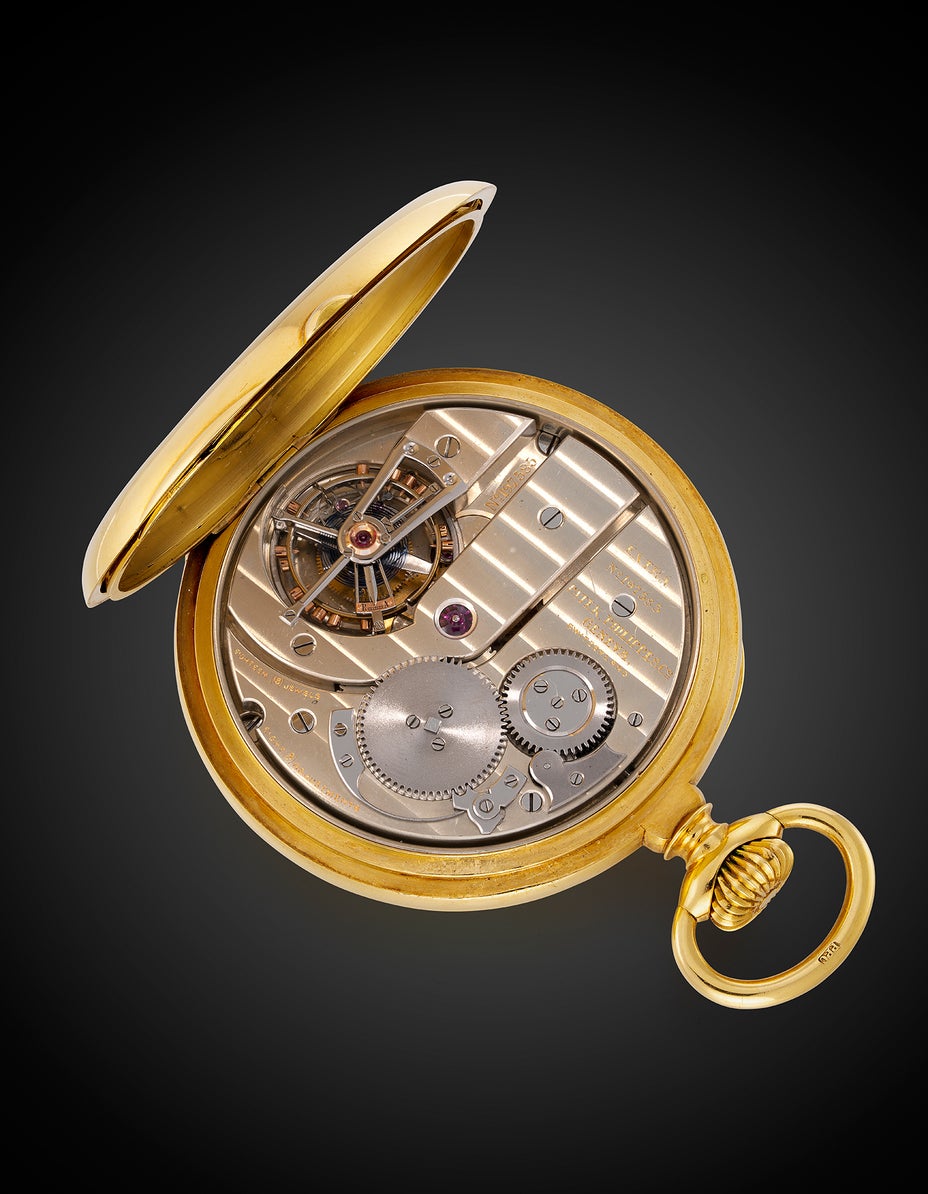
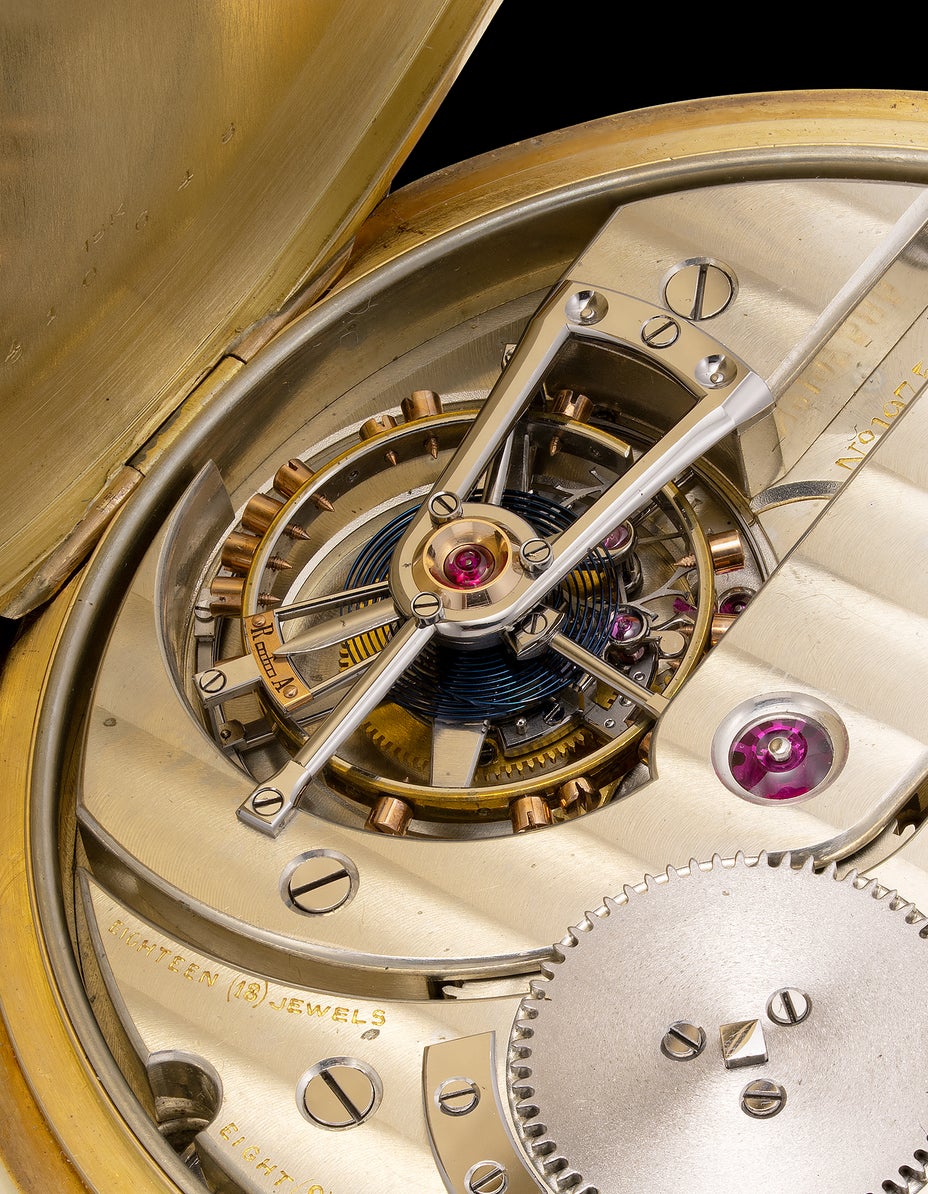
An influential watchmaker, Pellaton went on to become the director of the Le Locle watchmaking school and continued to his legacy by producing and mentoring student, earning the reputation as the foremost tourbillon maker of the time. His distinct tourbillon carriage design can be seen on the present lot.
A marvel crafted by James Pellaton, this highly rare Patek Philippe one-minute tourbillon pocket watch with up/down indicator movement numbered 197’585 won its distinction in 1924 with First Prize at the Geneva Astronomical Observatory competing in Category B with a total of 815 points. In order to win first class, the watch had to be of exceptional quality and while from the outside the pocket watch looks classic and sublime, the movement is a mechanical marvel with a one-minute tourbillon carriage with Guillaume balance and Breguet balance spring.
Very few Patek Philippe watches carry the double engraved “Extra” quality designation and it would be for such a “timing contest” that the manufacturer would use such movements. A second name associated with this extraordinary timepiece is J. Golay-Audemars, the celebrated master adjuster, who was responsible for preparing the watch for competition. In addition to being a prize winner, this pocket watch displays a beautiful double sunk amber-colored enamel dial similar to the one manufactured by Willis and also called "venetian tint" by the English collectors.
Notably, the up/down indicator used in a tourbillon pocket watch is only known in one other Patek Philippe, no. 174720, made for one of the firm's most famous patrons, James Ward Packard. In addition to the up/down function, Mr. Packard's watch included a two train minute repeating mechanism. Similar to the present watch, the carriage for the Packard watch was also constructed by James Pellaton. However, it is interesting to note that the Packard watch had a smaller movement measuring only 19 lignes whereas the present watch has a movement measuring 21 lignes. Making the present example one of the largest tourbillon watches produced by Patek Philippe with this complication.
Stowed away in a private collection for nearly 26 years, this prized example is extremely well-preserved. Their importance are highly regarded to their makers for its significance in horological contribution, and are typically inaccessible. Presenting a highly rare opportunity, the present rare bird is one of 100 exceptional watches by Patek Philippe in the era made available to the public.
Patek Philippe
Swiss | 1839Since its founding in 1839, this famous Geneva-based firm has been surprising its clientele with superbly crafted timepieces fitted with watchmaking's most prestigious complications. Traditional and conservative designs are found across Patek Philippe's watches made throughout their history — the utmost in understated elegance.
Well-known for the Graves Supercomplication — a highly complicated pocket watch that was the world’s most complicated watch for 50 years — this family-owned brand has earned a reputation of excellence around the world. Patek's complicated vintage watches hold the highest number of world records for results achieved at auction compared with any other brand. For collectors, key models include the reference 1518, the world's first serially produced perpetual calendar chronograph, and its successor, the reference 2499. Other famous models include perpetual calendars such as the ref. 1526, ref. 3448 and 3450, chronographs such as the reference 130, 530 and 1463, as well as reference 1436 and 1563 split seconds chronographs. Patek is also well-known for their classically styled, time-only "Calatrava" dress watches, and the "Nautilus," an iconic luxury sports watch first introduced in 1976 as the reference 3700 that is still in production today.