

原物主家族收藏
993
Patek Philippe
Ref. 2597/1
“The Australian Pink Travel Time”
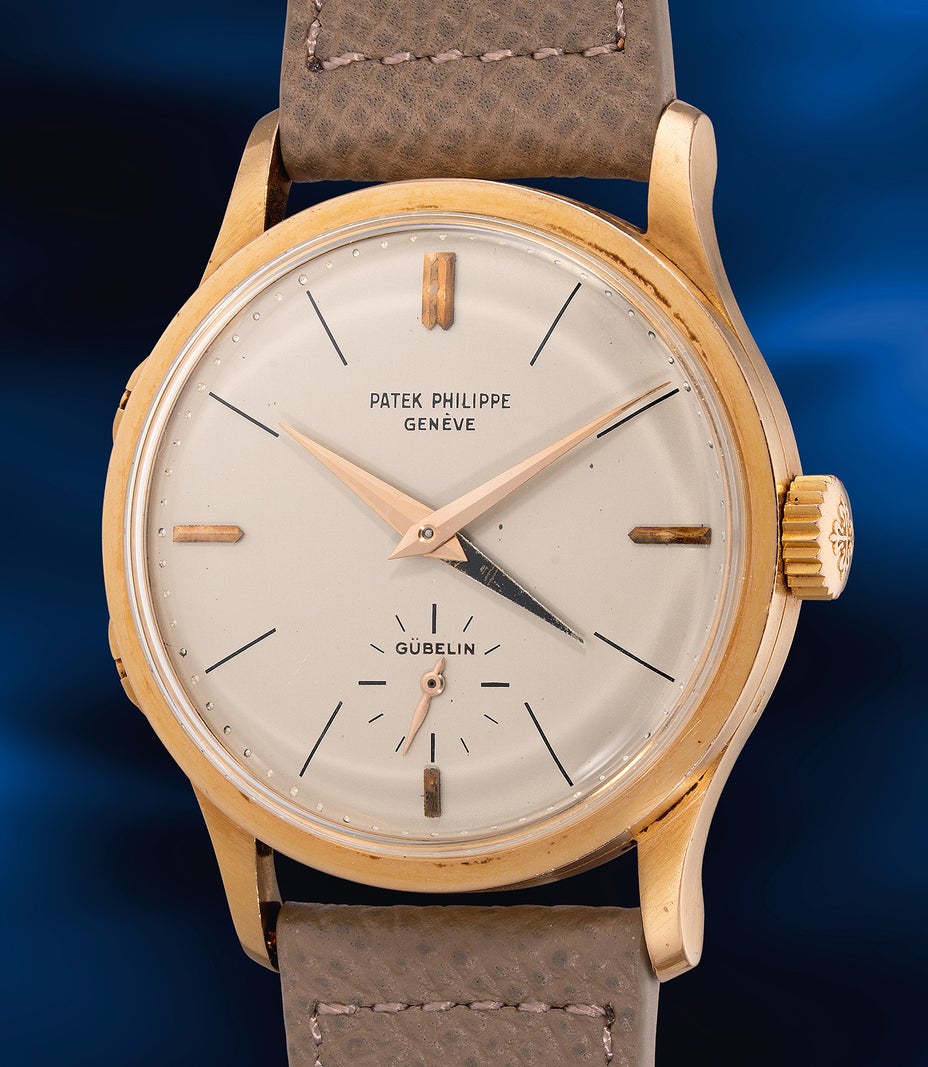
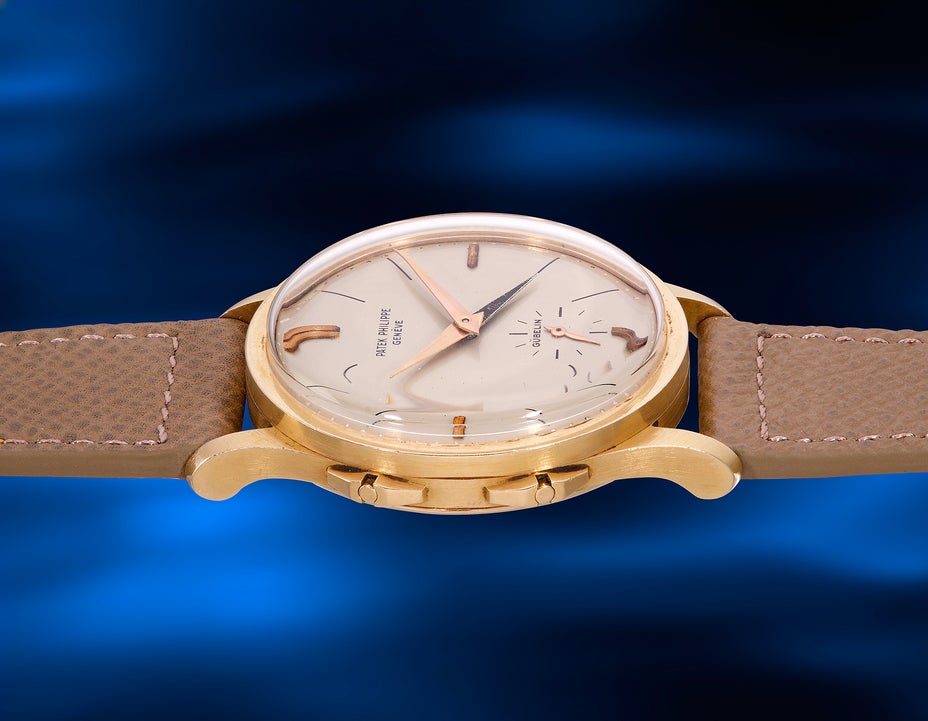
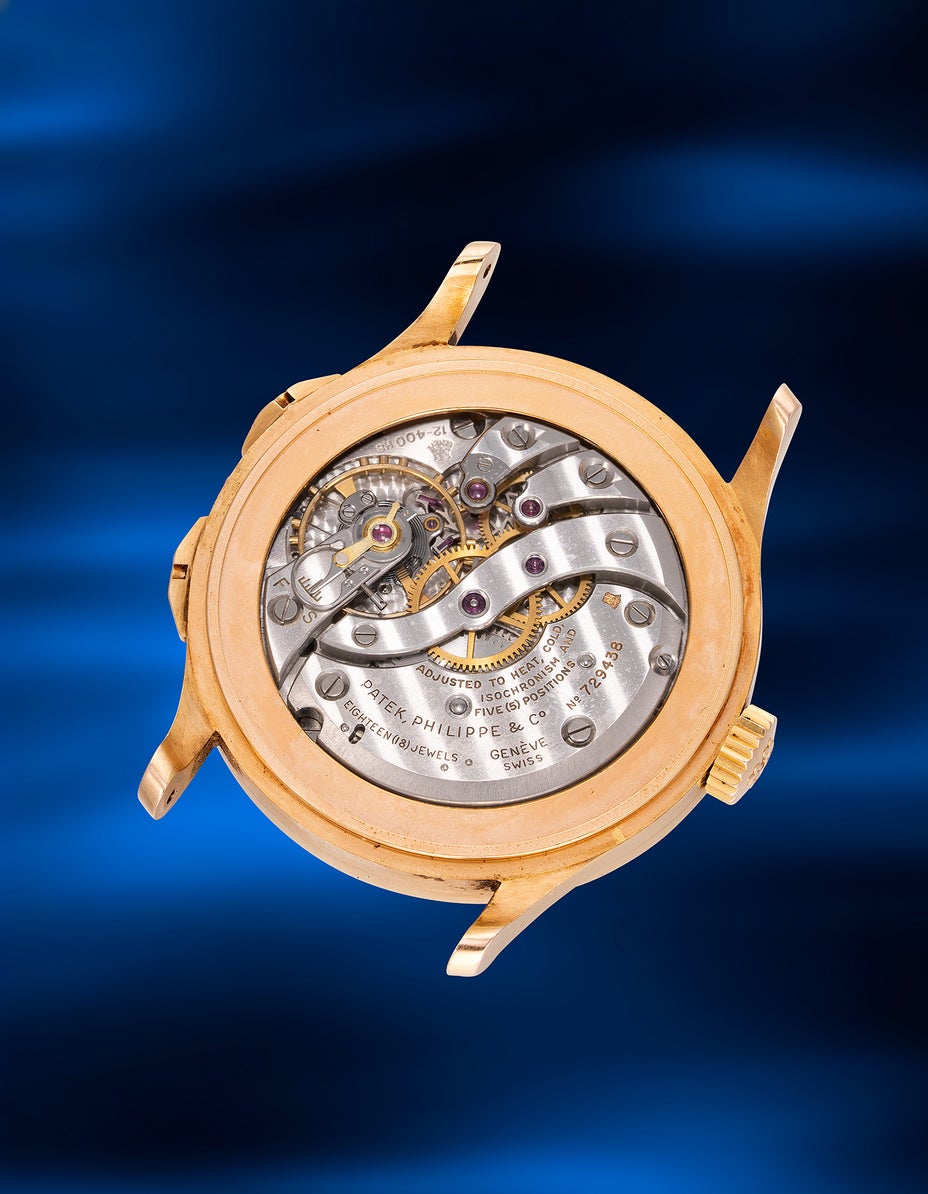
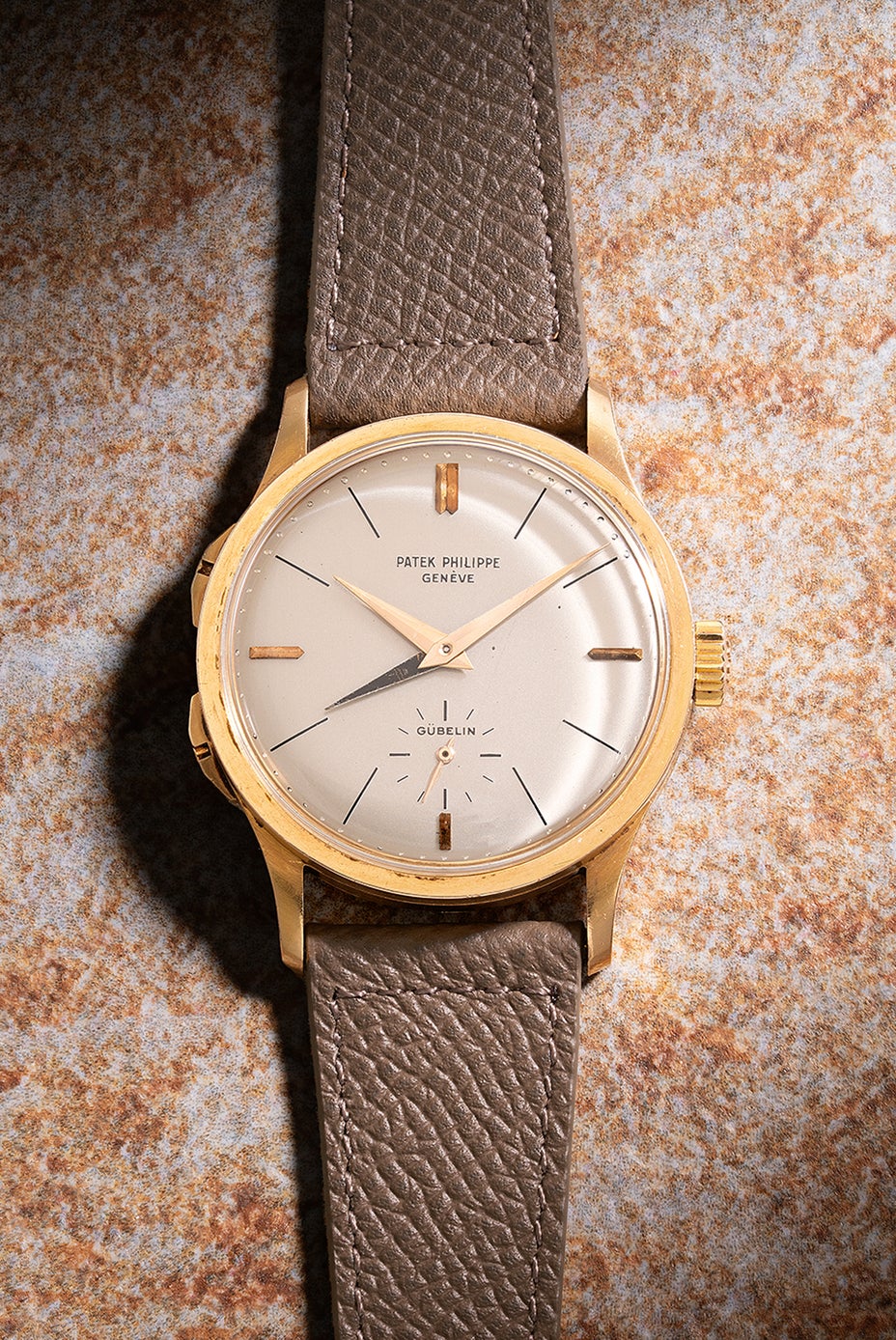
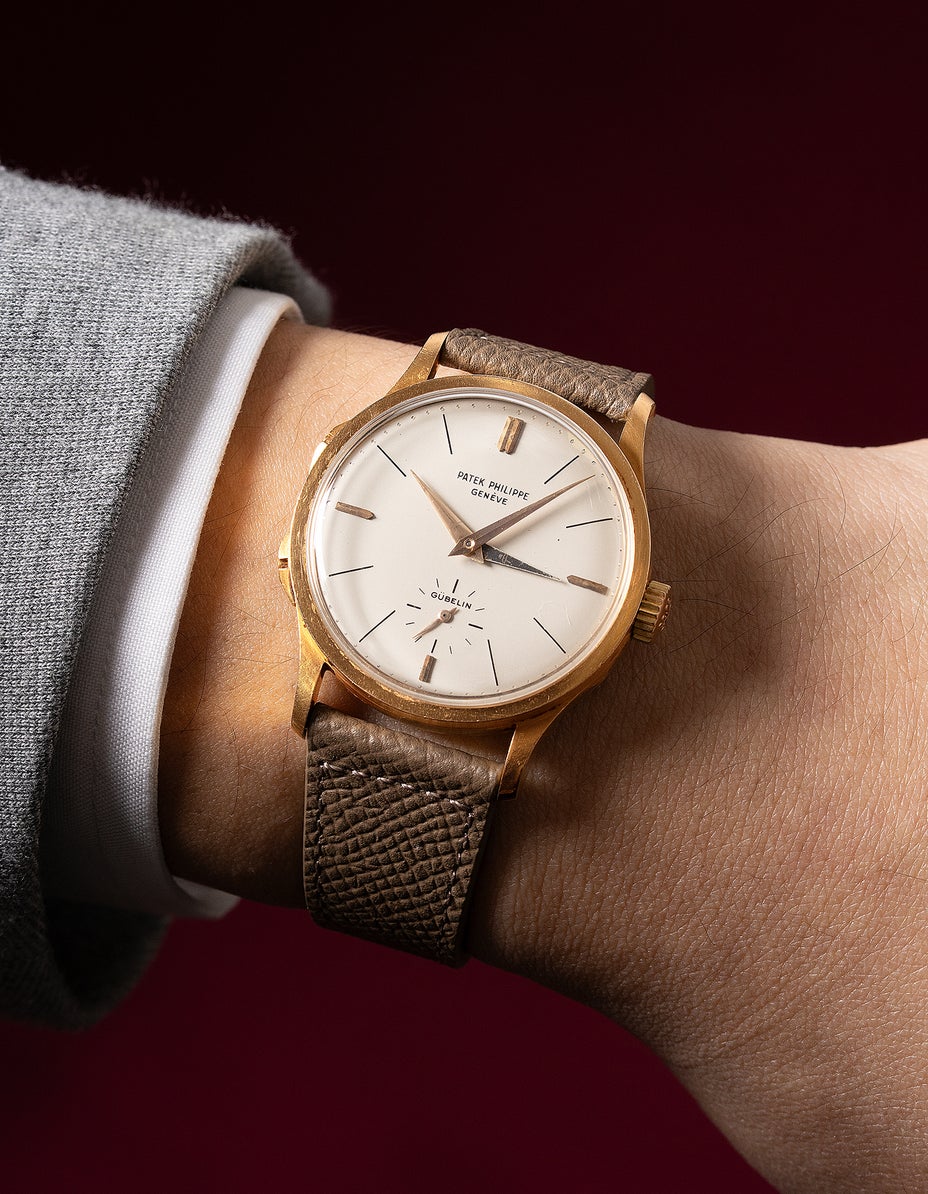
百達翡麗,「“The Australian Pink Travel Time”」型號2597/1,極度精美、重要,玫瑰金兩地時區腕錶,備可獨立調節第二時針,由Gübelin銷售,1961年製。附原裝證書、電報、後補證書、Gübelin後補證書
- 估價
- HK$2,000,000 - 4,000,000€222,000 - 445,000$256,000 - 513,000
HK$6,604,000
拍品詳情
- 製造商
- Patek Philippe
- 年份
- 1961
- 型號
- 2597/1
- 機芯編號
- 729'438
- 錶殼號碼
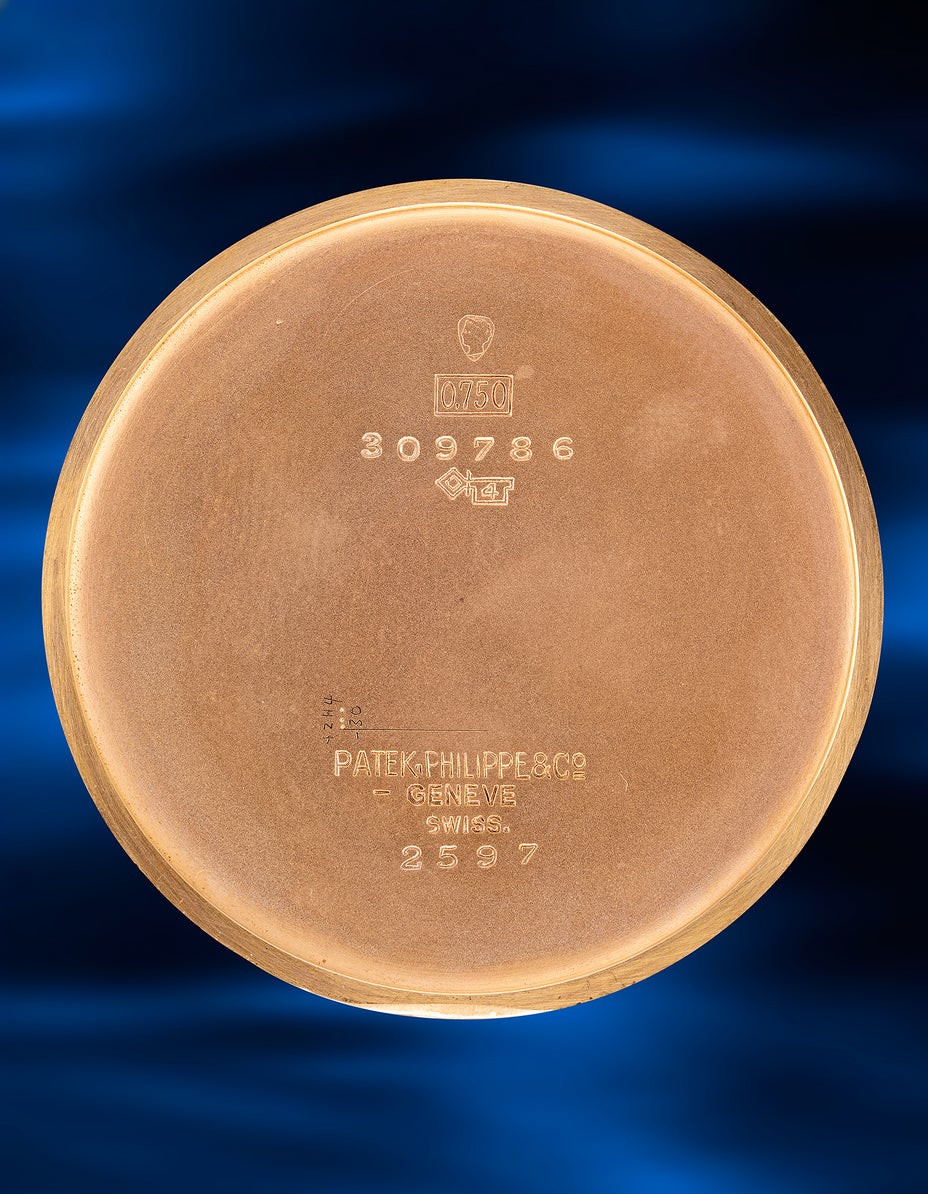
- 309'786
- 型號名稱
- “The Australian Pink Travel Time”
- 材料
- 18K pink gold
- 機芯
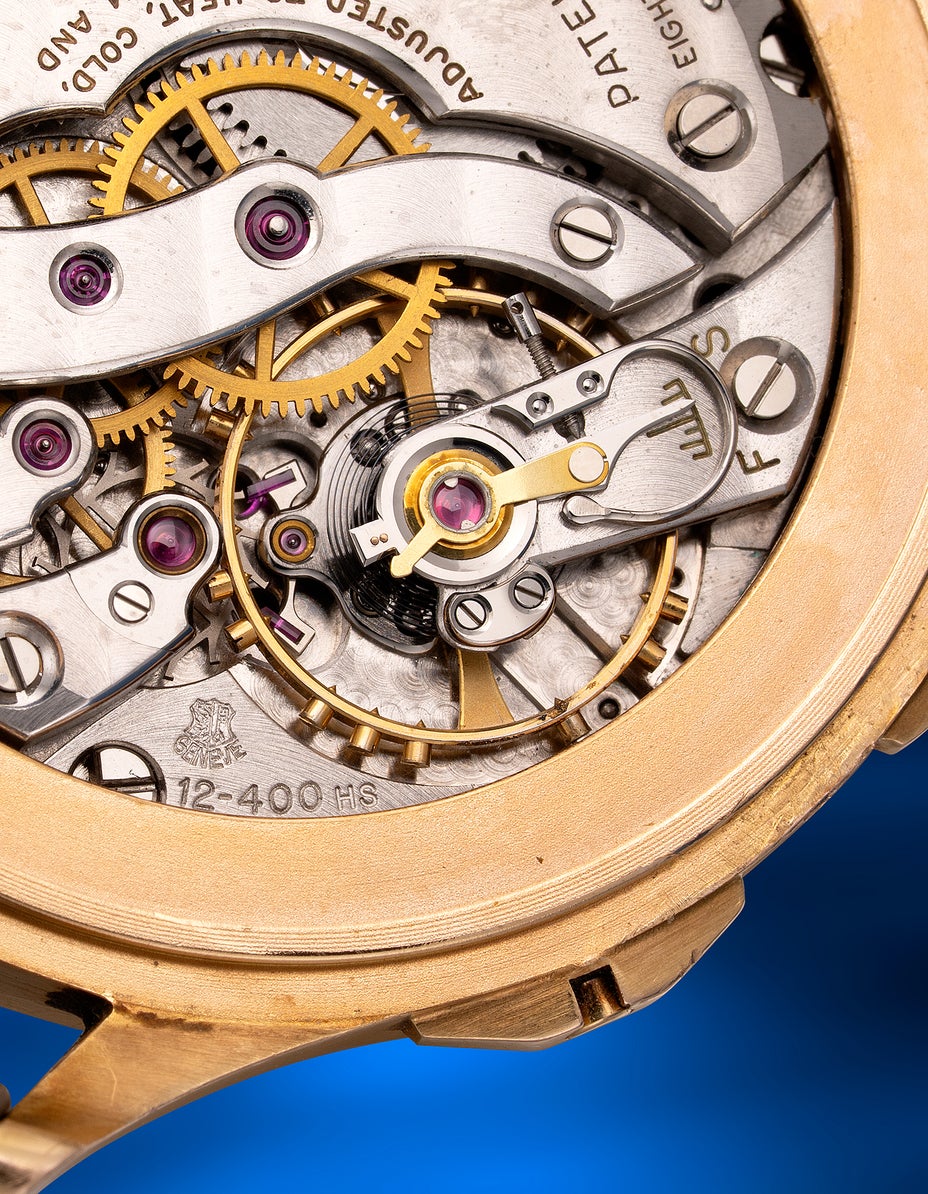
- Manual, cal. 12-400 HS, 18 jewels
- 錶帶/ 錶鏈
- Leather
- 錶扣
- 18K pink gold Patek Philippe buckle stamped PP.Co
- 尺寸
- 35.5mm diameter
- 簽名
- Case, dial, movement and buckle signed
- 配件
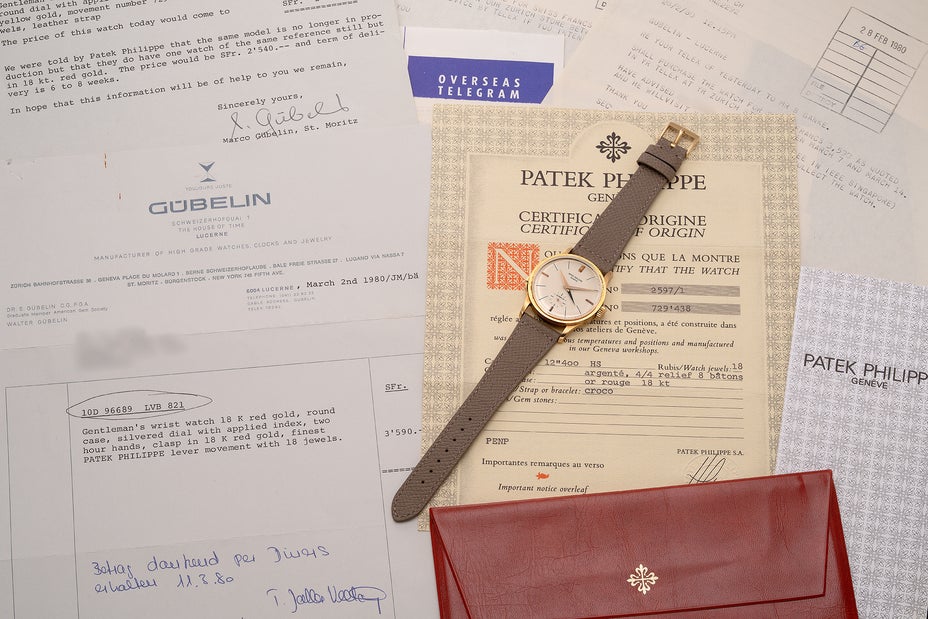
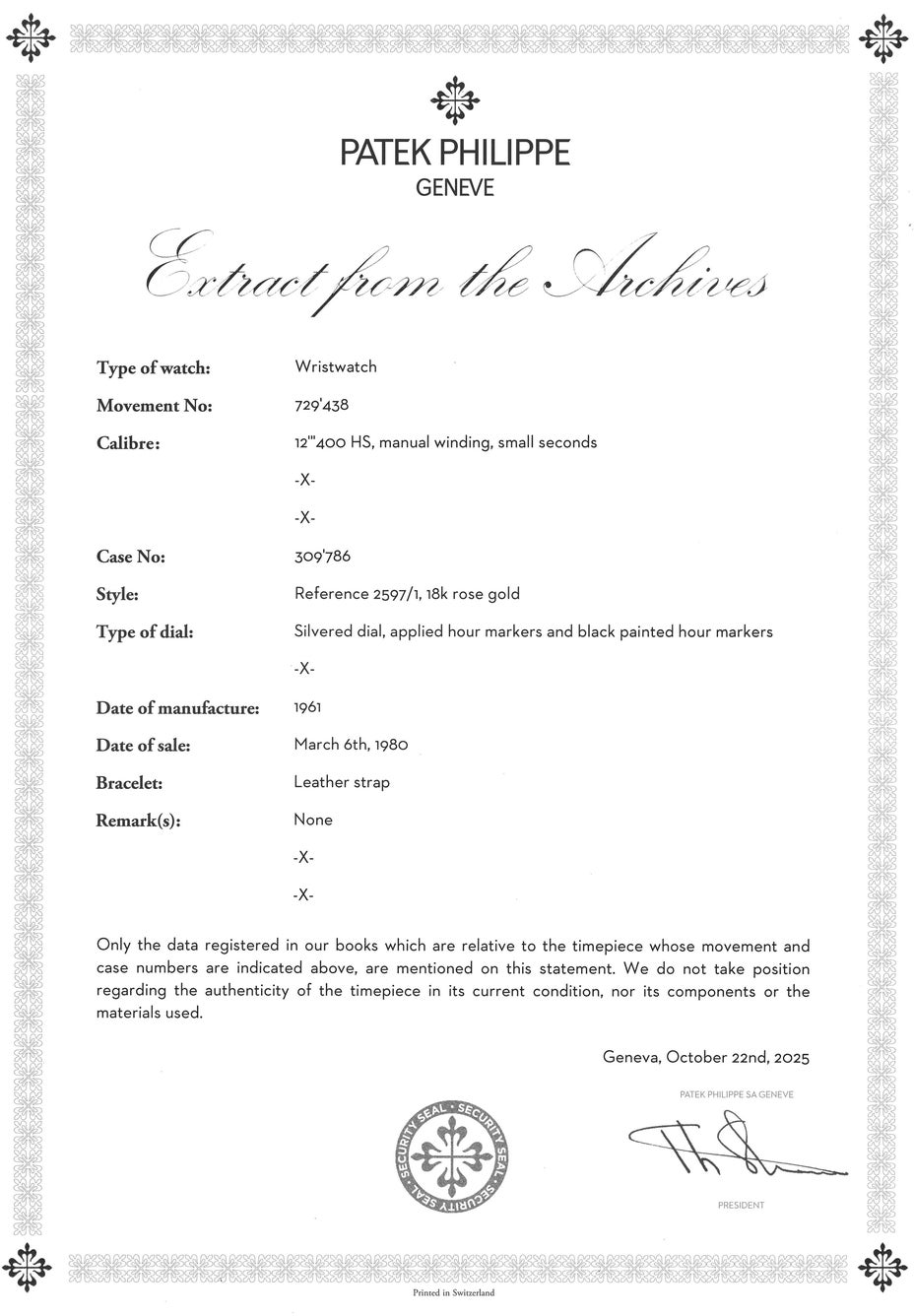
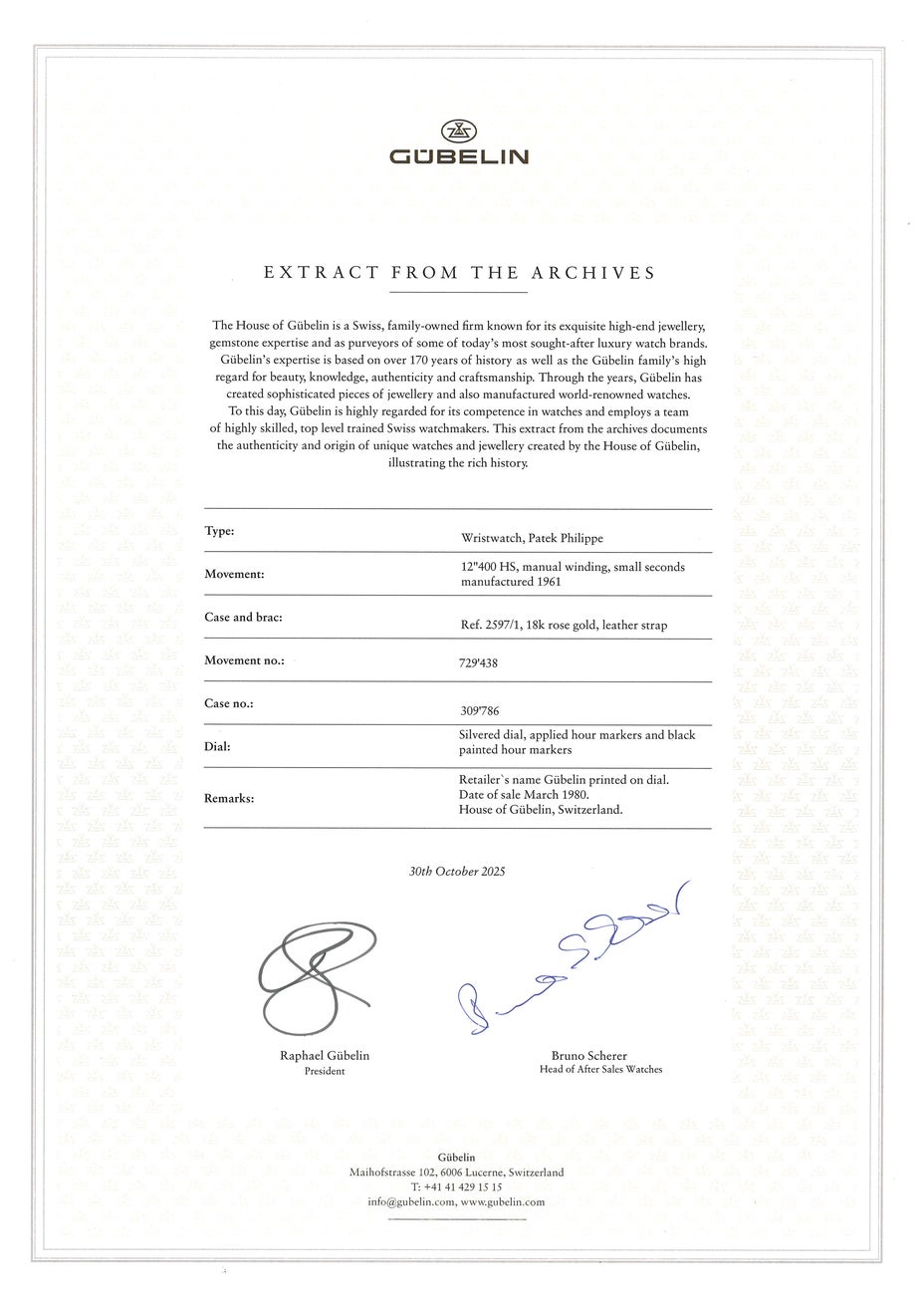
- Accompanied by Patek Philippe Certificate of Origin date coded March 1980, product literature, red leather envelope, letters and telex from 1977 to 1980 between the owner and Gübelin confirming the order of the present watch, original Gübelin invoice dated 2nd March 1980. Further delivered with both Gübelin and Patek Philippe Extract from the Archives confirming the manufacture date of the present timepiece in 1961 and its subsequent sale date on 6th March 1980.
專家
完整圖錄內容
圖錄文章
Patek Philippe released its first dual time zone watch, reference 2597, in 1958, based on a Louis Cottier-designed prototype from 1953 featuring Heures Sautantes, or jumping hours. Between 1958 and 1962, Cottier received approximately 90 movements (including calibers 12-400 and 27 AM 400) to modify for dual time zone functionality. The Heures Sautantes system allowed for a separately adjustable jumping hand alongside the hour and minute hands displaying local time where Patek Philippe has successfully patented this system in 1959 under Swiss Patent 340191 for a "Time Zone Watch". Cases for reference 2597 were produced by Antoine Gerlach (Key Number 4), a specialist firm known for crafting cases for Patek Philippe.
The first series ref. 2597 featured an independently adjustable hour hand, while the present second series, ref. 2597/1, includes an additional blued steel Daphine hour hand which can indicate the home time. The present watch, with case number 729'438, is among the earliest examples to showcase this feature, making it a superlative specimen in many respects.
Describing this piece as rare is an understatement, as only 7 known pink gold ref. 2597 examples have resurfaced on the market. Among these, only one is double-signed, having been offered in the “STYLED. Timeless Watches & How to Wear Them” auction in New York in 2018. The 8th pink gold example has now emerged, proudly double-signed “Gübelin” on the dial, making it the first and only known pink gold reference 2597 across both series to feature this prestigious retailer signature.
This watch also completes the narrative for two closely related examples in terms of serial number. One case and one movement number away (Movement: 729'439 & Case: 309'785), another pink gold 2597/1 second series example sold at The Geneva Watch Auction: SIX for an impressive CHF 540,500. That watch, confirmed by its Extract from the Archives, was made in 1961 and sold 19 years later, similar to the watch we present here. The other pink gold 2597/1 second series example (Movement: 729'437 & Case: 309'787) has never been sold and resides proudly in the Patek Philippe museum.
The story of this watch comes from extensive telegrams and letters from the family of the original owner. An Australian collector acquired a yellow gold 2597 in 1970, enjoying it until it was stolen in 1976. Heartbroken, he reached out to Gübelin boutique in St. Moritz, Switzerland in early 1977 during a business trip, hoping to find a replacement of the same reference. Gübelin informed him that the 2597 in yellow gold was no longer available, but Patek Philippe did have one in inventory—an 18K pink gold version.
Fortunately, one pink gold example was still available when he visited Switzerland in March 1980, and he purchased it for 3,590 Swiss Francs at the main Gübelin boutique in Lucerne. This watch has remained in the same collection since that day in 1980, and Phillips is honored to present this remarkable timepiece for the first time at an international auction after 45 years.
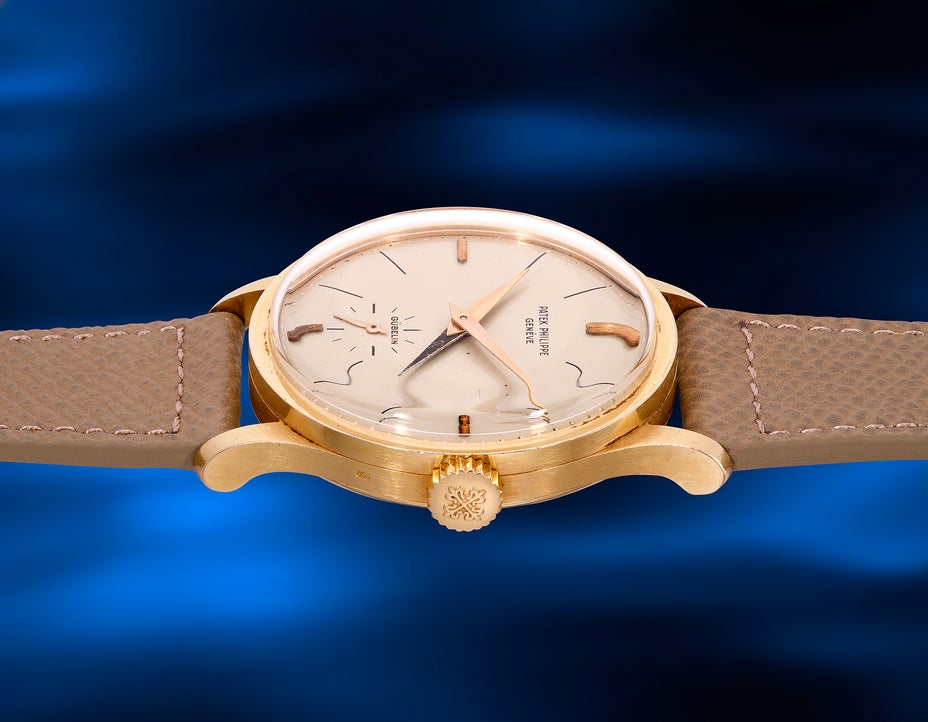
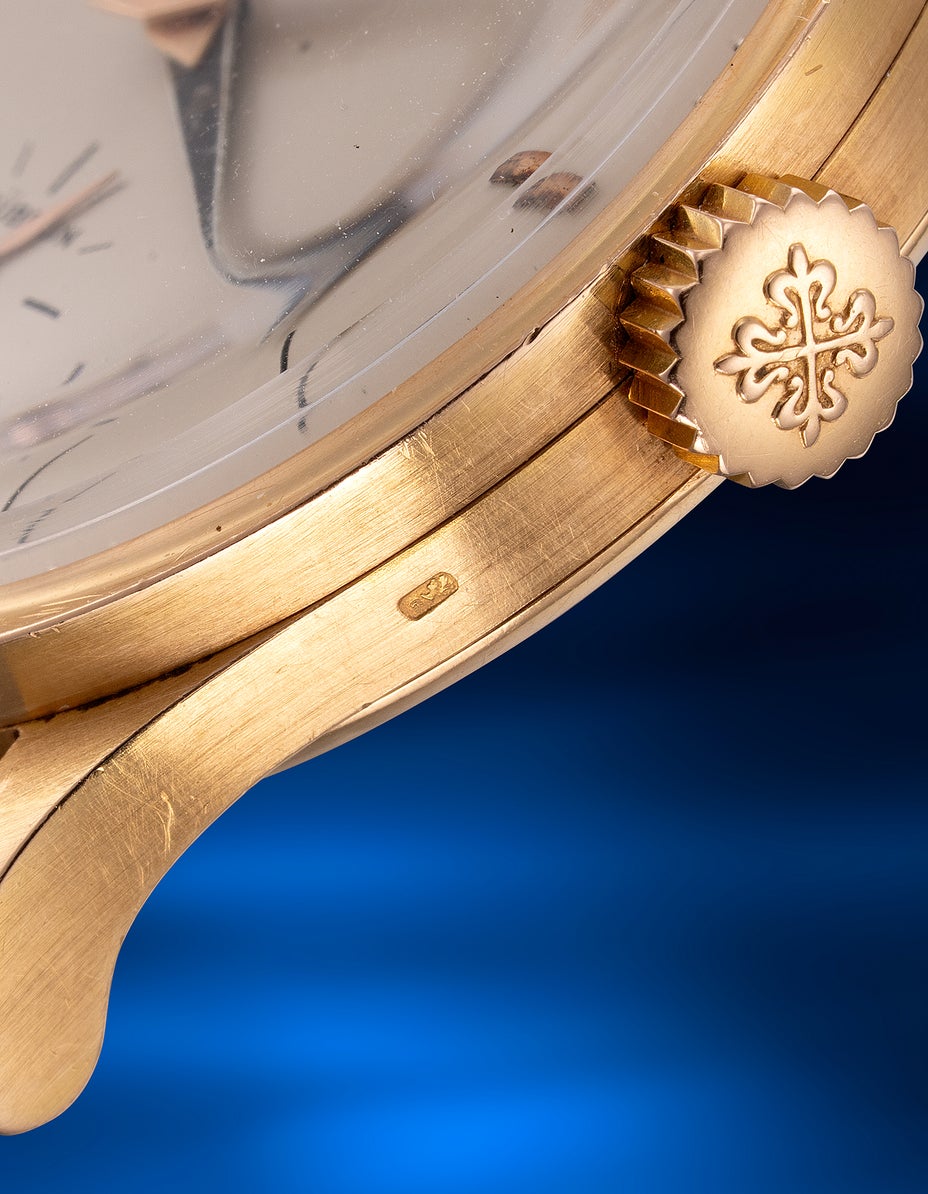
The condition of this watch is nothing short of astonishing as its impeccable state of preservation sets it apart. We believe it remains unpolished, featuring full, thick lugs and incredible proportions. The original brushed and satin finishes are intact, displaying how the watch left the Patek Philippe factory. Despite what one might expect from general wear, this example remains sharp and crisp. The case displays a strikingly deep hallmark on the caseband and the case edges are still sharp to the touch.
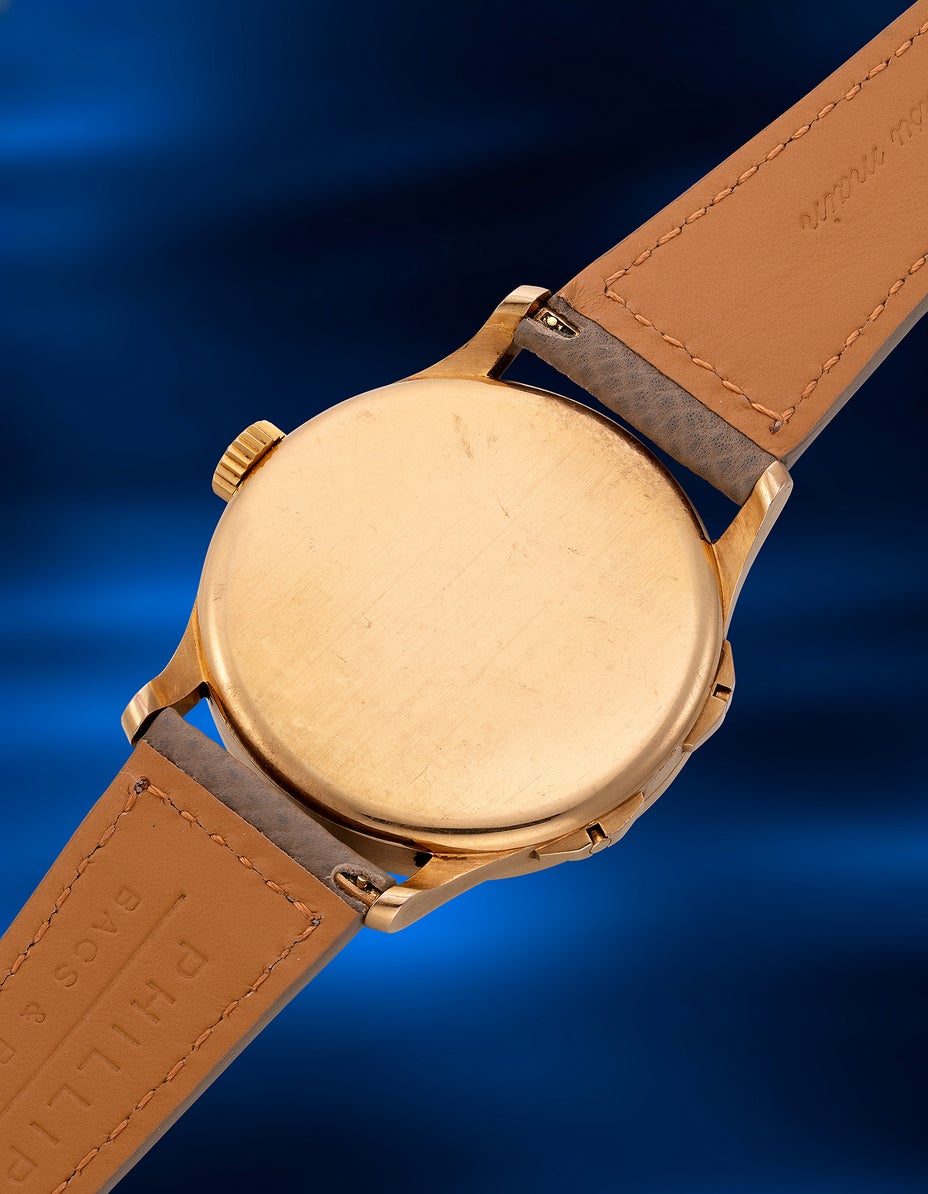
Most importantly, the inside caseback shows no service marks, indicating that the watch has undergone no interventions throughout its life, apart the long line and series of miniscule numbers above the reference number and Patek Philippe signature—an internal code used by Gübelin. The dial is equally impressive, showcasing a warm patinated glow, with a raised and defined enamel signature. The indexes have aged and exhibit some oxidation, indicating that the watch has remained untouched for a long time.
It is evident that this watch has likely been stored in a safe for most of its life, cherished and loved by its owner. The icing on the cake is the collection of accessories that accompany the watch: the original Certificate of Origin, date-coded (PENP) to March 1980. Given the provenance, it is no surprise to see an '80s-style certificate, despite the watch being made in the '60s. Also included are the original red leather envelope and a complete set of documented letters and telexes from 1977 to 1980 between the owner and Gübelin, confirming the order of this watch, along with the original Gübelin invoice dated March 2, 1980. We are deeply honored to have been entrusted by the family of the original owner to offer this piece of history for the first time at an international auction.
The first series ref. 2597 featured an independently adjustable hour hand, while the present second series, ref. 2597/1, includes an additional blued steel Daphine hour hand which can indicate the home time. The present watch, with case number 729'438, is among the earliest examples to showcase this feature, making it a superlative specimen in many respects.
Describing this piece as rare is an understatement, as only 7 known pink gold ref. 2597 examples have resurfaced on the market. Among these, only one is double-signed, having been offered in the “STYLED. Timeless Watches & How to Wear Them” auction in New York in 2018. The 8th pink gold example has now emerged, proudly double-signed “Gübelin” on the dial, making it the first and only known pink gold reference 2597 across both series to feature this prestigious retailer signature.
This watch also completes the narrative for two closely related examples in terms of serial number. One case and one movement number away (Movement: 729'439 & Case: 309'785), another pink gold 2597/1 second series example sold at The Geneva Watch Auction: SIX for an impressive CHF 540,500. That watch, confirmed by its Extract from the Archives, was made in 1961 and sold 19 years later, similar to the watch we present here. The other pink gold 2597/1 second series example (Movement: 729'437 & Case: 309'787) has never been sold and resides proudly in the Patek Philippe museum.
The story of this watch comes from extensive telegrams and letters from the family of the original owner. An Australian collector acquired a yellow gold 2597 in 1970, enjoying it until it was stolen in 1976. Heartbroken, he reached out to Gübelin boutique in St. Moritz, Switzerland in early 1977 during a business trip, hoping to find a replacement of the same reference. Gübelin informed him that the 2597 in yellow gold was no longer available, but Patek Philippe did have one in inventory—an 18K pink gold version.
Fortunately, one pink gold example was still available when he visited Switzerland in March 1980, and he purchased it for 3,590 Swiss Francs at the main Gübelin boutique in Lucerne. This watch has remained in the same collection since that day in 1980, and Phillips is honored to present this remarkable timepiece for the first time at an international auction after 45 years.
The condition of this watch is nothing short of astonishing as its impeccable state of preservation sets it apart. We believe it remains unpolished, featuring full, thick lugs and incredible proportions. The original brushed and satin finishes are intact, displaying how the watch left the Patek Philippe factory. Despite what one might expect from general wear, this example remains sharp and crisp. The case displays a strikingly deep hallmark on the caseband and the case edges are still sharp to the touch.
Most importantly, the inside caseback shows no service marks, indicating that the watch has undergone no interventions throughout its life, apart the long line and series of miniscule numbers above the reference number and Patek Philippe signature—an internal code used by Gübelin. The dial is equally impressive, showcasing a warm patinated glow, with a raised and defined enamel signature. The indexes have aged and exhibit some oxidation, indicating that the watch has remained untouched for a long time.
It is evident that this watch has likely been stored in a safe for most of its life, cherished and loved by its owner. The icing on the cake is the collection of accessories that accompany the watch: the original Certificate of Origin, date-coded (PENP) to March 1980. Given the provenance, it is no surprise to see an '80s-style certificate, despite the watch being made in the '60s. Also included are the original red leather envelope and a complete set of documented letters and telexes from 1977 to 1980 between the owner and Gübelin, confirming the order of this watch, along with the original Gübelin invoice dated March 2, 1980. We are deeply honored to have been entrusted by the family of the original owner to offer this piece of history for the first time at an international auction.
Patek Philippe
Swiss | 1839Since its founding in 1839, this famous Geneva-based firm has been surprising its clientele with superbly crafted timepieces fitted with watchmaking's most prestigious complications. Traditional and conservative designs are found across Patek Philippe's watches made throughout their history — the utmost in understated elegance.Well-known for the Graves Supercomplication — a highly complicated pocket watch that was the world’s most complicated watch for 50 years — this family-owned brand has earned a reputation of excellence around the world. Patek's complicated vintage watches hold the highest number of world records for results achieved at auction compared with any other brand. For collectors, key models include the reference 1518, the world's first serially produced perpetual calendar chronograph, and its successor, the reference 2499. Other famous models include perpetual calendars such as the ref. 1526, ref. 3448 and 3450, chronographs such as the reference 130, 530 and 1463, as well as reference 1436 and 1563 split seconds chronographs. Patek is also well-known for their classically styled, time-only "Calatrava" dress watches, and the "Nautilus," an iconic luxury sports watch first introduced in 1976 as the reference 3700 that is still in production today.
瀏覽製造者