79
Rolex
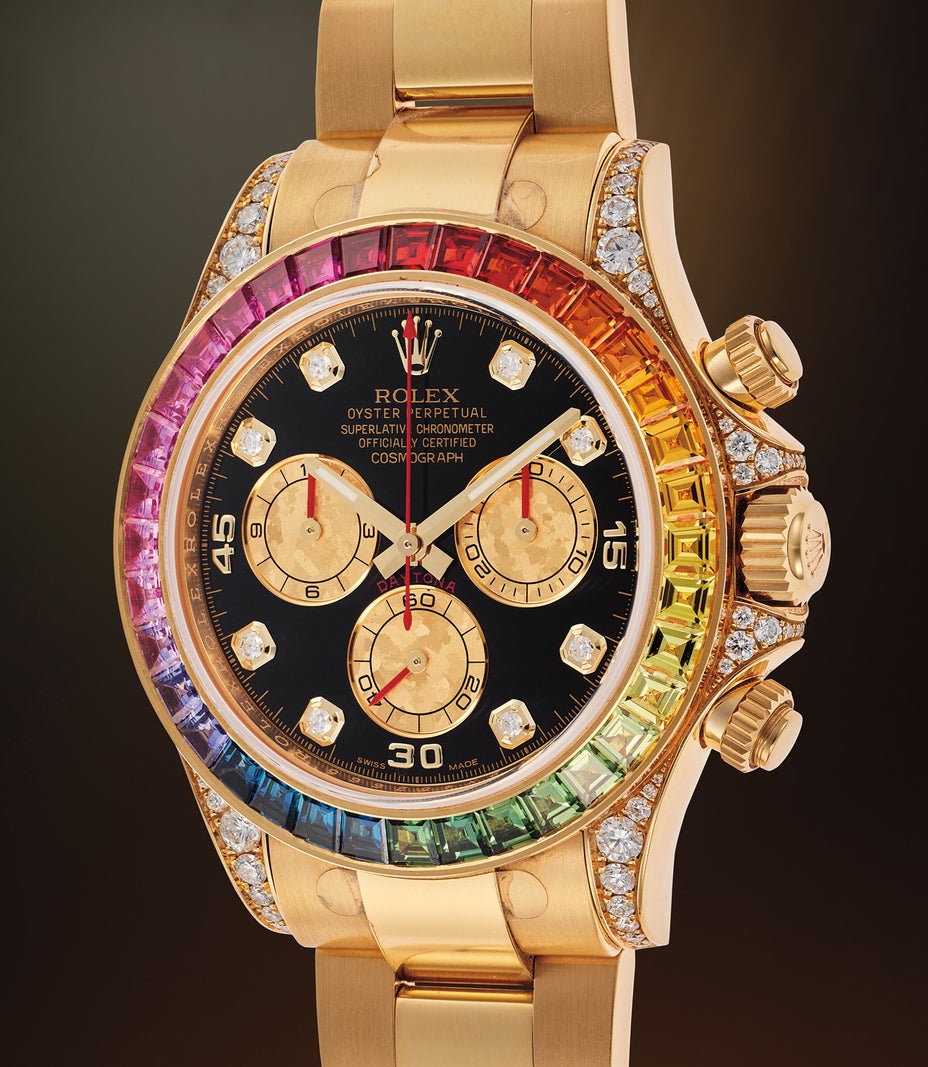
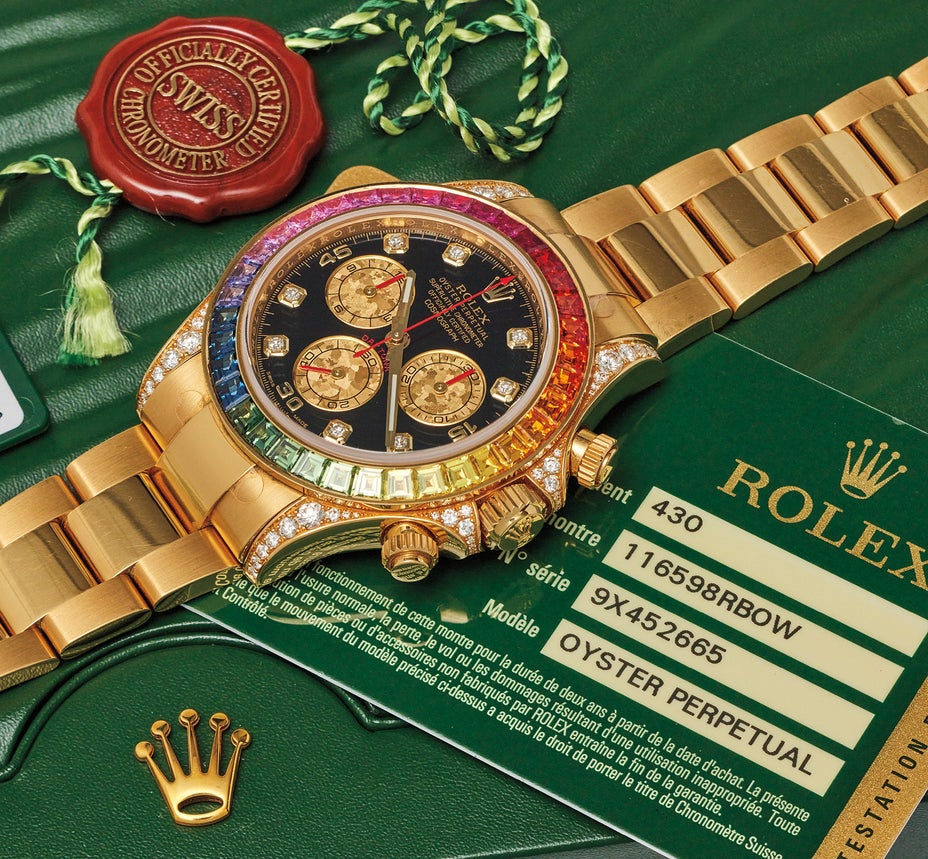
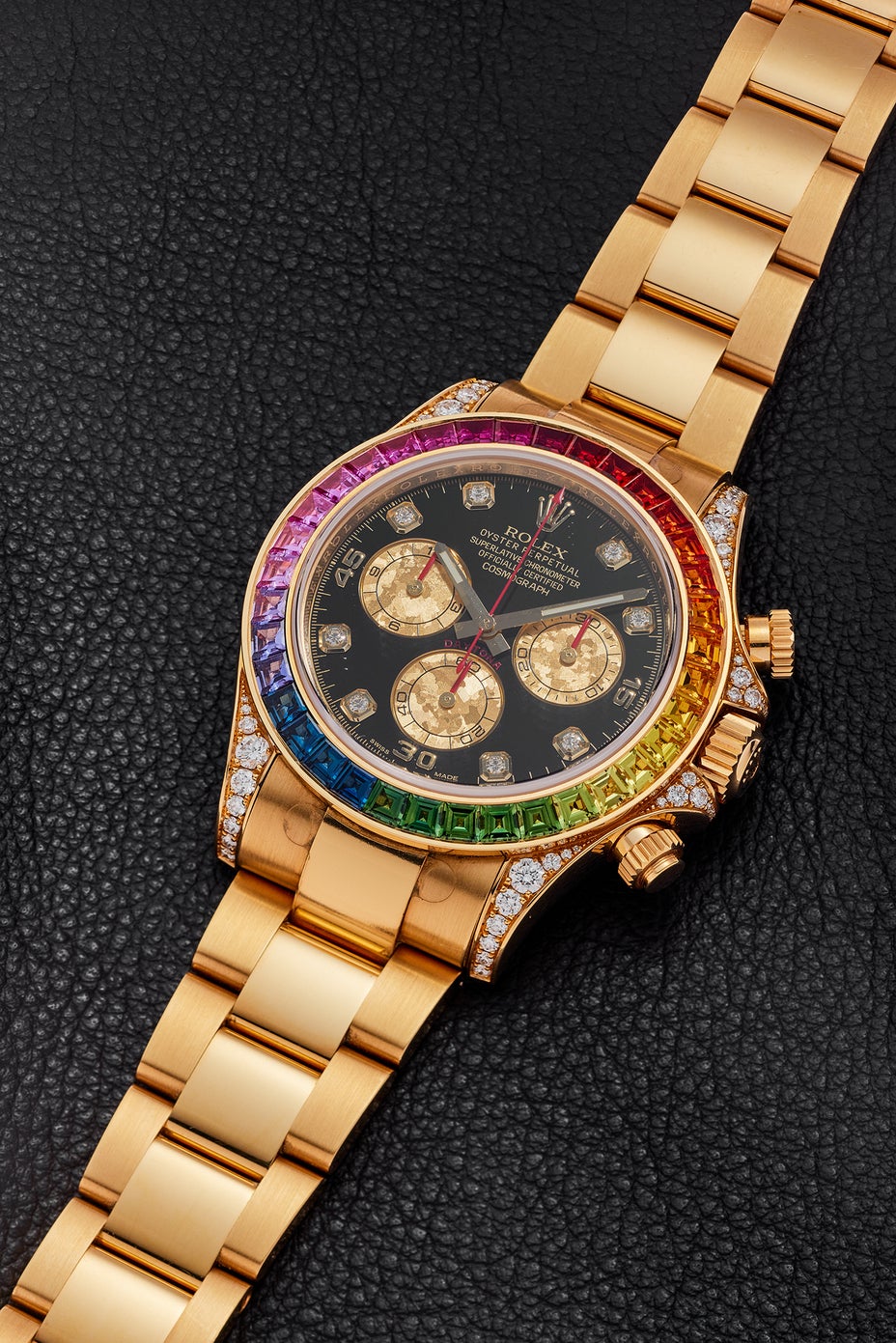
Ref. 116598RBOW
Cosmograph Daytona “Rainbow”
勞力士,極度精美,黃金鑲多彩寶石計時鏈帶腕錶,備鑲鑽錶盤。附保證卡、錶盒
完整圖錄內容
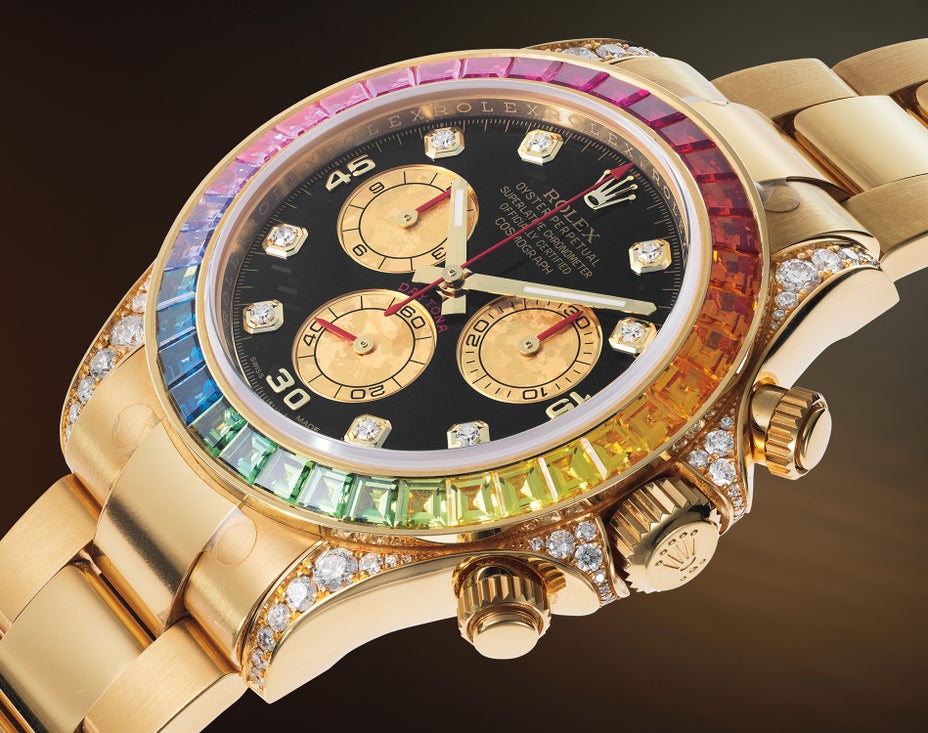
Set with 36 rainbow-hued sapphires, 56 diamonds adorning the lugs and crown guards, and diamonds indicating the hours, to call the Rainbow Daytona luxurious and lavish is an exercise in understatement. Each sapphire – every single gemstone used is internally flawless - is perfectly cut to fit without prongs into the bezel, and selected with the right color for transitioning to the stones on adjacent sides, so that rather than seeming like 36 individual stones, they blend into one another. The subsidiary dials are made of gold crystal, and the hour markers accentuated with bezel set, internally flawless diamonds. Due to the difficulty in sourcing these stones, subjecting them to Rolex’s high standards, and then fitting them into the watch, production numbers remain extremely low and only few examples have surfaced at auction.
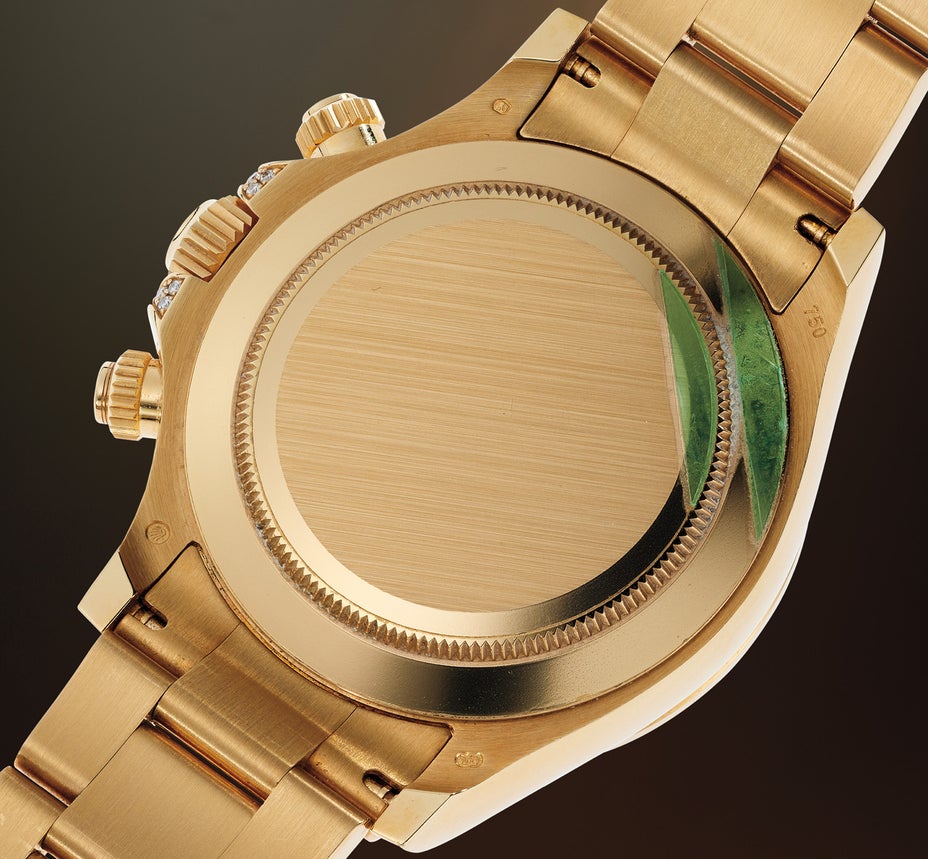
The sheer audacity of such a watch cannot be overstated, and neither can the effect the Rainbow Daytona has had on popular culture. When first introduced, they did not gain the traction they rightly deserved, but over the past decade, collectors’ tastes have evolved and matured in order to fully appreciate the precedent of boldness and eclectic style set forth by Rolex’s introduction of the reference 116598RBOW. This particular example is offered in stunning, hardly-worn condition with many of its original case and bracelet stickers still attached, complete with its complete suite of original accessories.
All iterations of Rolex's Cosmograph Daytona "Rainbow" are recently discontinued as of this writing, making this triptych of Rainbows an exciting opportunity to acquire this unobtainable model.
Rolex
Swiss | 1905Founded in 1905 England by Hans Wilsdorf and Alfred Davis as Wilsdorf & Davis, it soon became known as the Rolex Watch Company in 1915, moving its headquarters to Geneva in 1919. Like no other company, the success of the wristwatch can be attributed to many of Rolex's innovations that made them one of the most respected and well-known of all luxury brands. These innovations include their famous "Oyster" case — the world's first water resistant and dustproof watch case, invented in 1926 — and their "Perpetual" — the first reliable self-winding movement for wristwatches launched in 1933. They would form the foundation for Rolex's Datejust and Day-Date, respectively introduced in 1945 and 1956, but also importantly for their sports watches, such as the Explorer, Submariner and GMT-Master launched in the mid-1950s.
One of its most famous models is the Cosmograph Daytona. Launched in 1963, these chronographs are without any doubt amongst the most iconic and coveted of all collectible wristwatches. Other key collectible models include their most complicated vintage watches, including references 8171 and 6062 with triple calendar and moon phase, "Jean Claude Killy" triple date chronograph models and the Submariner, including early "big-crown" models and military-issued variants.