17Σ︎
Jaeger-LeCoultre
Ref. E168
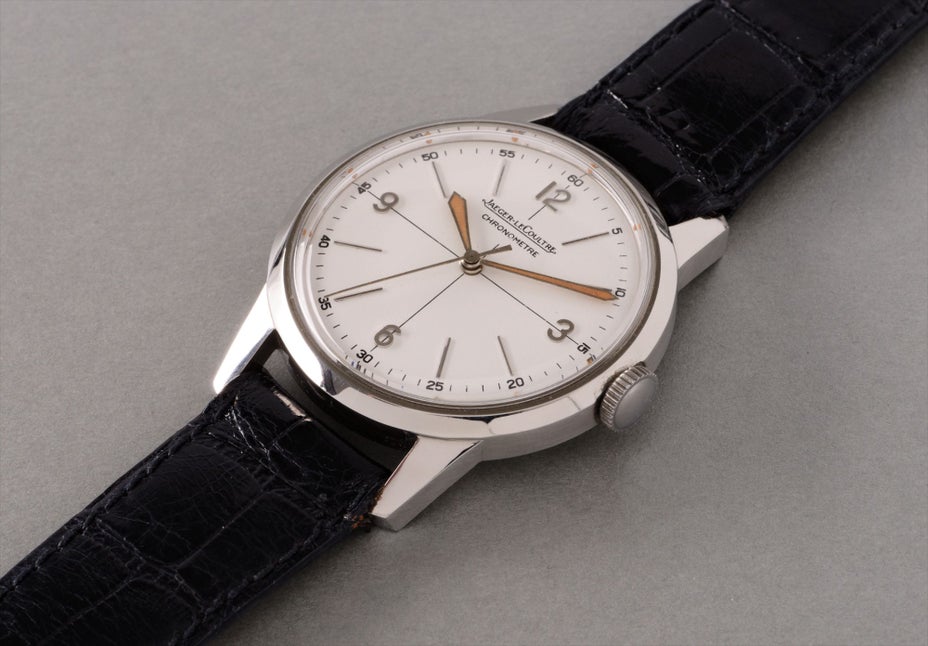
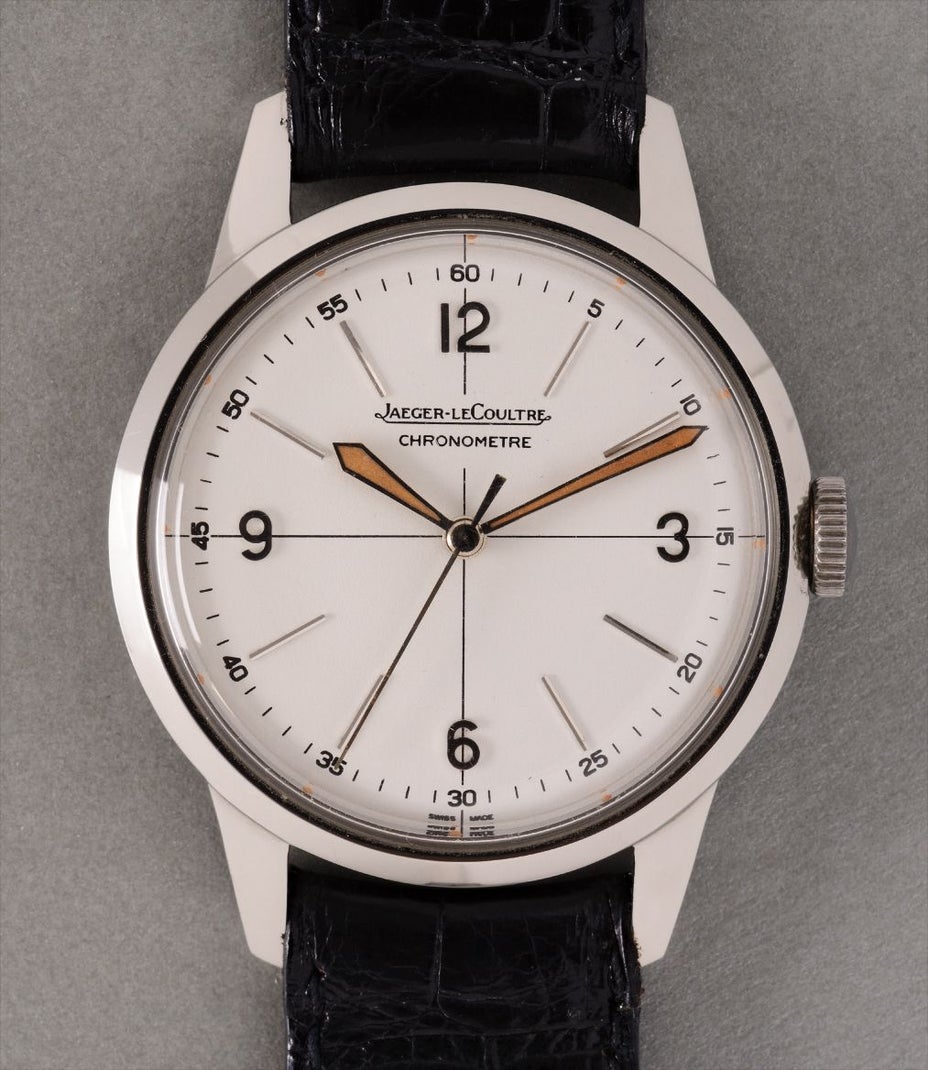
Chronometre Geophysic
A rare and fine stainless steel chronometer wristwatch with center seconds
Full-Cataloguing
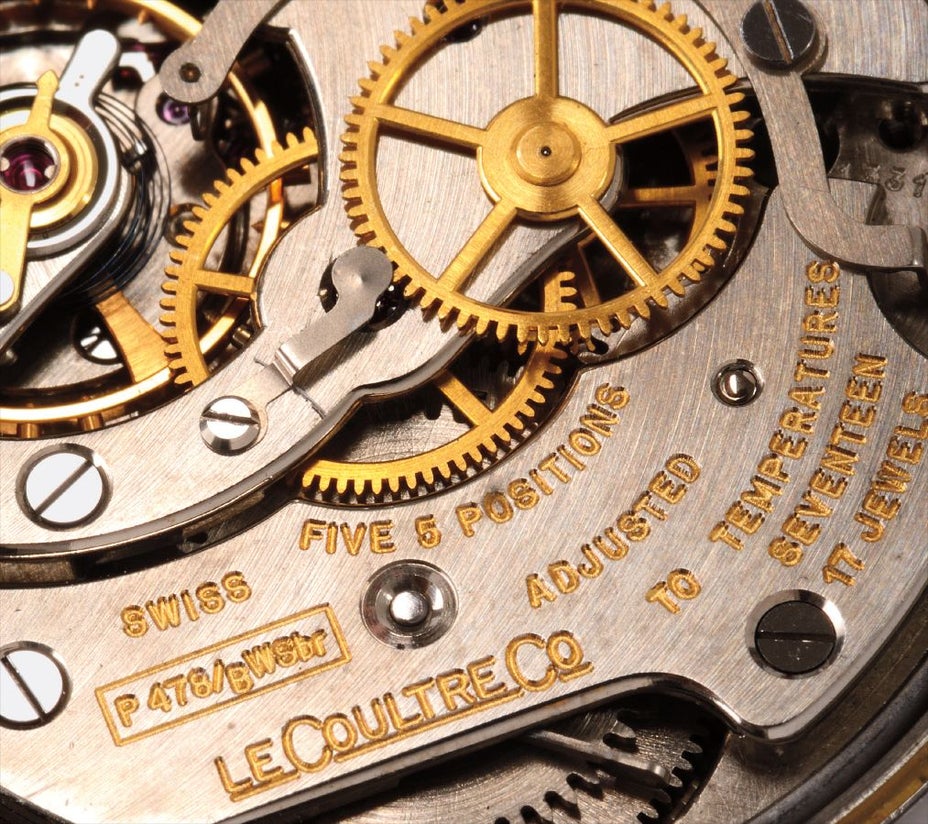
Destined for explorers and scientists, the Geophysic had a Bauhaus-inspired, no-nonsense dial optimized for the reading of time. Its chronometer movement (something quite rare for the brand at the time) featured a central hacking seconds hand, a special adjustment system for ease of regulation, as well as a Glucydur balance that would not be adversely affected by the changes in temperature. The movement was further protected thanks to a soft iron anti magnetic inner case, and was thus resistant to 600 Gauss – perfect for the research scientists working on polar bases, in laboratories, and inside submarines. Accordingly, in the summer of 1958, the citizens of Geneva gifted Geophysics to the captains of the SS Skate (Calvert) and Nautilus (Anderson) to commemorate their accomplishment of traversing the North Pole in their submarines. Scholarship suggests that slightly over 1000 Geophysic models were made.
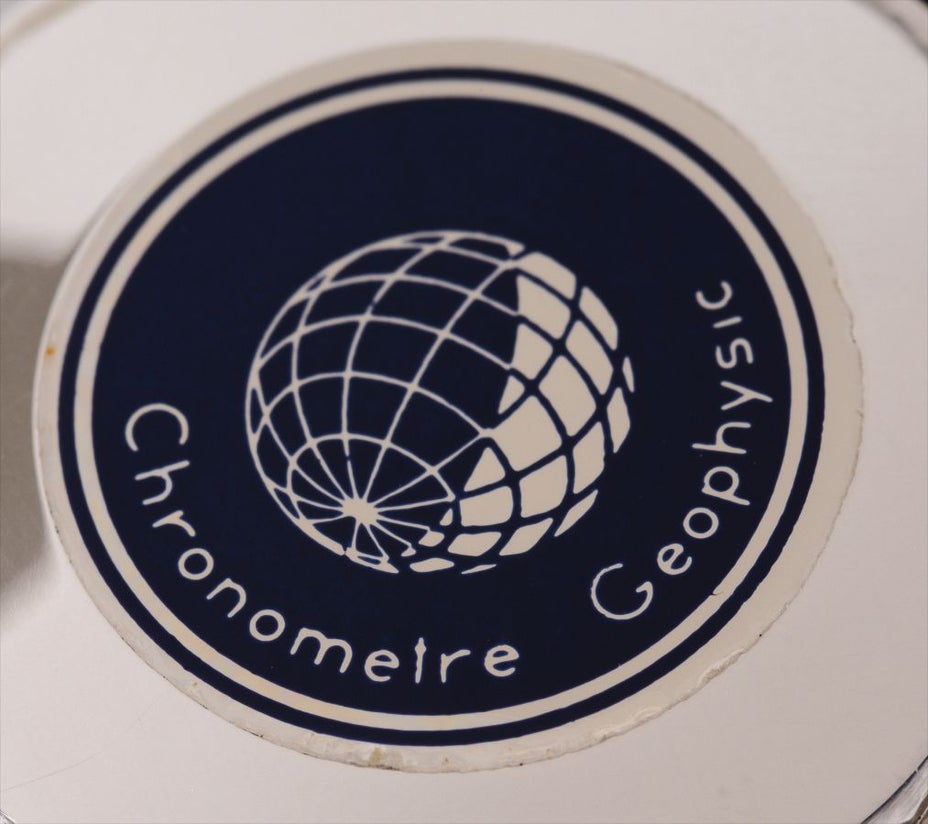
The present lot made in 1958 comes from the family of the original owner, and is in pristine condition - worn very rarely and with great care for special occasions only. Its flawless dial, perfectly preserved enamel medallion on the caseback, and original Jaeger LeCoultre buckle, attest to the exceptional condition of this watch. It is as if it left the factory yesterday. While Jaeger LeCoultre launched a “Tribute to the Geophysic” in 2014, the original Reference E 168 remains one of the most coveted chronometer timepieces for discerning collectors. The present lot is, in our view, the finest example of this legendary reference ever appearing on the market.
Jaeger-LeCoultre
Swiss | 1833Not all companies in the watchmaking field have been able to stand the test of time quite like Jaeger LeCoultre, also known as the "watchmaker's watchmaker." Founded in 1833 by Antoine LeCoultre and originally named LeCoutre, the firm provided watchmaking's top brands, such as Patek Philippe, Vacheron Constantin and Audemars Piguet, the high-grade, unfinished mechanical movements with which they completed their watches.
In the early 1900s, Cartier's watch supplier Edmond Jaeger sought out LeCoultre's help in creating the world's thinnest watches. The collaboration resulted in the creation of Cartier's earliest Tank and Santos watches, all housed with LeCoultre movements. The duo decided to merge in 1937, and the firm officially became the Jaeger-LeCoultre brand by which collectors know and adore it today. Some of the firm's most significant and important timepieces include the Reverso, the Memovox, the Atmos clock and, among modern watches, their Master Complications.