813
Just & Son
“Bouquets de Chine”
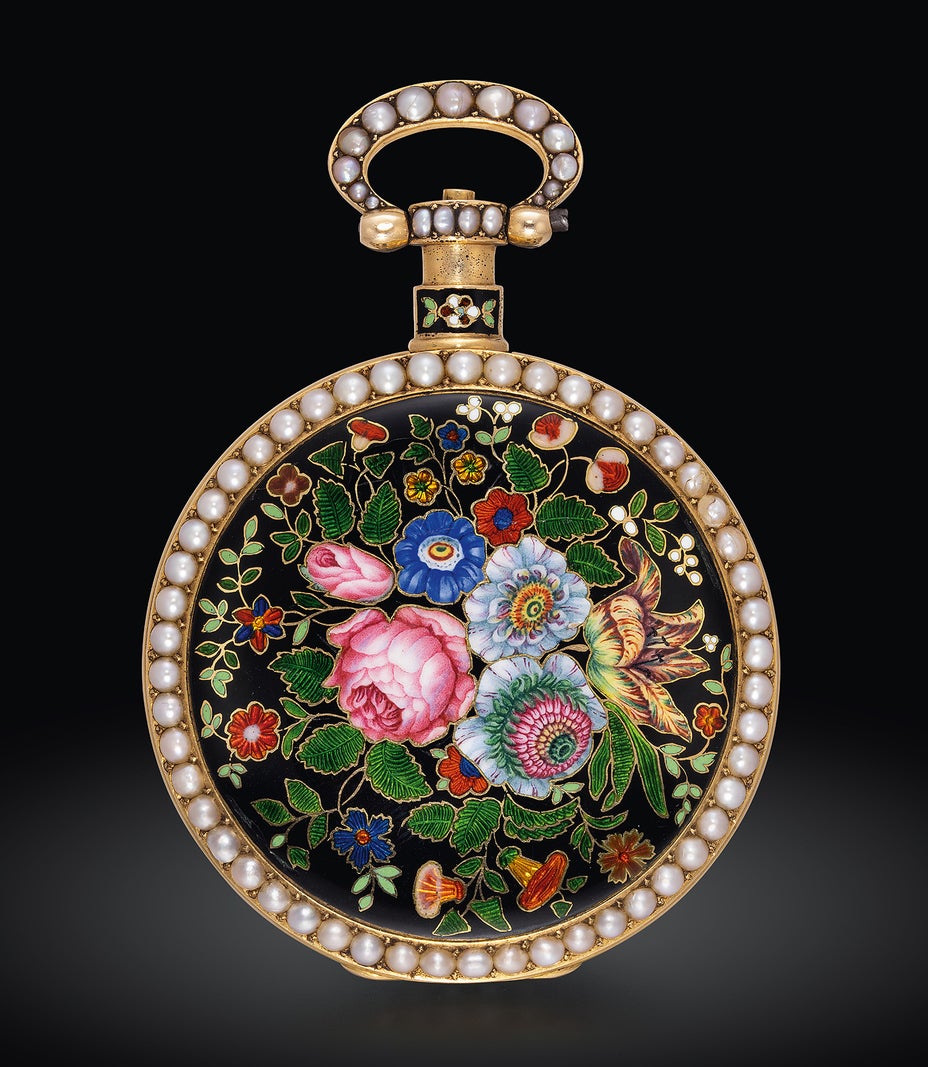
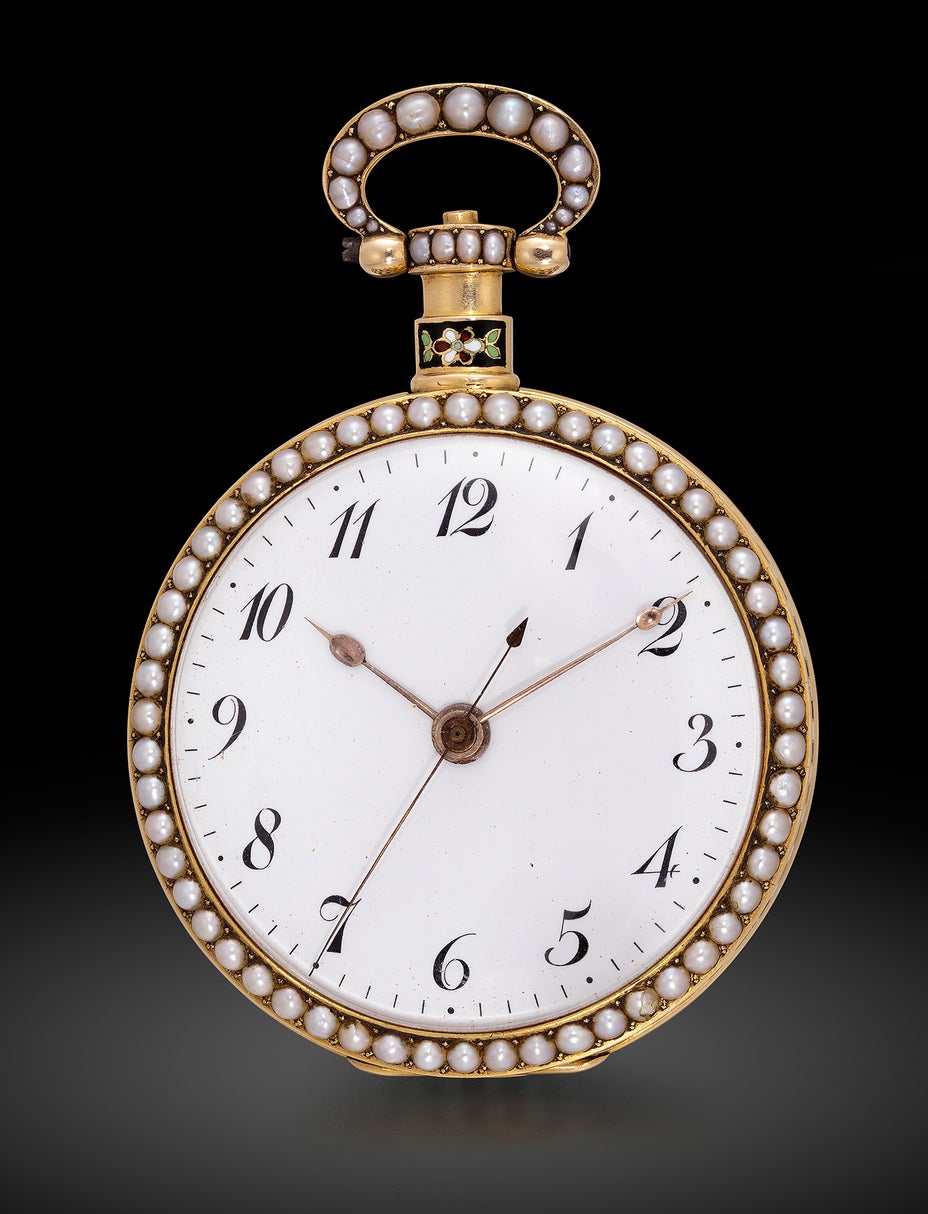
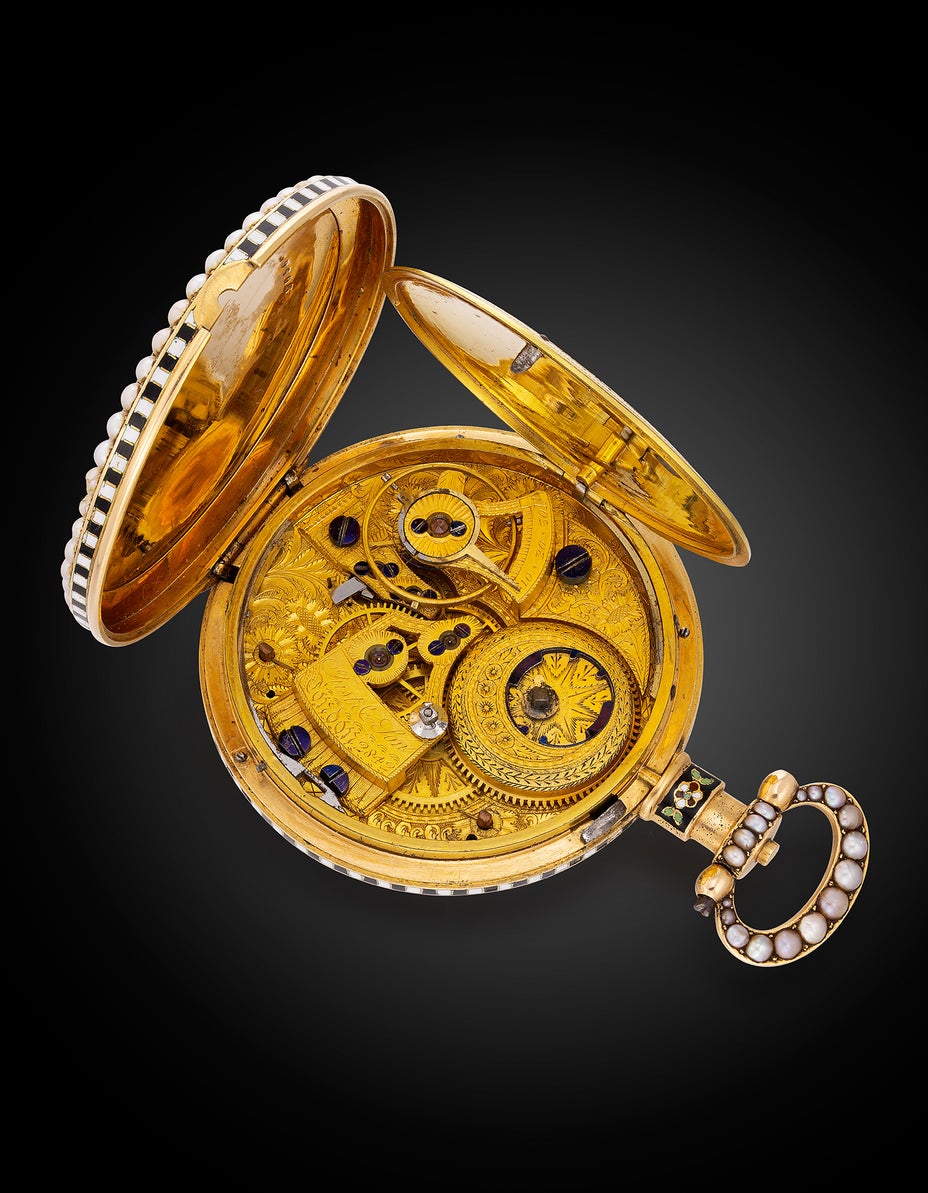
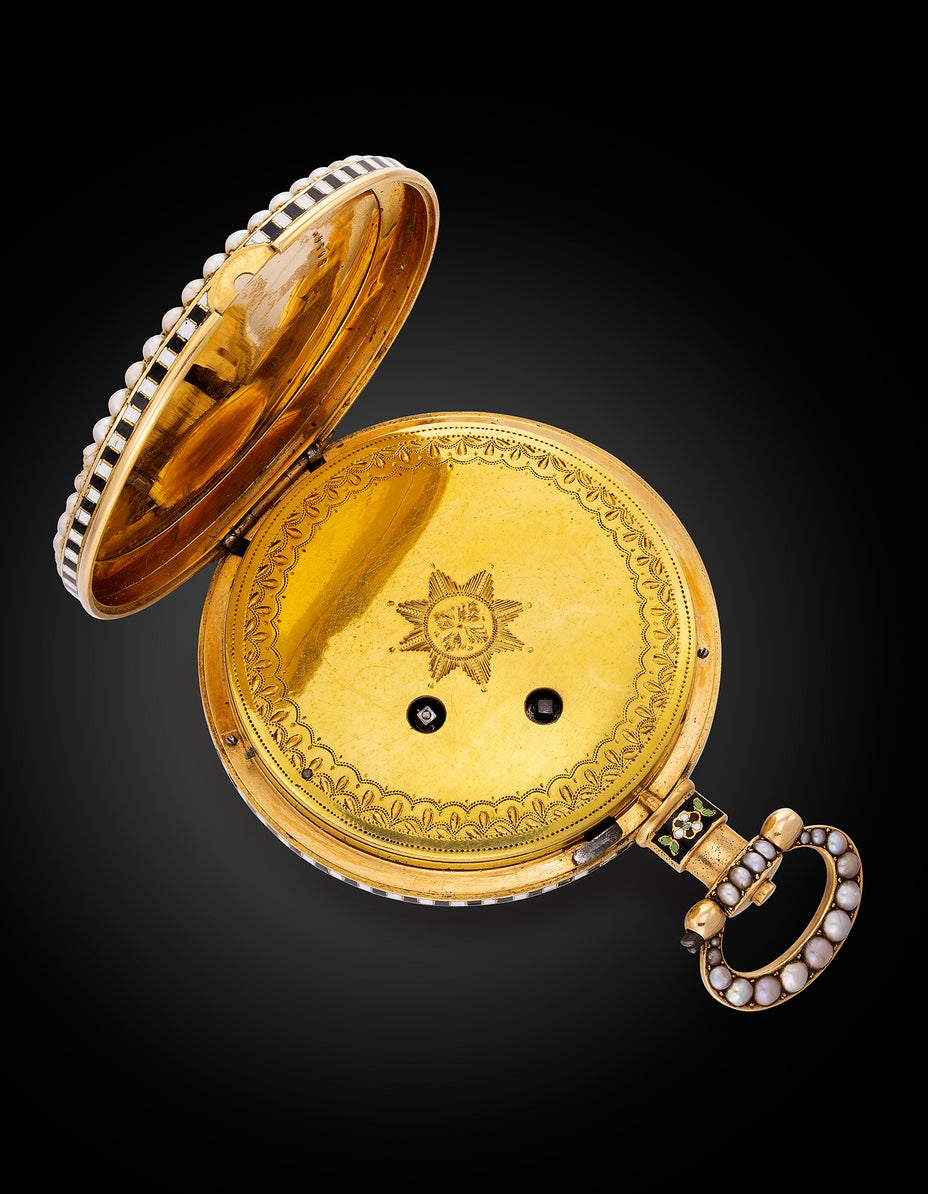
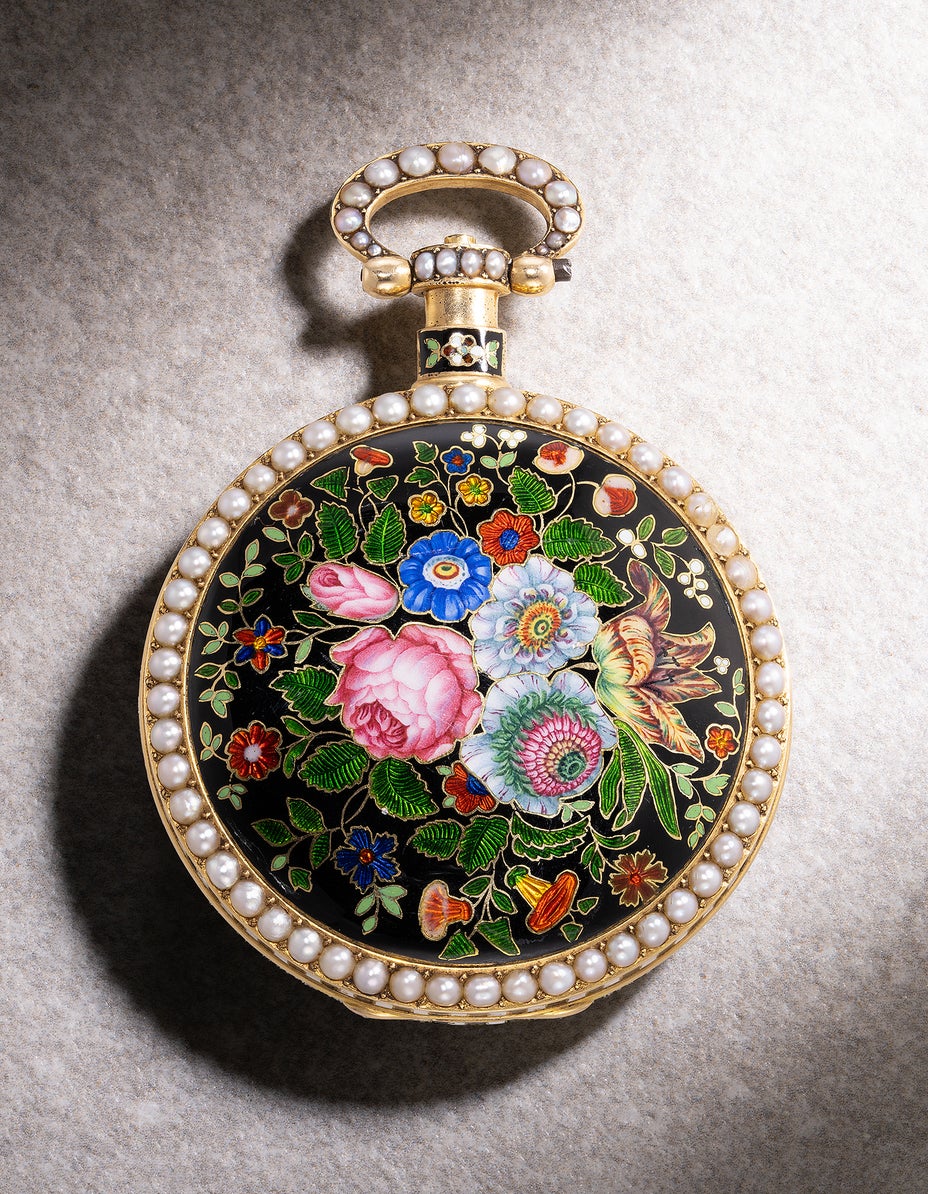
A very finely decorated and well-preserved yellow gold and pearl-set open faced pocket watch with Empire-styled case, champlevé and miniature enamel painting depicting bouquets de Chine, white enamel dial, engraved cuvette and movement and duplex escapement, made for the Chinese market
Estimate
HK$80,000–160,000
€9,100–18,100
$10,300–20,500
Sold For
HK$165,100
Manufacturer
Just & Son
Year
Circa 1850
Movement No
2842
Case No
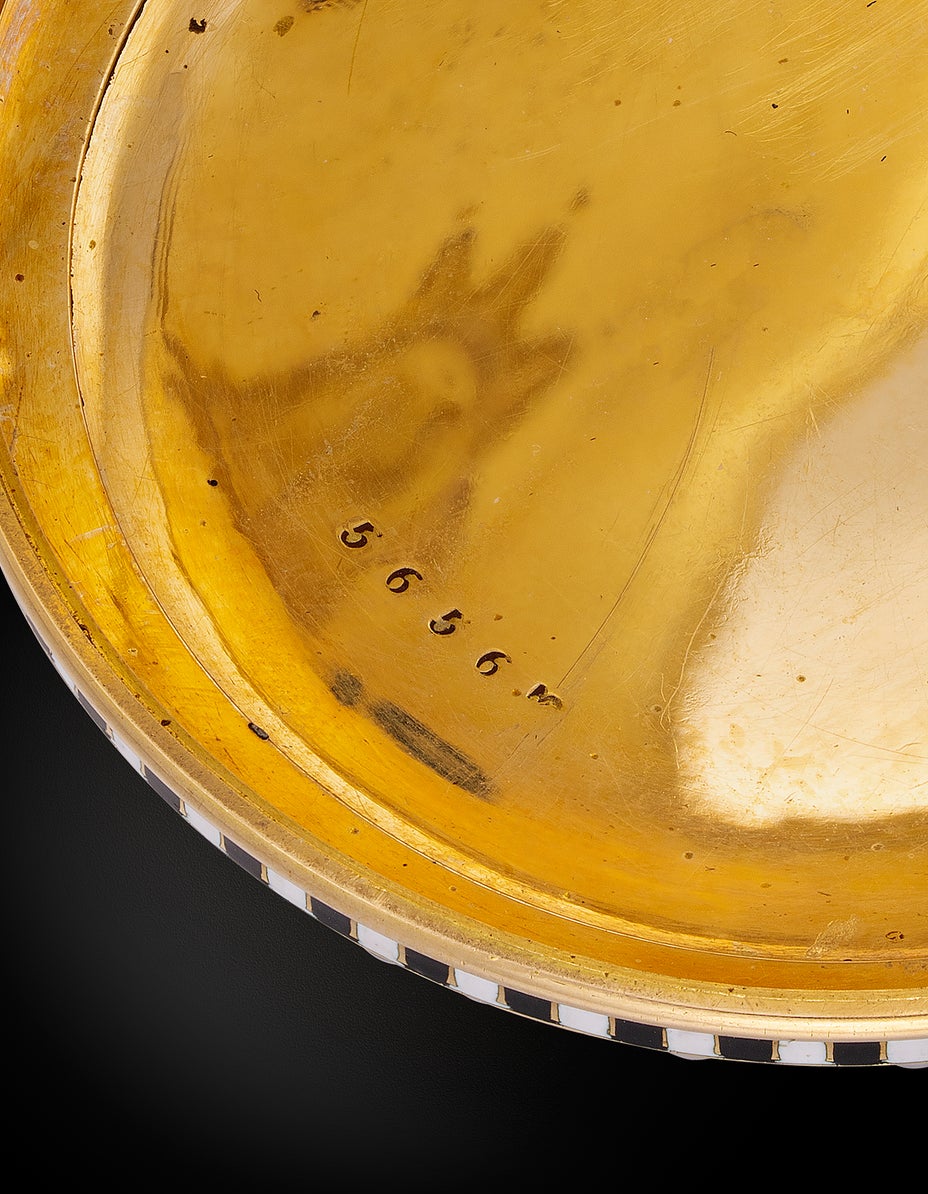
5656
Model Name
“Bouquets de Chine”
Material
Yellow gold, pearls and enamel
Calibre
Manual, duplex escapement
Dimensions
55mm diameter
Signed
Case and cuvette numbered, movement numbered and signed
Full-Cataloguing
Leonard Just headed his London workshop from 1790 until 1825 and became one of the renowned watchmakers of his time, specializing in watches for the Chinese export market. Following the British acquisition of Hong Kong in 1842, Just relocated to the island, managing the business there starting in 1846. After Leonard Just's passing, the enterprise transitioned to his son, continuing under the name Just & Son as a retailer of British timepieces in Asia.
In Chinese culture, flowers hold significant symbolic importance. Their forms, aspects, and fragrances are considered highly spiritual, reflecting the profound nature of the Chinese people. Poems and proverbs convey this cultural significance and certain flowers have particular meanings; for instance, the lotus symbolizes purity, the chrysanthemum represents perseverance, and the plum blossom signifies integrity.
The peony, with its generous forms, brilliant colors, and heady fragrance, is regarded as the most important flower in China. It symbolizes wealth, nobility, prosperity, and happiness, earning the title "Queen of Flowers". Paintings of flowers are often displayed in Chinese homes for good luck and in offices to attract business success.
Embroidered garden, everywhere there, fettered with famous flowers;
My steps are blocked by the red tiers of budding crimson.
I ponder on your favors, which resemble the colors of springtime—
Upon tree peony branches, indeed their glory’s profuse.
— Lu Shusheng (A poet in the Ming Dynasty)
The deep symbolism attached to flowers made them an ideal subject for exquisite timepieces, often intended for exalted patrons, including the Emperor himself. The significance of each flower would have been readily recognized by China's elite, serving as a flattering reference to their own wealth and power.
Typically featuring an entire miniature painting on the enamel panel, the present watch from Just & Son is a rare gem that showcases a beautiful champlevé combined with painted enamel, depicting a lovely summer blossom. This magnificent decoration is set against a rare black background. Forming an "Empire" style case, the bezel, pendant, and bow are adorned with large half-pearls, complemented by a sprung gold cuvette.
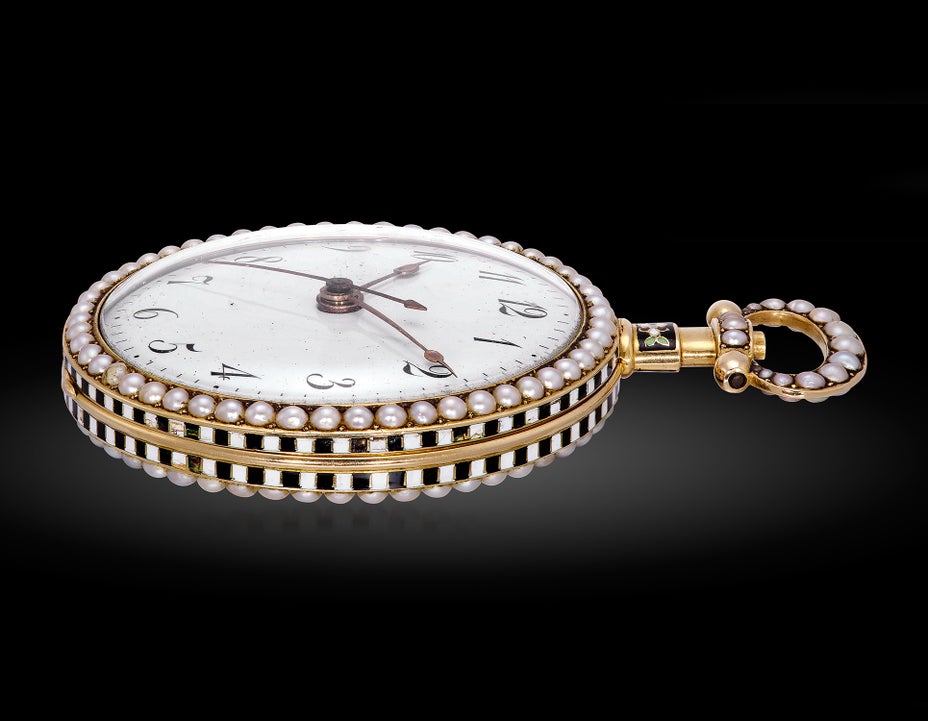
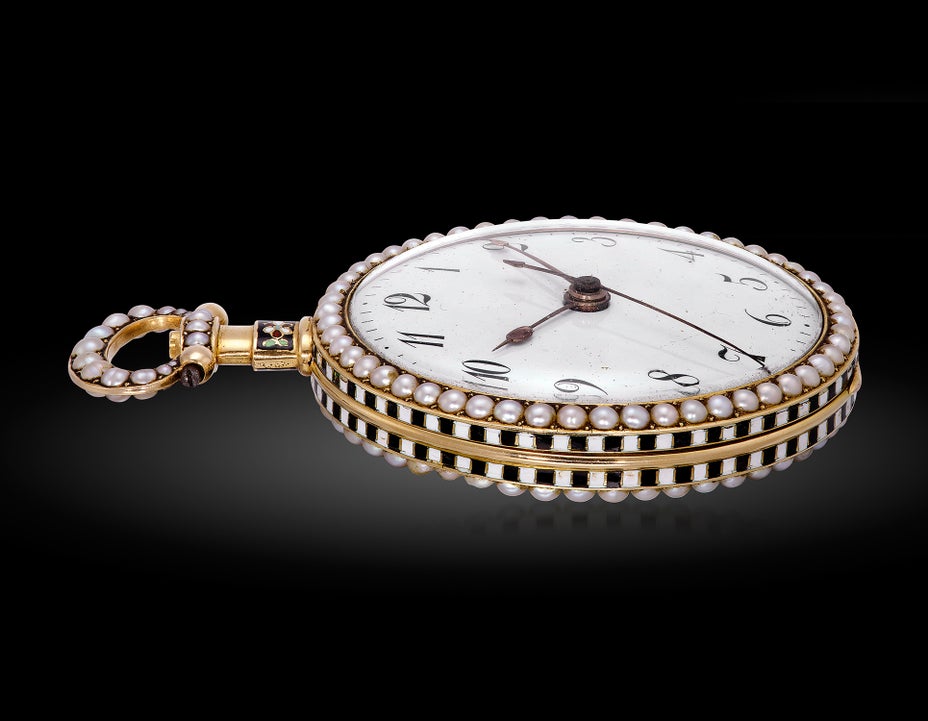
Further enhanced by a black and white checkered design on the caseband, the gilt movement is richly decorated with engravings, featuring an escapement jewelled to the center with screwed chatons. The Just & Son signature is proudly engraved along with the movement number. Remarkably well preserved given its age, this timepiece represents an important piece of history in English watchmaking and its influence on Eastern culture.
In Chinese culture, flowers hold significant symbolic importance. Their forms, aspects, and fragrances are considered highly spiritual, reflecting the profound nature of the Chinese people. Poems and proverbs convey this cultural significance and certain flowers have particular meanings; for instance, the lotus symbolizes purity, the chrysanthemum represents perseverance, and the plum blossom signifies integrity.
The peony, with its generous forms, brilliant colors, and heady fragrance, is regarded as the most important flower in China. It symbolizes wealth, nobility, prosperity, and happiness, earning the title "Queen of Flowers". Paintings of flowers are often displayed in Chinese homes for good luck and in offices to attract business success.
Embroidered garden, everywhere there, fettered with famous flowers;
My steps are blocked by the red tiers of budding crimson.
I ponder on your favors, which resemble the colors of springtime—
Upon tree peony branches, indeed their glory’s profuse.
— Lu Shusheng (A poet in the Ming Dynasty)
The deep symbolism attached to flowers made them an ideal subject for exquisite timepieces, often intended for exalted patrons, including the Emperor himself. The significance of each flower would have been readily recognized by China's elite, serving as a flattering reference to their own wealth and power.
Typically featuring an entire miniature painting on the enamel panel, the present watch from Just & Son is a rare gem that showcases a beautiful champlevé combined with painted enamel, depicting a lovely summer blossom. This magnificent decoration is set against a rare black background. Forming an "Empire" style case, the bezel, pendant, and bow are adorned with large half-pearls, complemented by a sprung gold cuvette.
Further enhanced by a black and white checkered design on the caseband, the gilt movement is richly decorated with engravings, featuring an escapement jewelled to the center with screwed chatons. The Just & Son signature is proudly engraved along with the movement number. Remarkably well preserved given its age, this timepiece represents an important piece of history in English watchmaking and its influence on Eastern culture.